Light as Absence and Presence - the work of Lundgaard & Tranberg Architects
Category
Daylight & Architecture
Daylight in buildings
Design Philosophy
Author
Kristoffer Lindhardt Weiss
Photography
ANDERS SUNE BERG
TORBEN ESKEROD
KVANT-1
LUNDGAARD & TRANBERG ARKITEKTER
Date
January 2026
Source
Daylight & Architecture
Share
Copy
In the Daylight Talk – Sense of Site, Perception of Light, architects Trine Hedeager Harboe and Malene Hjortsø Kyndesen from Lundgaard & Tranberg Architects explore the connections between place and light in four of the firm’s most prominent contemporary projects: The Natural History Museum of Denmark, The New Viking Ship Museum, Kannikegården in Ribe, and Novo Nordisk’s new headquarters in Tuborg Harbour, Copenhagen. The four projects are indeed very conceptually different, but what they have in common is the carefully orchestrated interplay between the special character of the place and what one might call, in almost metaphysical terms, the presence of light. In this, Lundgaard & Tranberg Architects adds new layers of interpretation of the ways light influences and shapes the buildings around us.
Lundgaard & Tranberg Architects, founded in Copenhagen in 1985 by Boje Lundgaard and Lene Tranberg, approach architecture through what they describe as “listening to the site”. This philosophy, deeply rooted in Nordic architectural tradition, emphasises humanism, craftsmanship, and the understanding that architecture originally springs from nature. As Malene Hjortsø Knudsen explains in the lecture, their work operates through ‘messy circles’ rather than linear processes, where light, material, and site considerations evolve together organically.
"listening to
the site"
The firm’s approach to daylight is not merely functional but phenomenological. They seek to understand how light creates atmosphere, guides human experience, and in the end tells stories about place and purpose. In their work, the studio gravitates towards an understanding of space that gives priority to sensuality; the body’s way of being and recognising the world. It is not a cool, rational, compositionally stringent world of form drawn from the modernist vocabulary that characterises the studio’s expression and distinctive features. This is despite the fact that the Nordic desire for light has often been translated into open plans, large light intakes and light-coloured materials that reflect and maximise the use of light when it is finally here. On the contrary, the studio practises what might be called the aesthetics of gravity, and here light plays a very special role as a conveyor of the many different spatial qualities that Lundgaard & Tranberg Architects manage to bring into play – gravity, or weight, in several senses. A way of being in the world that rests on an interpretation of the historical and geological past of the place. An interpretation that is translated into the choice of materials, concept and execution. Gravity in the form of a distinct architectural appeal to the senses of the body. Tactility as the intense, sensory experience of materials and form. In phenomenological terms, one would call it a bodily pre-understanding of light as it opens up the world to us, meaning that before we rationally take a position on a space and orient ourselves, the body has already registered the atmosphere of the place and absorbed it as a form of recognition.
At the architectural firm Lundgaard & Tranberg, the balanced interplay between the way the basic architectural elements are articulated is a key concept. The expressive power found in the composition of materials, sculpturally emphasised by sophisticated lighting effects is a leitmotive in their work. And in this, light is not treated in isolation but as an integral part of the overall spatial and material experience.
At Lundgaard & Tranberg, architectural art is not bourgeois decadence. There is a pervasive awareness of tradition in the studio’s work, which is not translated into conservatism, but into a distinct sensitivity to the history and locality that sets the framework for each project. This applies not least to the understanding of materials and the ability to adapt to the context, which has been refined over the years by the Lundgaard Tranberg collective. The studio’s work with light is included in this. Architecture, in which light as a basic element plays a decisive role in staging our movement through space and the experience of presence. This is a kind of idealism of presence. Whether through an emphasis on the deep glow of the wood or the matt, light-absorbing brick, which with its shadow figures achieves unprecedented tactility. In the end, it is a constant balance between light and shadow, where neither is higher in the architectural hierarchy of design elements than the other.
The architectural method of the studio can be said to consist of refined readings of context that emphasise a phenomenological orientation with a focus on sensory qualities, scenographic staging of movement and movement through passages and spaces guided by light as a recurring organising principle. And that there is a duality between monumentality and human scale, which is manifested through the lighting of spaces and reinforced by materiality that tells a story. For example, the patination of a material over time as a quality. Lundgaard & Tranberg Architects thus do not work with light as an isolated element, but as part of an overall spatial narrative, ranging from how light is reflected or absorbed in materials to how it guides the body’s movement through space. The studio describes it as a continuous effort to “connect place, history and existing dimensions – and create strong relationships between light, space, structure and material.”
Light connects
In the studio’s daylight lecture, it is emphasised that each place has its own specific conditions for working with daylight, which thus shapes and enhances an architectural narrative in different ways. For instance, the project for the Natural History Museum of Denmark describes how light creates visual connections between inside and outside, above and below. At Kannikegården in Ribe, daylight helps to balance the encounter between historical ruins and new architecture. In the new Viking Ship Museum, light is reduced to narrow, tectonic slits that protect the vulnerable ships from UV radiation. In all projects, light is much more than a function. It is a sensory and mood-creating element that shapes the experience of space, orientation and materiality – both outside and inside. The awareness of the importance of light as a fundamental conceptual element, is represented in the following quote by Lundgaard & Tranberg Architects describing the architecture of the Natural History Museum:
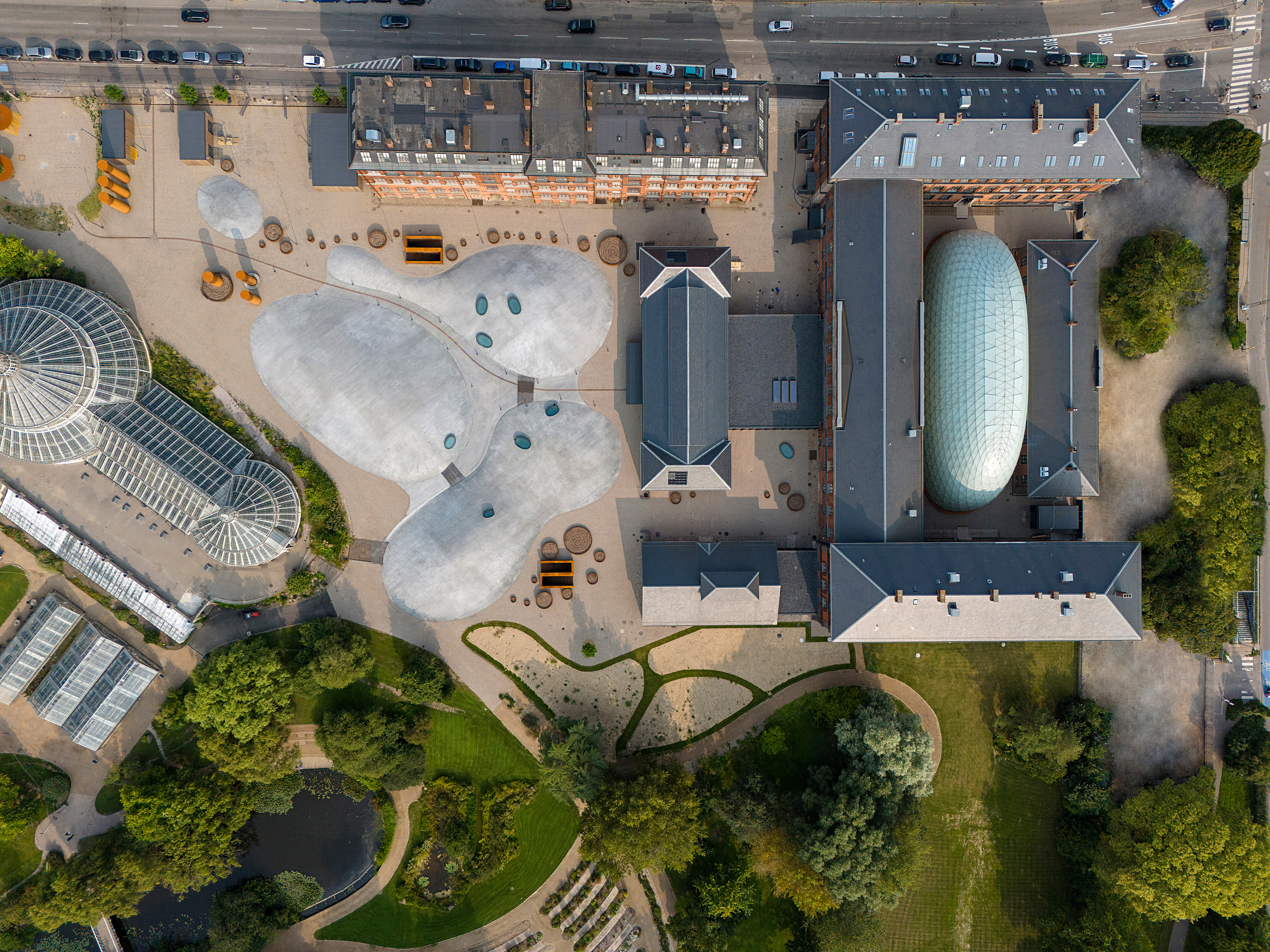
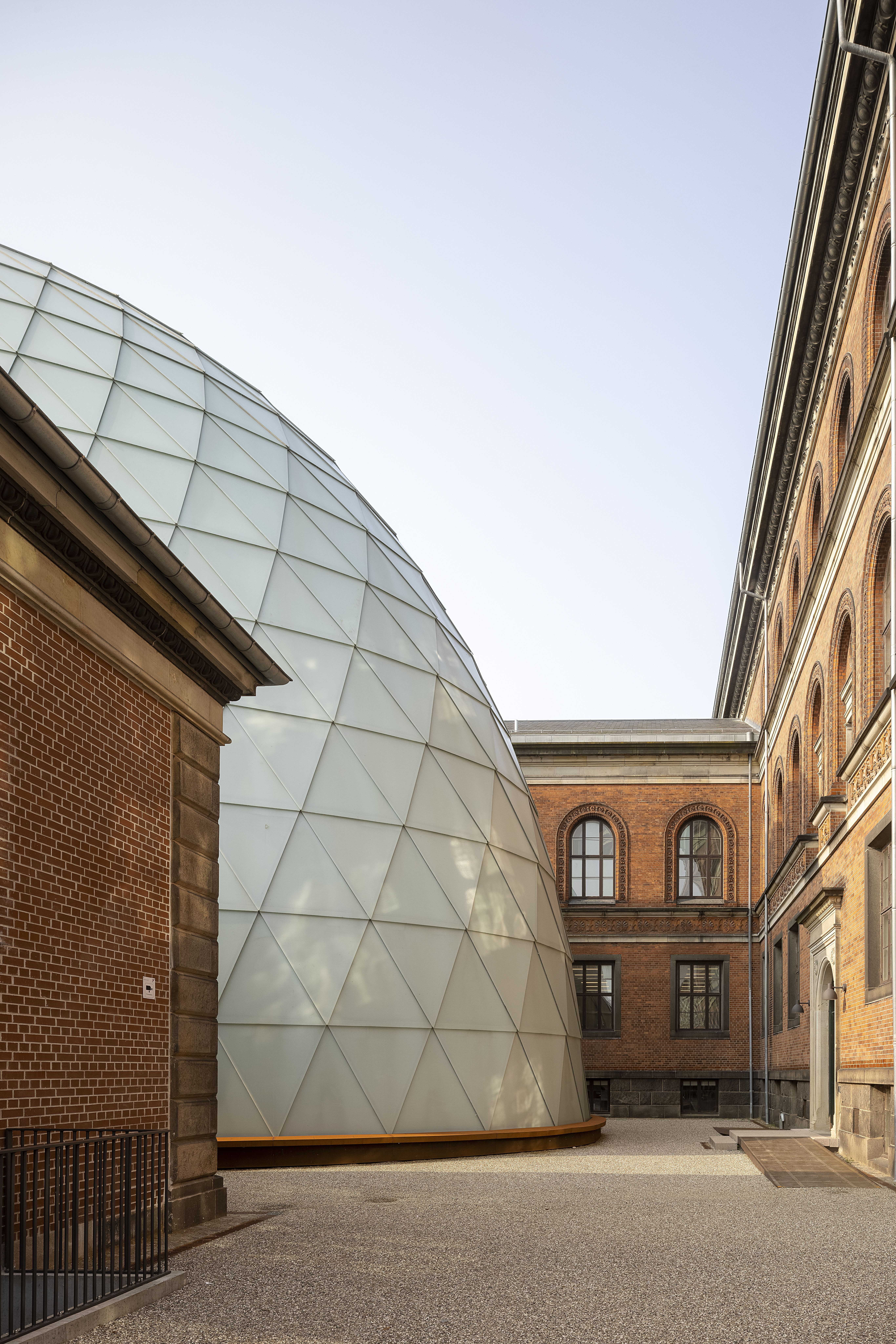
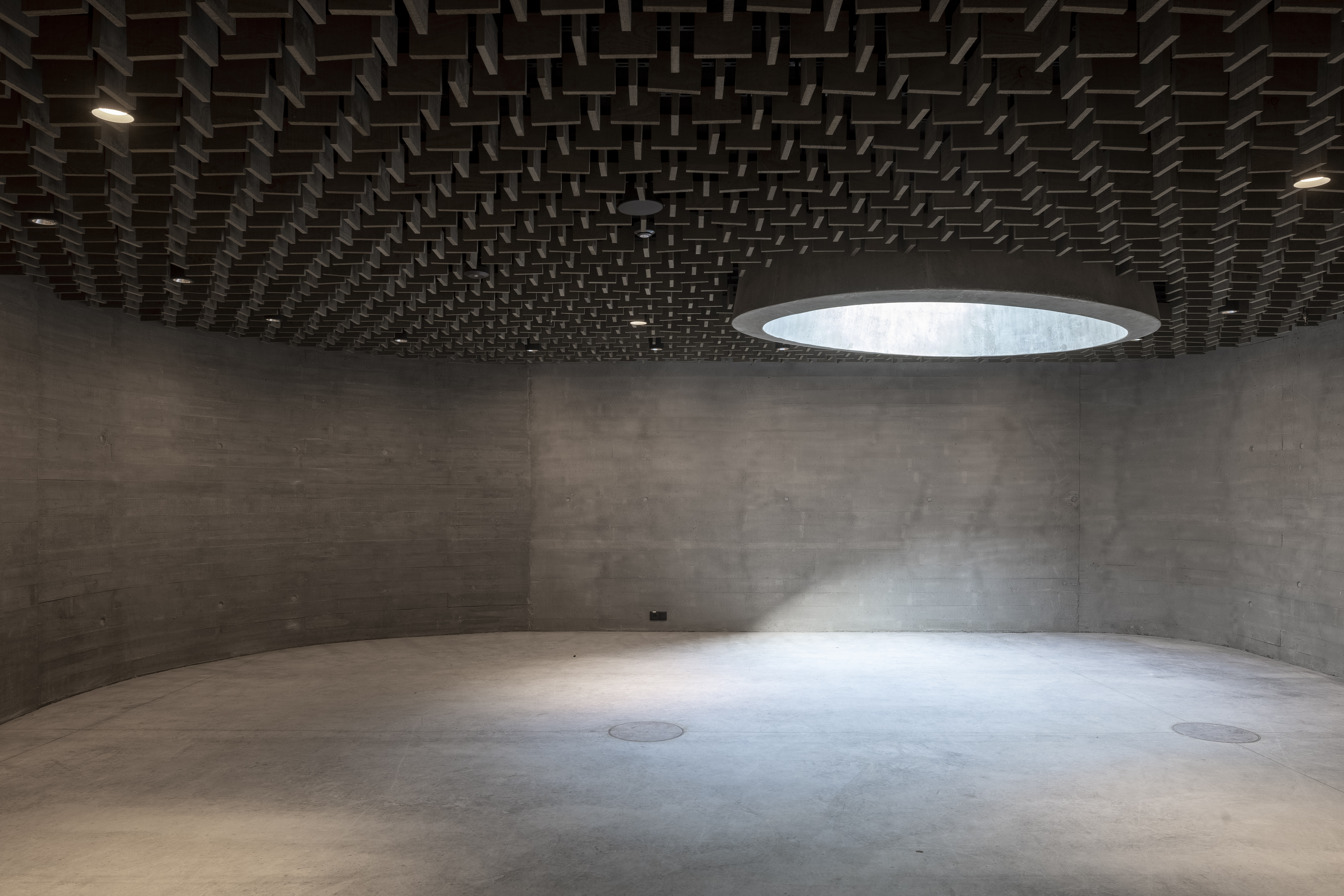
“The roof surface of the Natural History Museum of Denmark is pierced by oval skylights and light cuts, which create direct visual and spatial connections between the terrain and the underground exhibition spaces. The controlled light intakes have a dual sensory function – from above, they hint at a wondrous life underground, while from below, they function as precisely calibrated light intakes that distribute daylight in the underground spaces.” And it continues:
“The undulating geometry of the ceiling corresponds to the curved design language of the exhibition areas and acts as an active partner in the staging of daylight.”
The quotes reveal the very precise use of light as the supporting pillar in the studio’s design. In addition, that architecture is not merely a celebration of light, but an exploration and unfolding of the many potentials that daylight offers in architectural practice.
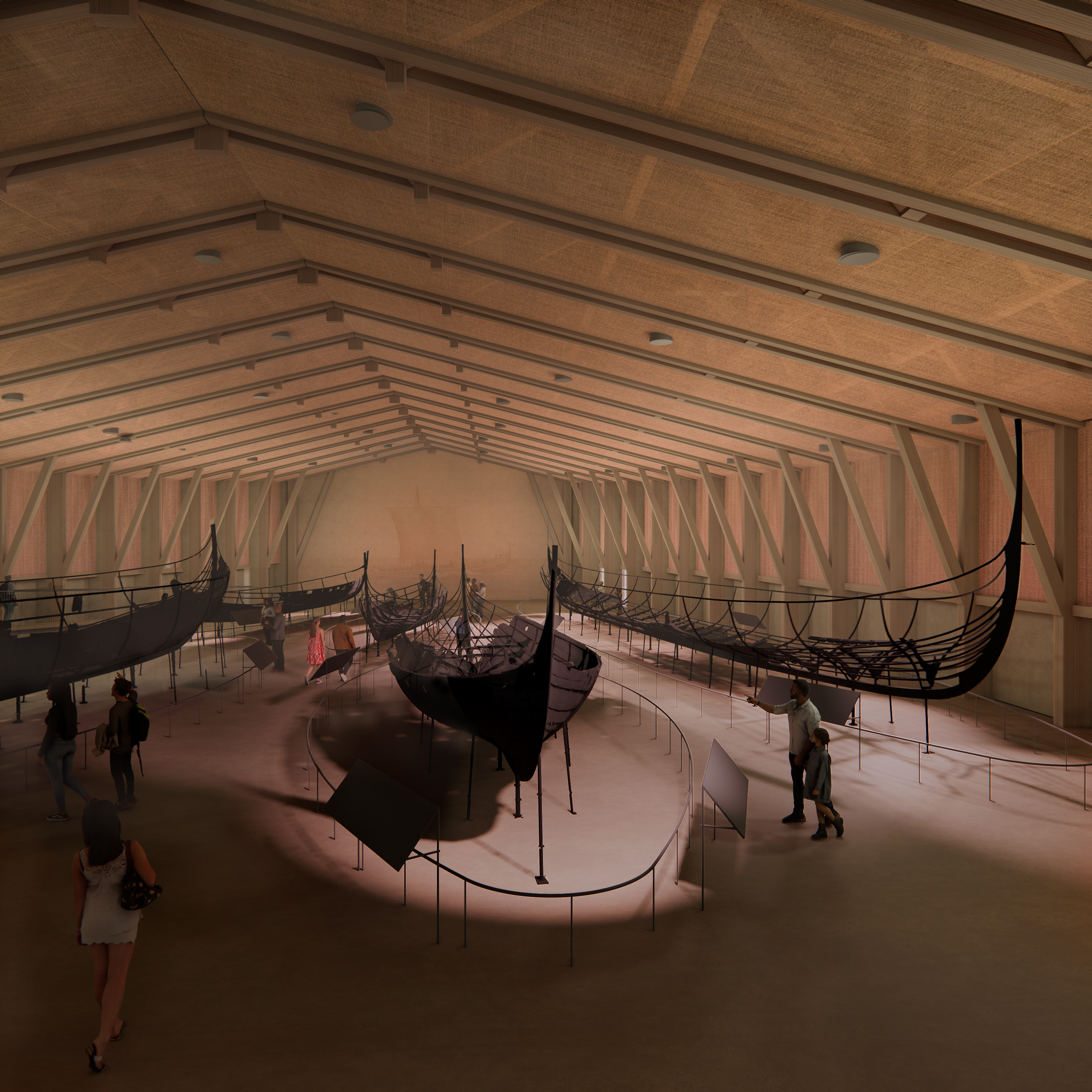
The Paradox of Protection and Revelation (Viking Ship Museum, Roskilde)
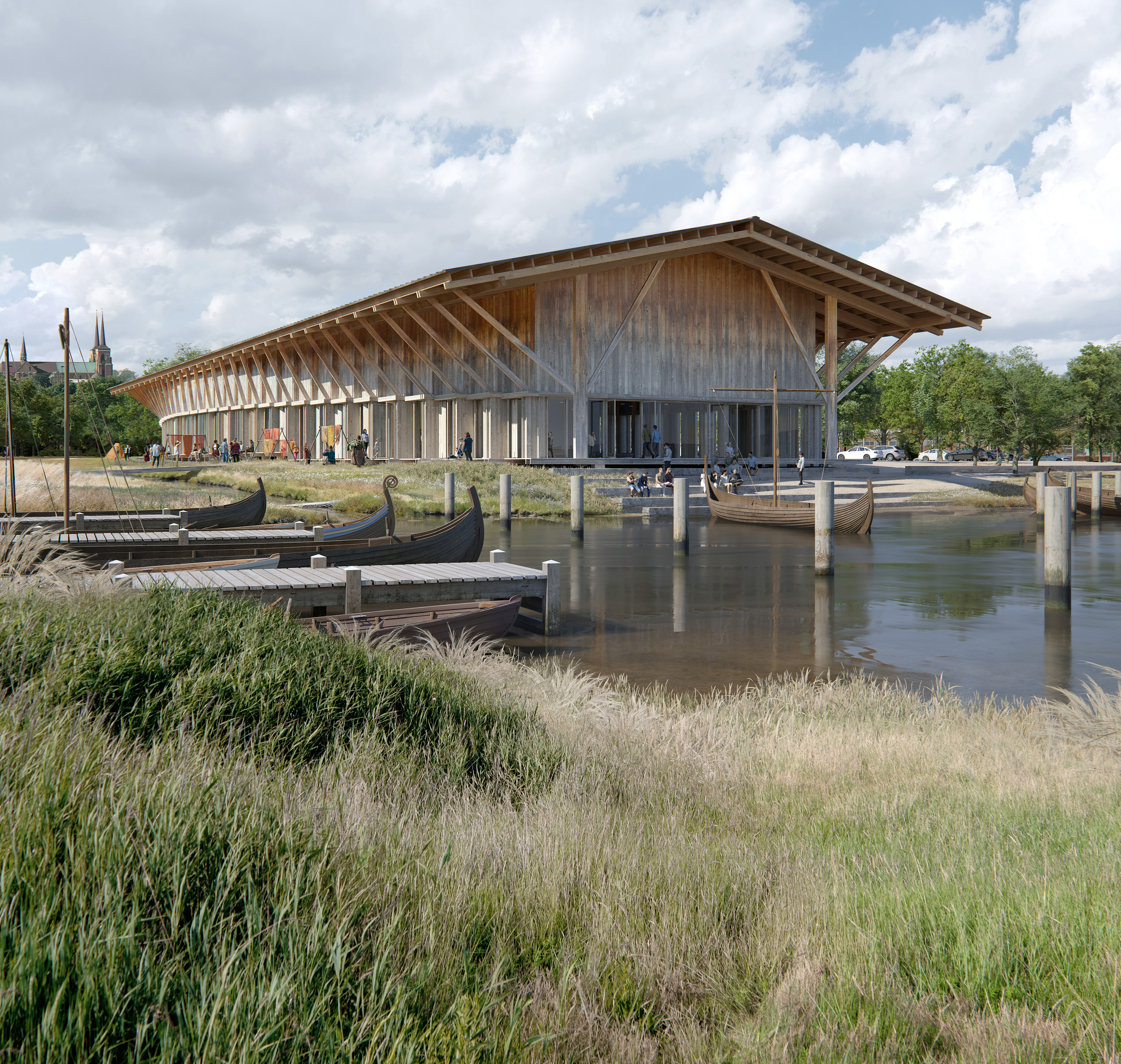
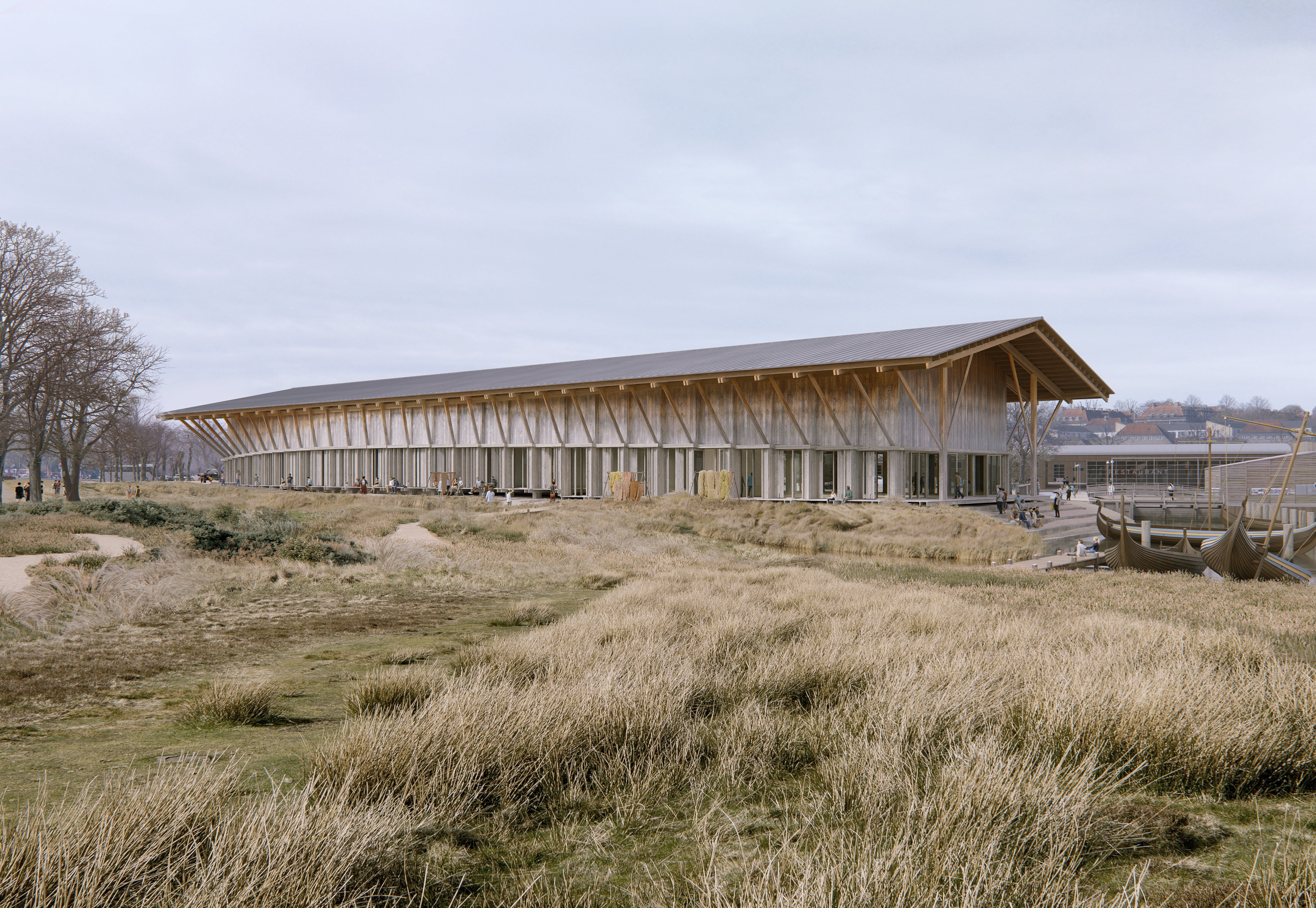
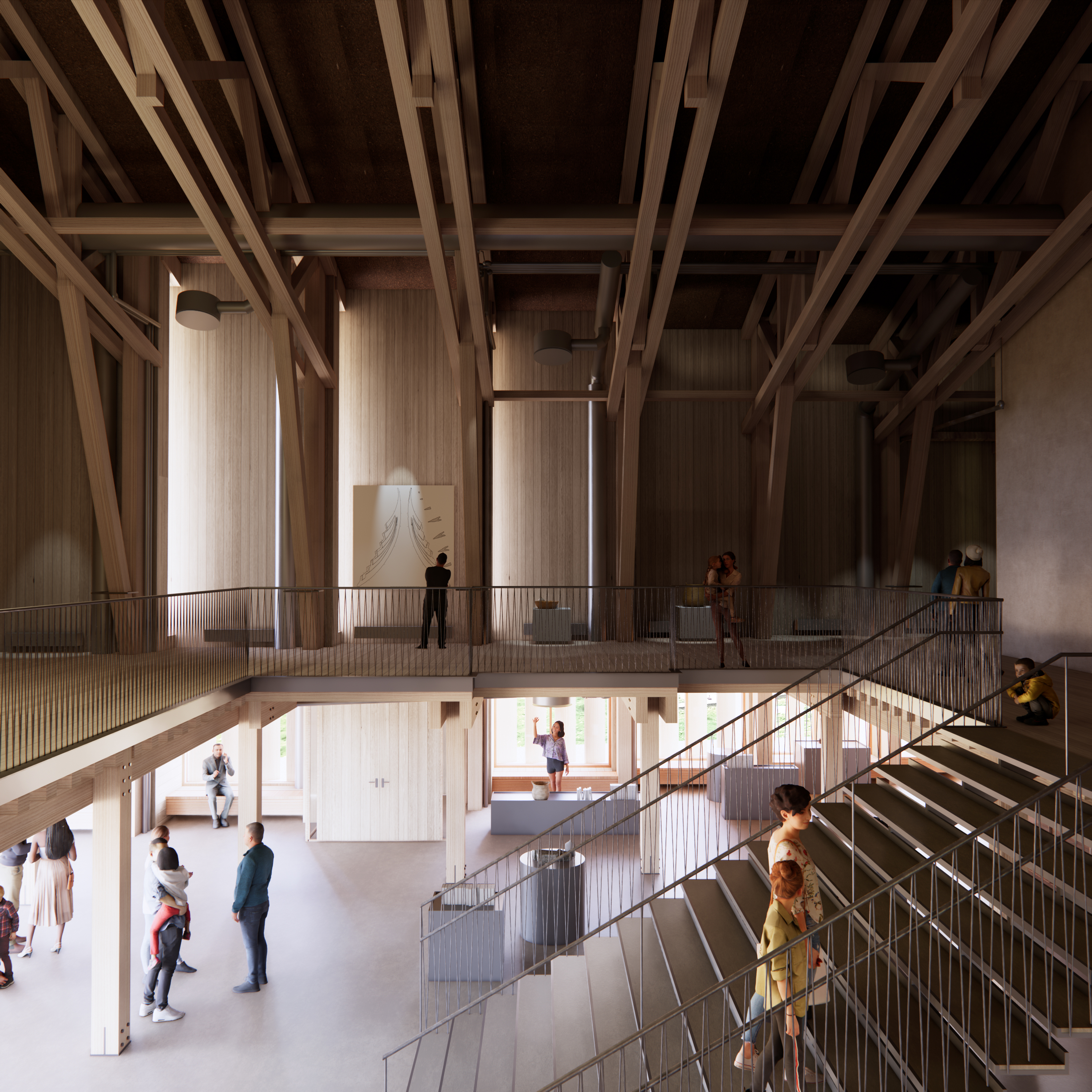
The Viking Ship Museum project, won through competition in 2023, presents a fundamental paradox that defines its entire architectural approach; a mix between celebrating the viking ships displayed in the hall whilst protecting them from the very daylight that would illuminate them. The wooden structure of the new museum responds to both the materiality of the ships themselves and the inherent logic of timber construction. Unlike the existing concrete Viking Ship Hall with its massive spans and heavy concrete columns, wood demands a “much lighter and tighter way of building… it wants to be together in a rhythm,” according to the architects. This rhythmic structure creates narrow openings at its beginning and end where minimal daylight can enter, just enough to suggest direction and connection to the fjord without endangering the ships. The treatment of light becomes an exercise in restraint and suggestion in that light enters only through “tectonic cracks” where the wooden structure narrows. Several “light themes” emerge: Wayfinding, the limited light guides visitors from the water entrance, up the stairway, to the balcony viewing platform. Artificial atmosphere: A shell within the wooden structure allows artificial lighting to simulate sunrise and atmospheric changes. Protection narrative: The roof speaks about protection, concealing the ships from outside while suggesting something precious within. The architects acknowledge this as
a project about the absence of light, yet even this absence becomes expressive – the few streams of light that enter “speak about the space finishing… the surroundings of the ships.”
Illuminating the Layers of Time, Kannikegården Parish Hall, Ribe
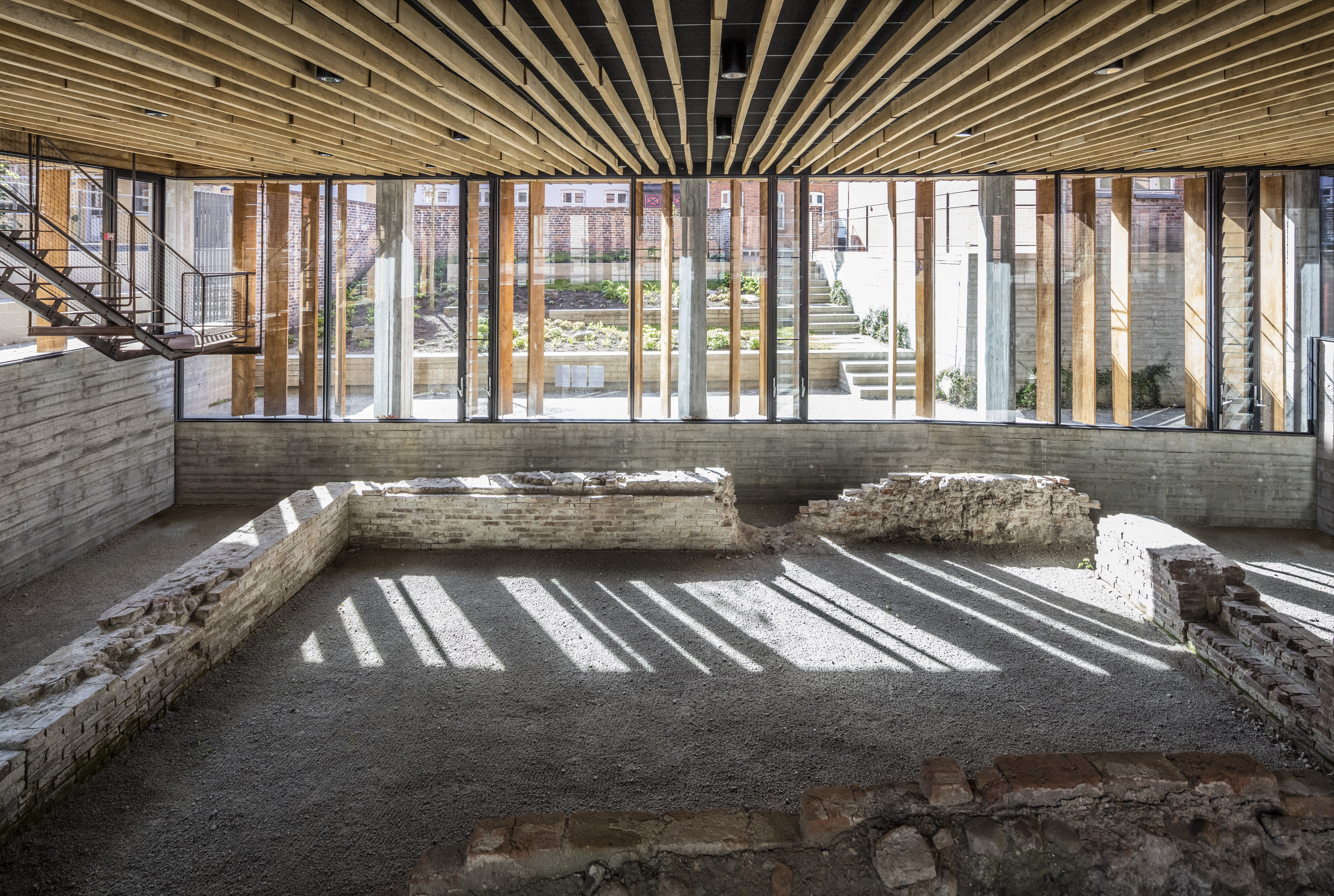
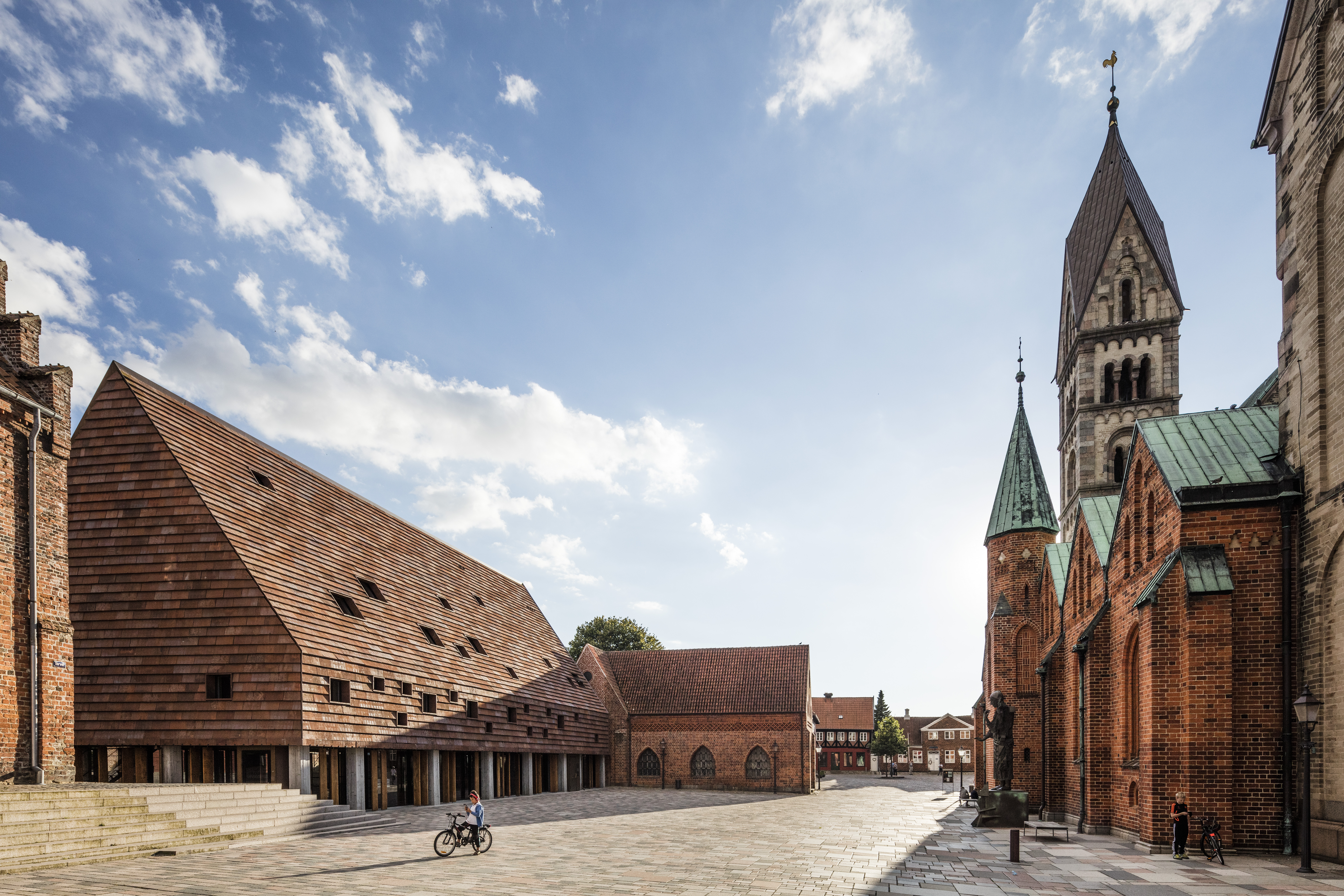
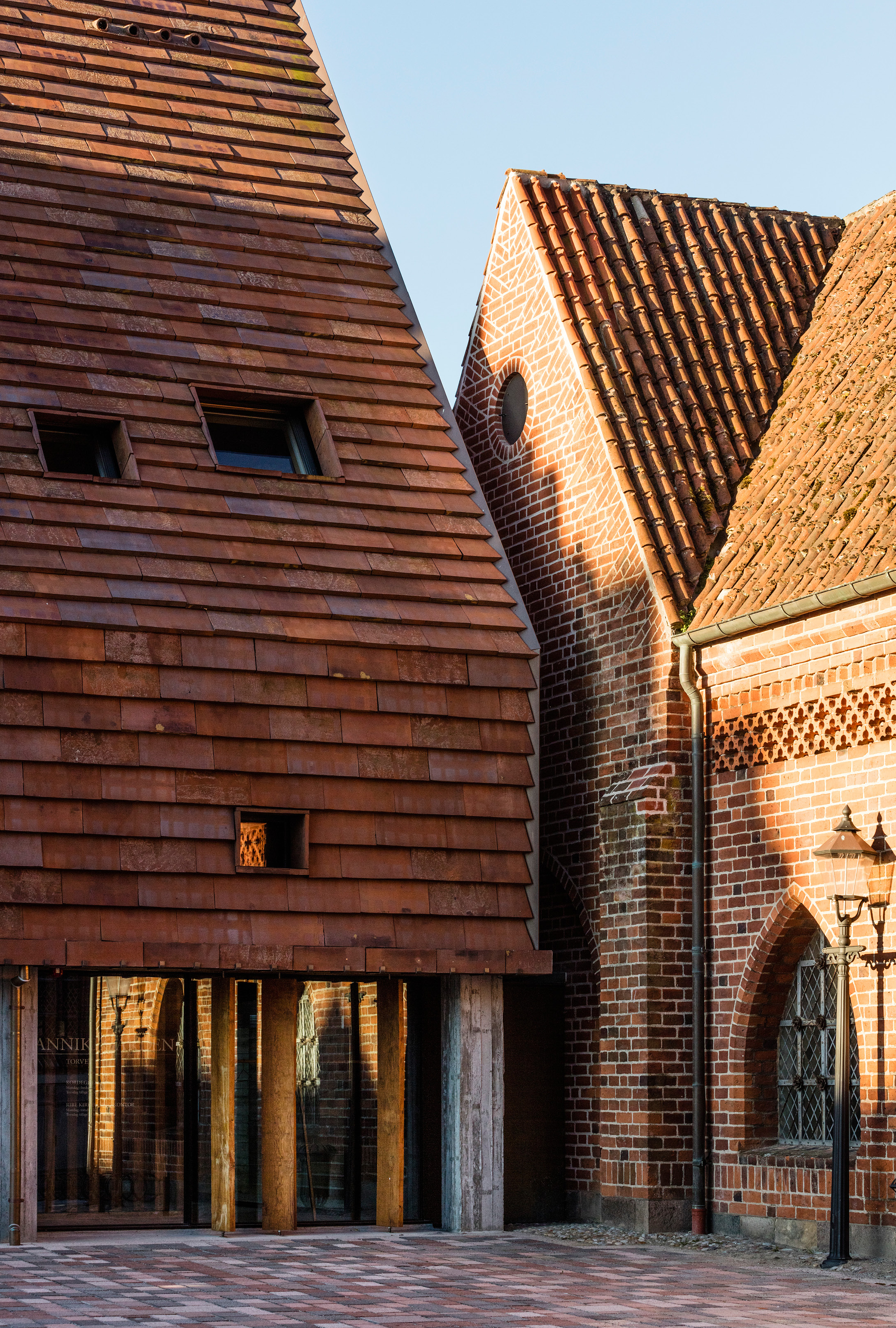
In Ribe, the challenge was to build above the ruins of one of Denmark’s oldest monasteries while respecting the homogeneous brick character of the historic centre. Located directly opposite the cathedral, the site demanded extreme sensitivity. The solution emerged from the site’s unique condition: a building that must protect ancient ruins while serving contemporary parish functions. This led to an innovative structural approach with hanging bricks suspended above the ruins, inverting brick’s traditional compressive logic to create a protective canopy that makes the archaeological remains visible and accessible. In this way, light becomes a mediator between epochs. The project establishes a dramatic contrast between two light conditions. Below, we find the illuminated ruin, completely open to daylight where it celebrates and reveals the ancient stones and creates a public archaeological garden beneath the building. Above is the controlled interior, the parish hall with offices and meeting spaces, deep window openings eliminate frames creating pure “holes” in the brick mass. Windows are clad with bricks all around, no reflections of skylight, and direct visual connections to the city creating an introverted space for contemplation and gathering.
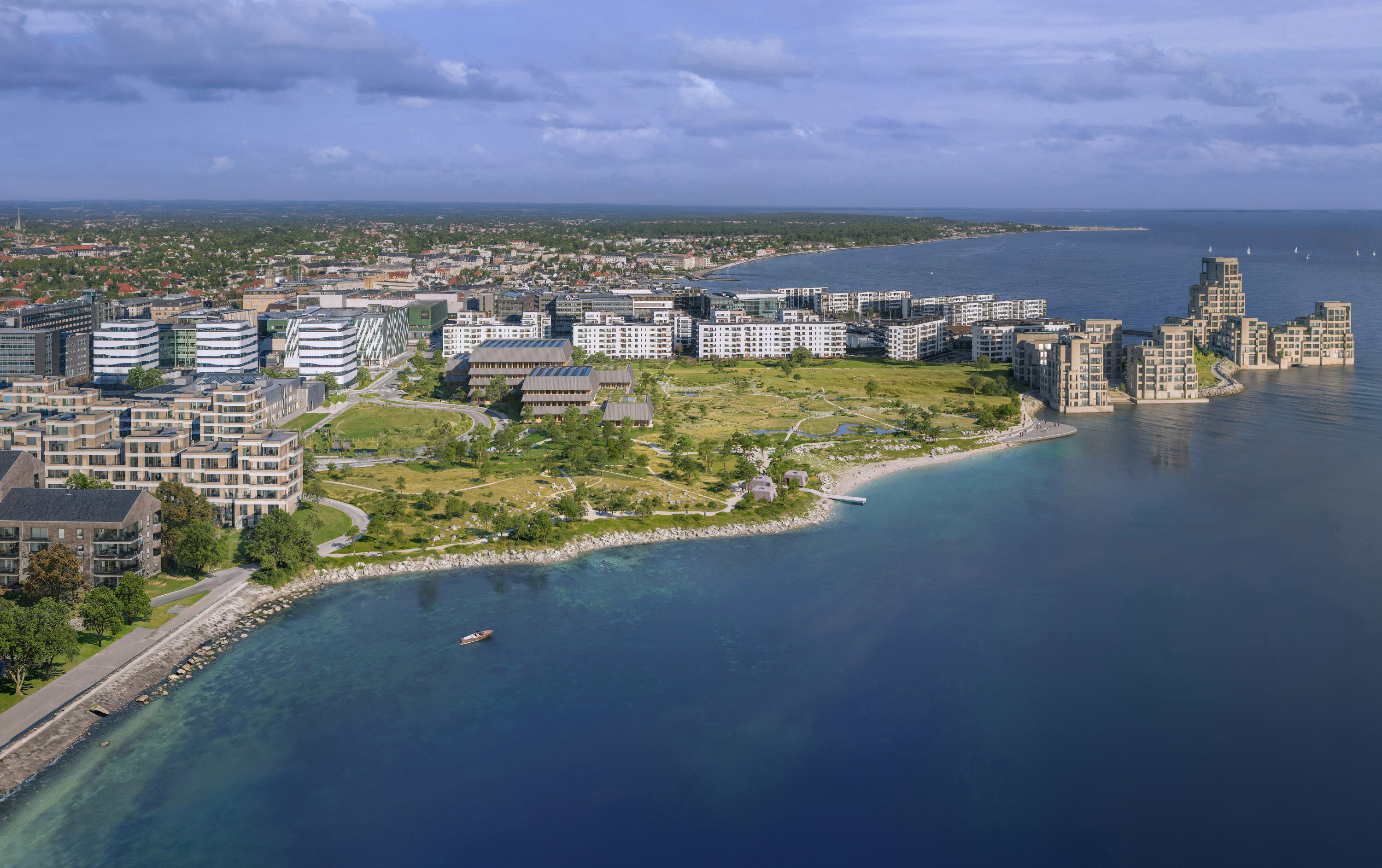
Nature as Architecture, Architecture as Nature, Novo Nordisk Foundation Headquarters
At the basis of the project in the Northern part of Copenhagen is the realisation that there is
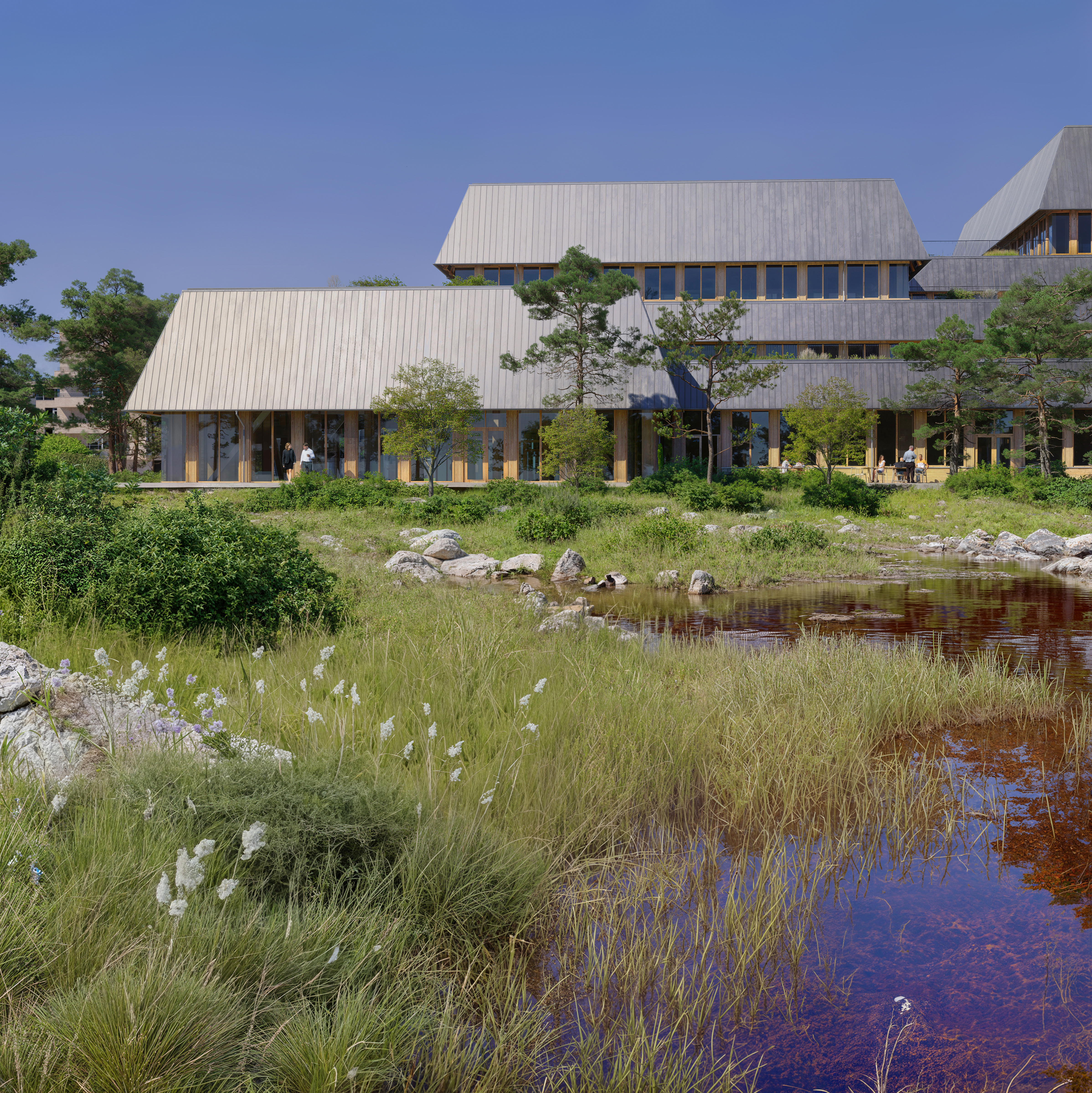
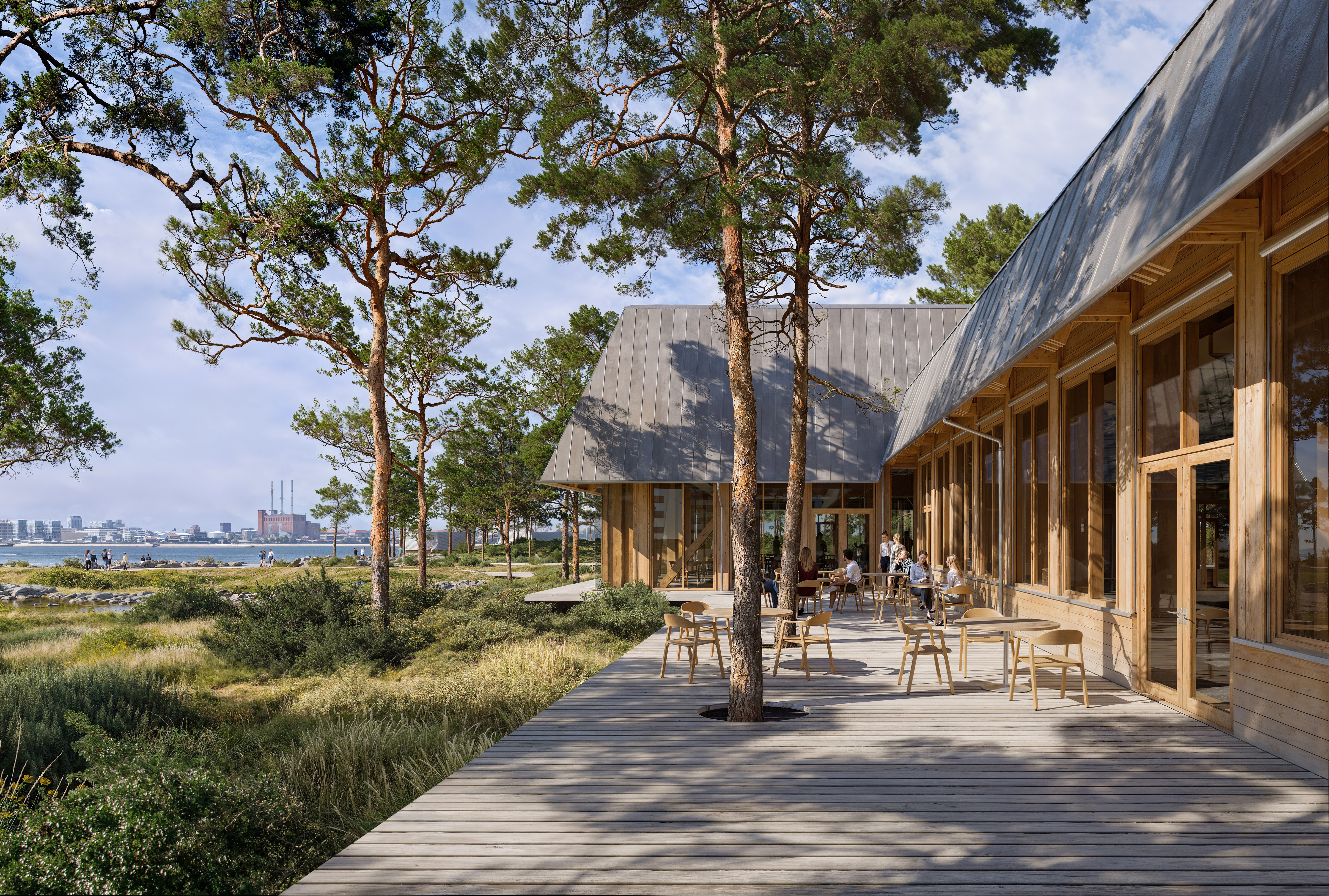
a specific responsibility since it is “the first open space when coming out of Copenhagen that you actually see the water and the skyline is opening.” It drives an ambition to create architecture that “arises from the topography of the landscape.”
The fundamental concept emerges from the fact that you experience the horizon and you experience the sea and thereby the two primary light conditions emphasising both horizontal and vertical elements. The horizontal means emphasis on the horizon line and the folded facades ensure universal access to horizon light. This combined with a vertical punctuation of the roofs, lift to reveal the sky that combines with horizontal light to suggest “a world bigger than what we see on the horizon.”
Light as Wayfinding Through Earth’s Layers, Natural History Museum in Copenhagen
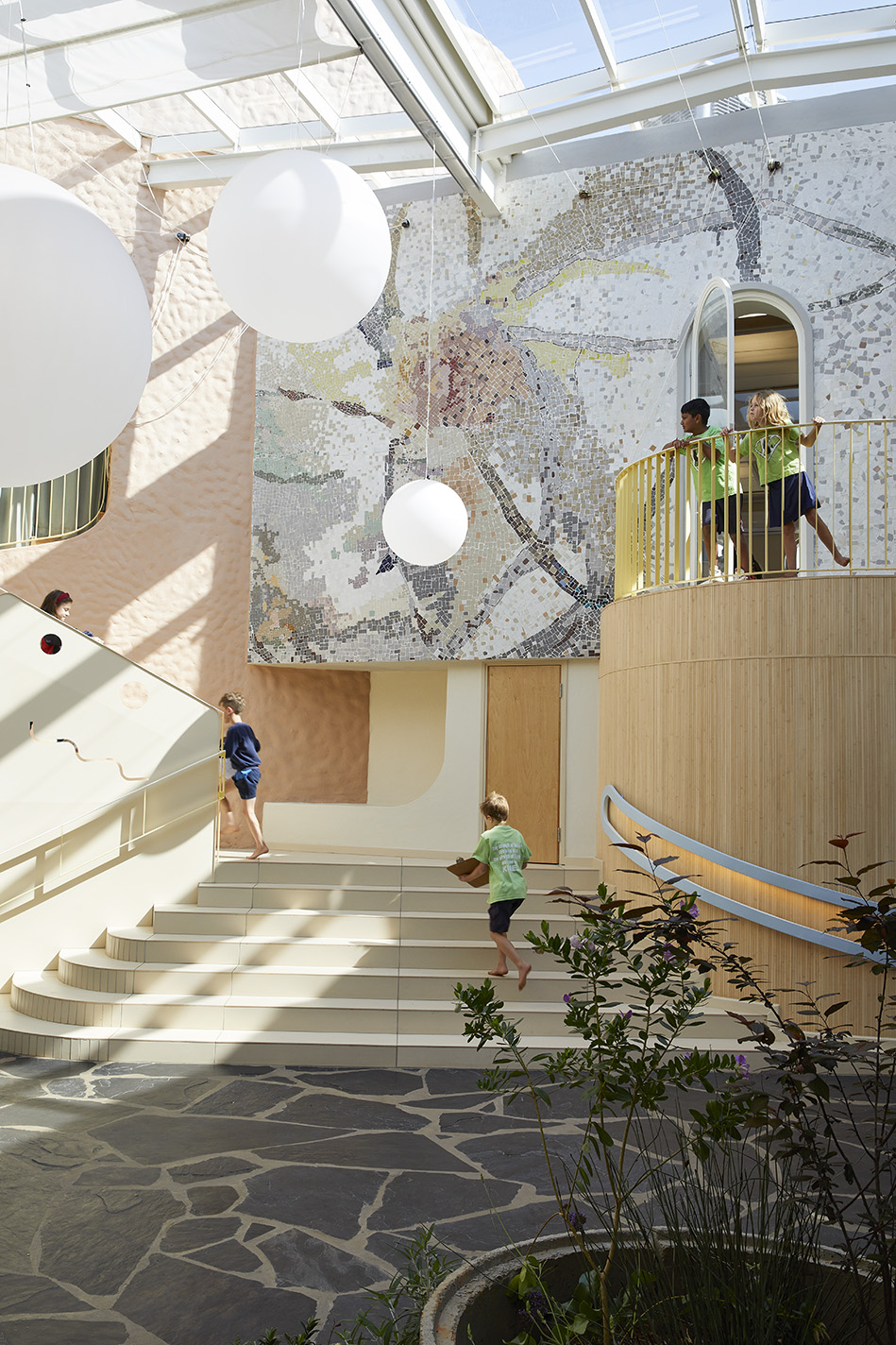
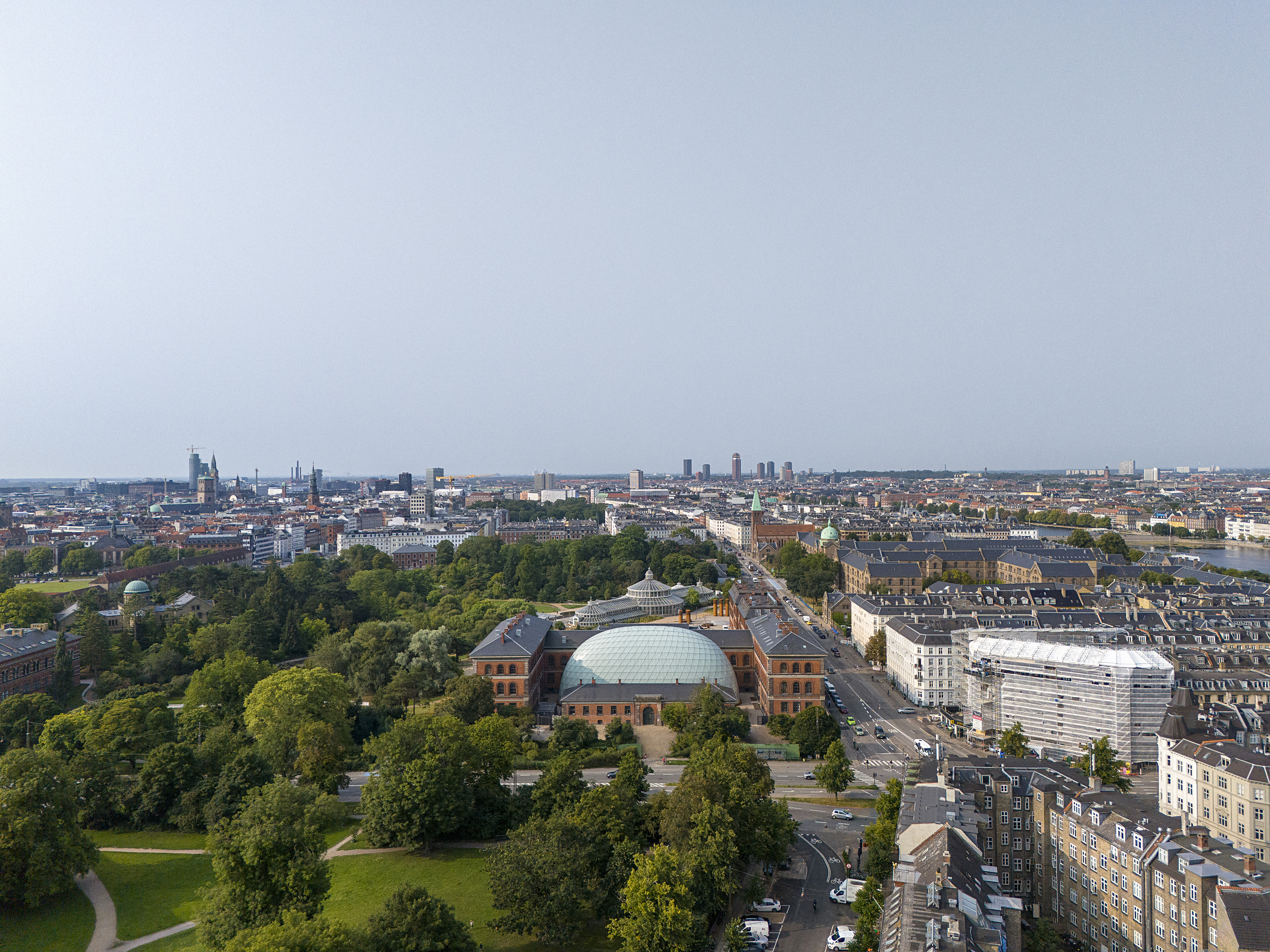
Completed in spring 2024, the architecture of the new museum demonstrates how a crucial decision, that is, making the museum’s roof into landscape can define an interesting overall light concept. This gesture ensures the botanical garden remains the primary experience while creating a new geological narrative layer. Going underground serves multiple purposes.
It protects light-sensitive collections from UV damage, preserves the primacy of the botanical garden above, creates a geological journey through earth’s layers, and allows selective use
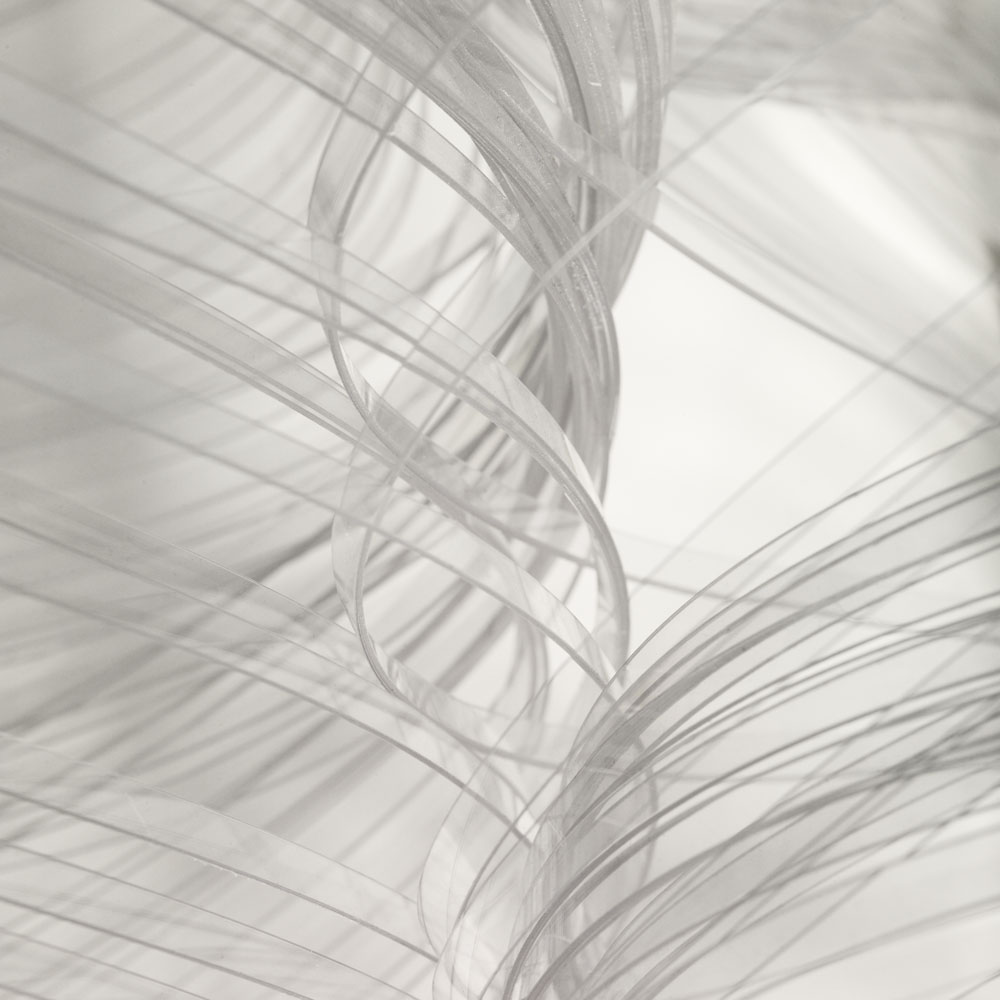
of daylight as wayfinding. The Ocean Hall recreates underwater light conditions. Darker when looking straight ahead, progressively lighter when looking up, woven steel curtains reflect
and diffuse light, and create the sensation of being submerged. The curtains serve triple duty: hiding structural steel that would interfere with displayed whale skeletons, regulating acoustics, and dimming direct sunlight. The result is a room where “you should have a sense
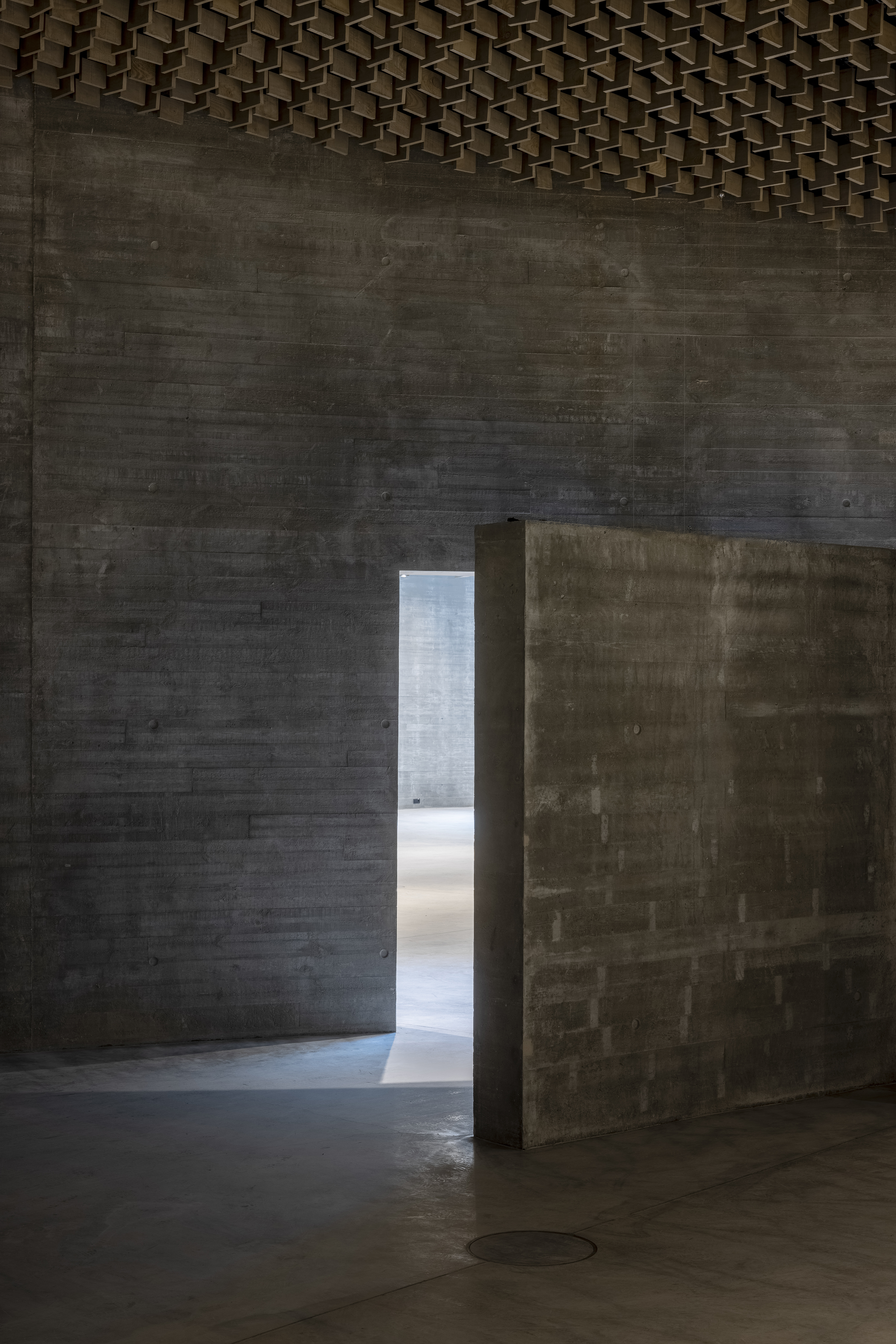
of being underwater in the ocean.” In the underground exhibition areas the museum’s lighting strategy creates a clear wayfinding system where daylit zones indicate space for circulation; curved walls with skylights connect underground to above ground, and “phenomenological” thresholds between spaces. On the other hand, the museum dark zones house the UV-sensitive collections and a complete absence of natural light in the protected exhibition spaces. Across all projects, light operates phenomenologically rather than merely functionally. The architects describe working with light’s different qualities, mentioning shade and not just light and dark. Shifting light where the dynamic qualities change with time and season, and guided light where light is used as “scenography” to determine movement.
Conversation as Method
The four projects reveal an architecture of profound humility and awareness of light as more than a resource. Whether protecting ancient ships from light while celebrating their maritime heritage, illuminating buried ruins while creating contemporary parish space, dissolving boundaries between office and landscape, or guiding visitors through geological and biological collections, each project demonstrates that the most powerful architecture often steps aside to let light, site, and nature speak. This openness to discovery, combined with technical rigour and phenomenological sensitivity, creates architecture that truly “makes sense” not through imposed logic but through deep response to place, purpose, and the poetic possibilities of light. The lesson from Lundgaard & Tranberg is clear: in an era of climate crisis and environmental urgency, architecture must rediscover humility. By listening carefully to sites, respecting nature’s hierarchy, and using light not as mere illumination but as a narrator of spatial stories, architecture can once again “give back more than it takes” creating spaces
that connect us to place, time, and the larger natural systems of which we remain, inevitably, a part. Their parting message resonates:
"We will make space for nature and be more humble."
In these four projects, that philosophy transforms from aspiration into built reality, one carefully considered stream of light at a time.
Watch the Daylight Talk with Trine Hedeager Harboe and Malene Hjortsø Kyndesen from Lundgaard & Tranberg to explore the projects further.