A School That Lets Light Teach
Category
Daylight & Architecture
Design Philosophy
Author
Melissa Gibson
Photography
Elsa Young
Iwan Baan
Date
04/06/2025
Share
Copy
Redhill Early Learning Centre by Hubo Studio, Best Use of Natural Light Winner 2025
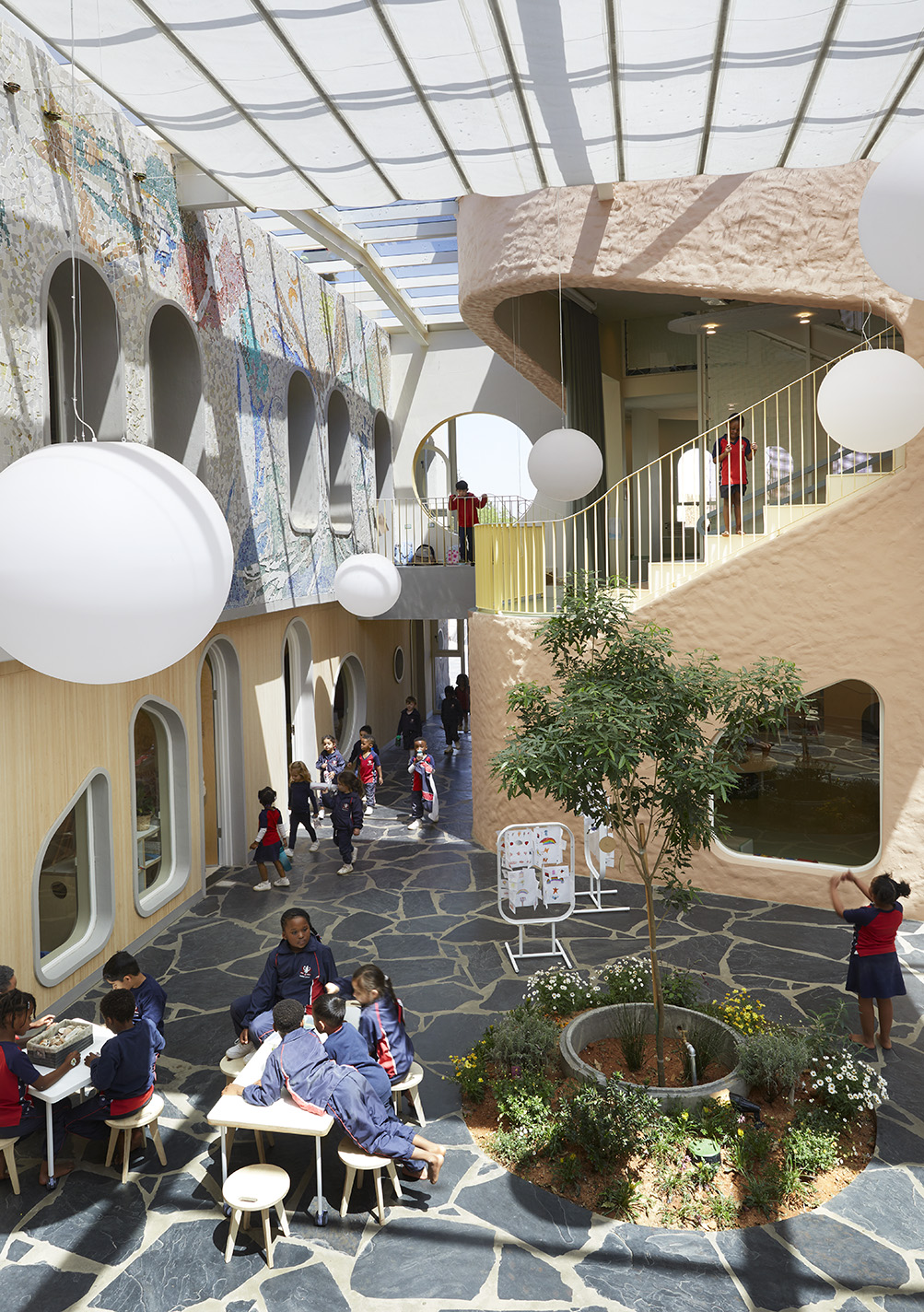
Designing optimal environments for learning demands careful attention to acoustics, spatial comfort, and, of course, light. Hubo Studio is an award‑winning architecture firm based in Norwood, Johannesburg, renowned for its work with educational and child‑centred spaces. At the World Architecture Festival 2025, their Redhill Early Learning Centre stood out among eight exceptional projects shortlisted from around the world, earning the Best Use of Natural Light Prize.
In this inspiring project, daylight is both material and method – not simply a practical necessity, but a core design driver. We spoke with Hubo Studio’s, Asher Marcus, Founder and Lead Architect, to explore the project’s design process and the deliberate use of light to shape an environment where the building itself becomes a tool for teaching and learning. Rooted in the Reggio Emilia philosophy’s respect for children as active researchers and sharpened by the realities of a city-wide controlled reduction of electricity supply, the project treats natural light not as an afterthought, but as a design brief in its own right.
D/A: Looking back to the very start of the project, when did light first emerge as a driving force rather than simply a technical consideration?
Light has always been fundamental to how we think about learning. Along with acoustics, it’s often described as one of the “basics” of education, but we don’t really like that word, because it suggests something you solve once and then move on from. For us, these elements need to be revisited and reframed constantly.
We’ve always pushed natural light as the main ingredient in a space. You rarely feel dysregulated when you’re outdoors and connected to nature, and learning depends so much on feeling safe, calm, and contained. We find light is the ultimate container in that it wraps a space and allows people, especially children, to be open to learning.
Even before we focused primarily on educational spaces, warmth and light were central to our work. And in South Africa, with such a generous climate, there’s a real privilege in being able to bring the outdoors in. Every project starts with understanding the context: where we are, what already exists, and how we can engage meaningfully with that environment.
D/A: Hubo Studio works primarily with spaces for learning. How does daylight shape the way you design educational environments?
There’s a deep human desire to connect with nature, and children are especially tuned into that. Traditional schools often try to block this connection, assuming nature is a distraction. We see the opposite: nature enables learning. When children can engage and work with the natural world, they can tap into unbelievable layers of thinking and ways of being. So, while light and acoustics are often treated as basic checkboxes, we want to push them further. Natural light isn’t just something to “get right”; it plays a fundamental role in learning and education.
D/A: Designing during periods of load‑shedding reframed daylight as essential rather than optional. How did that reality influence your design decisions?
At the time we were designing, load‑shedding was at its peak. Schools could be without power for six hours during a learning day. Suddenly, light wasn’t just about atmosphere or wellbeing, but it was a functional necessity. The building had to work without electricity. Fortunately, South Africa has abundant sunlight, so we designed with the assumption that the school should function fully throughout the day without artificial lighting. Natural light shifted from being a “nice to have” to a core element that would allow the building to function.
D/A: How did the project context influence the very early design stages?
When we became involved, the site had already been prepared for a fairly conventional school block under a previous architect. At the same time, I was only beginning to immerse myself in educational architecture. When the head of school asked whether we could make the interiors more aligned with the Reggio Emilia philosophy, my first response was very honest: What is Reggio Emilia? That willingness to admit not knowing was actually crucial. It opened the door to learning. Three days later, I was on a flight to Reggio Emilia in Italy. It was there that I truly began to understand light in all its nuances and how it could be used as a material for learning.
D/A: What did you discover about light through the Reggio Emilia approach?
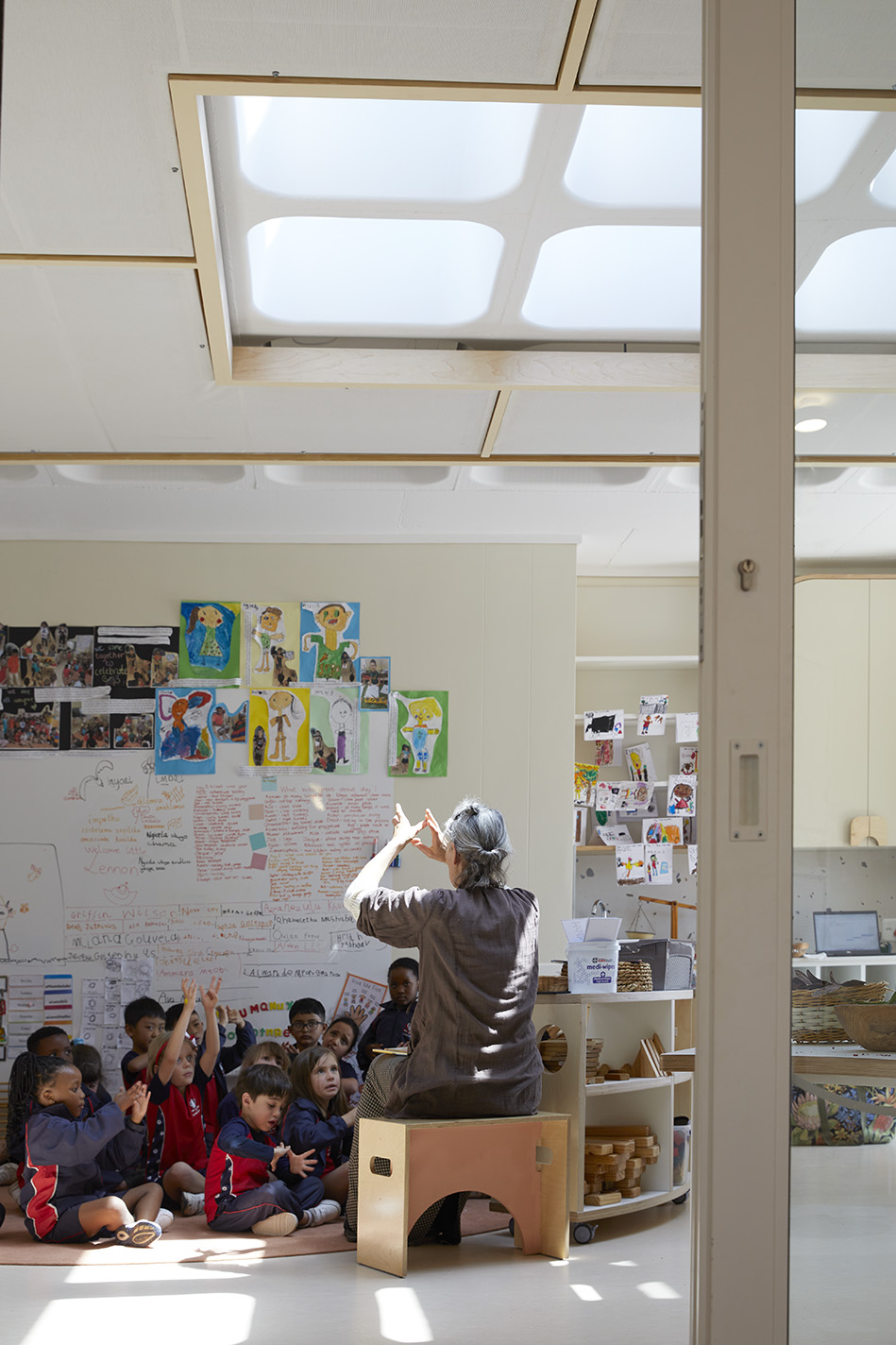
One of the most striking shifts was how colour is taught. Instead of labelling colours, red, for example, children are sent out to find colour in the world. They then examine it under light, magnify it, project it, and watch how it changes over time. Doing so reveals that colour isn’t static; the perspective of light reframes everything. This extends to shadow play, projection, reflection, and movement. Light introduces time and changes into learning. It becomes playful, immersive, and sensorial.
Being wrapped in light is seen as a privilege, something that helps children feel regulated and ready to be their best selves. For me, it became clear that natural light in Reggio Emilia isn’t decorative; it’s intentional, functional, and deeply pedagogical.
D/A: Collaboration is a key principle of Reggio Emilia. How did that influence your design approach?
Reggio Emilia celebrates change — of seasons, of light, of atmosphere. Buildings aren’t fixed objects; they evolve throughout the day. Morning and afternoon light completely alter both interior and exterior spaces. Coming back from Reggio Emilia fundamentally changed how I understood collaboration. A building can never compete with nature, but it can engage with it as an active part of learning. Authentic collaboration between architects, educators, children, and the environment is essential. Co‑creation requires comfort with the unknown. You can’t truly co‑create if you already know what the outcome will be. That openness became central to the project.
“Natural light isn’t decorative; it’s intentional, functional, and deeply pedagogical.”
D/A: Was there a moment when the children’s input shifted the project’s direction?
Yes, very clearly. During an early workshop, we brought the children onto the site, which had been completely flattened. They had watched mature oak trees being cut down, and there was real emotional weight attached to that loss.
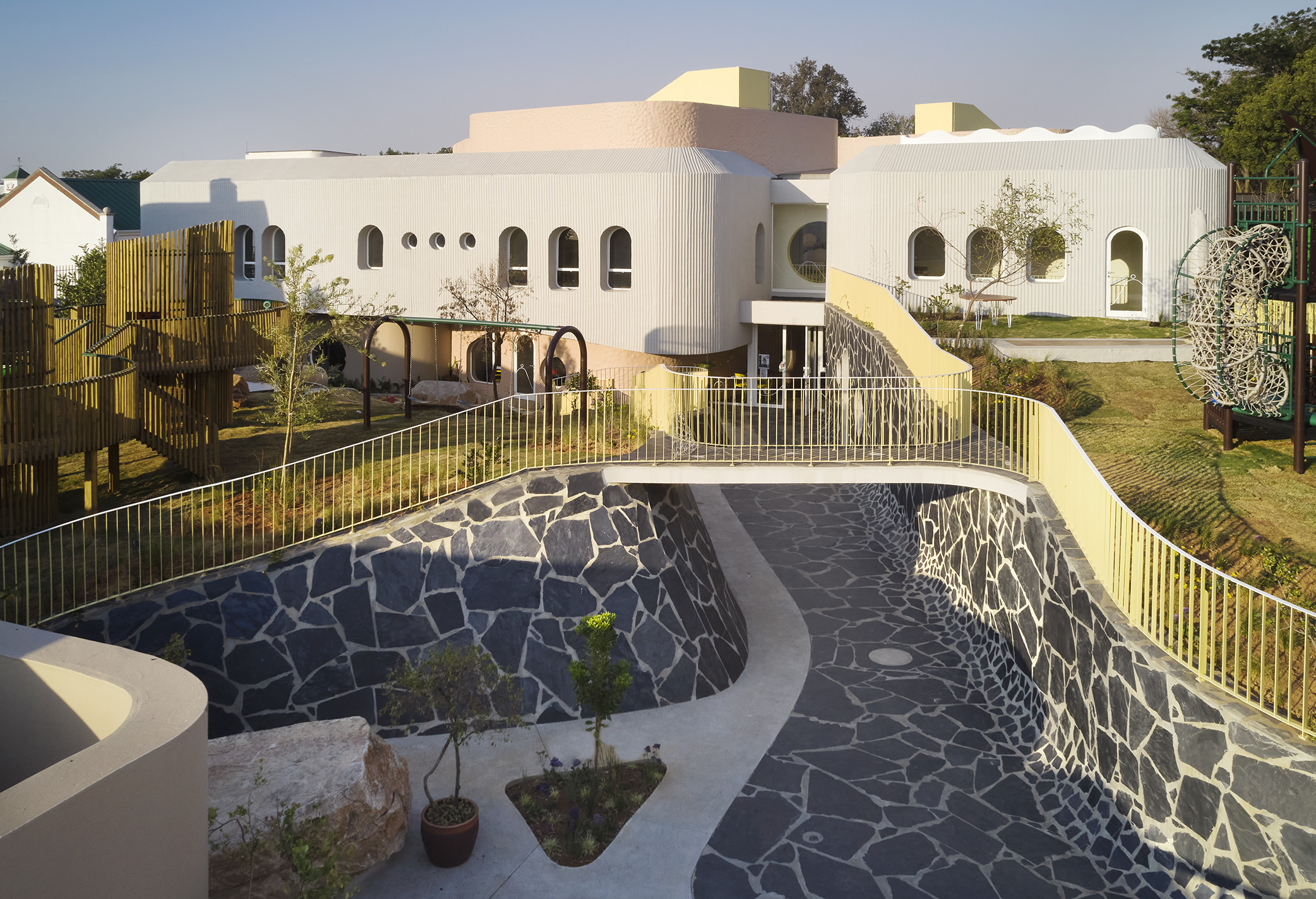
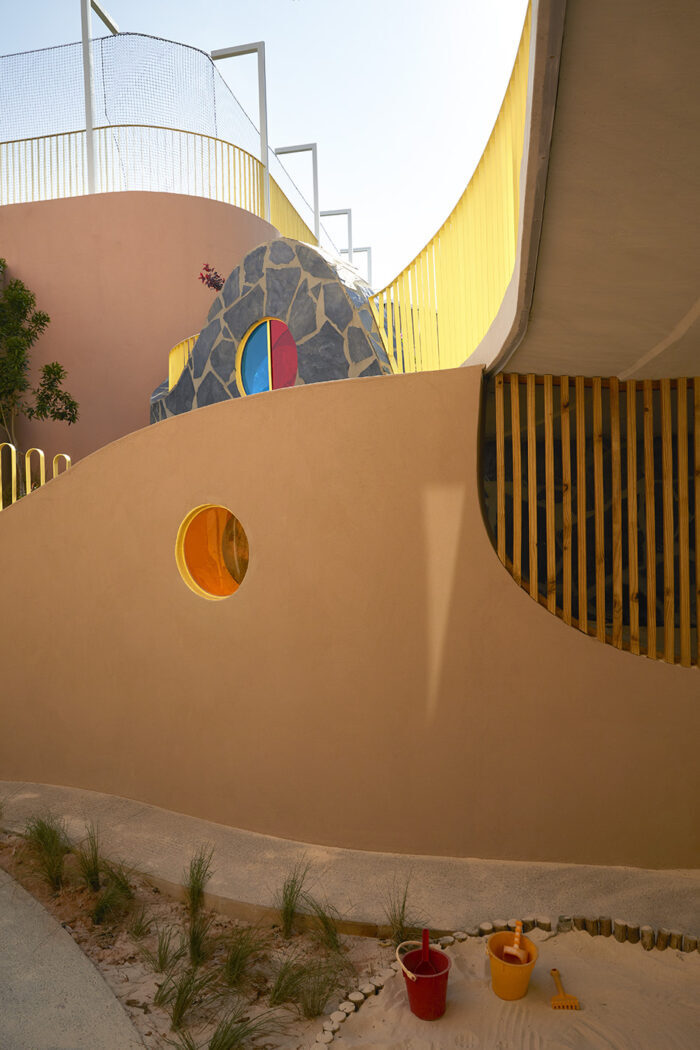
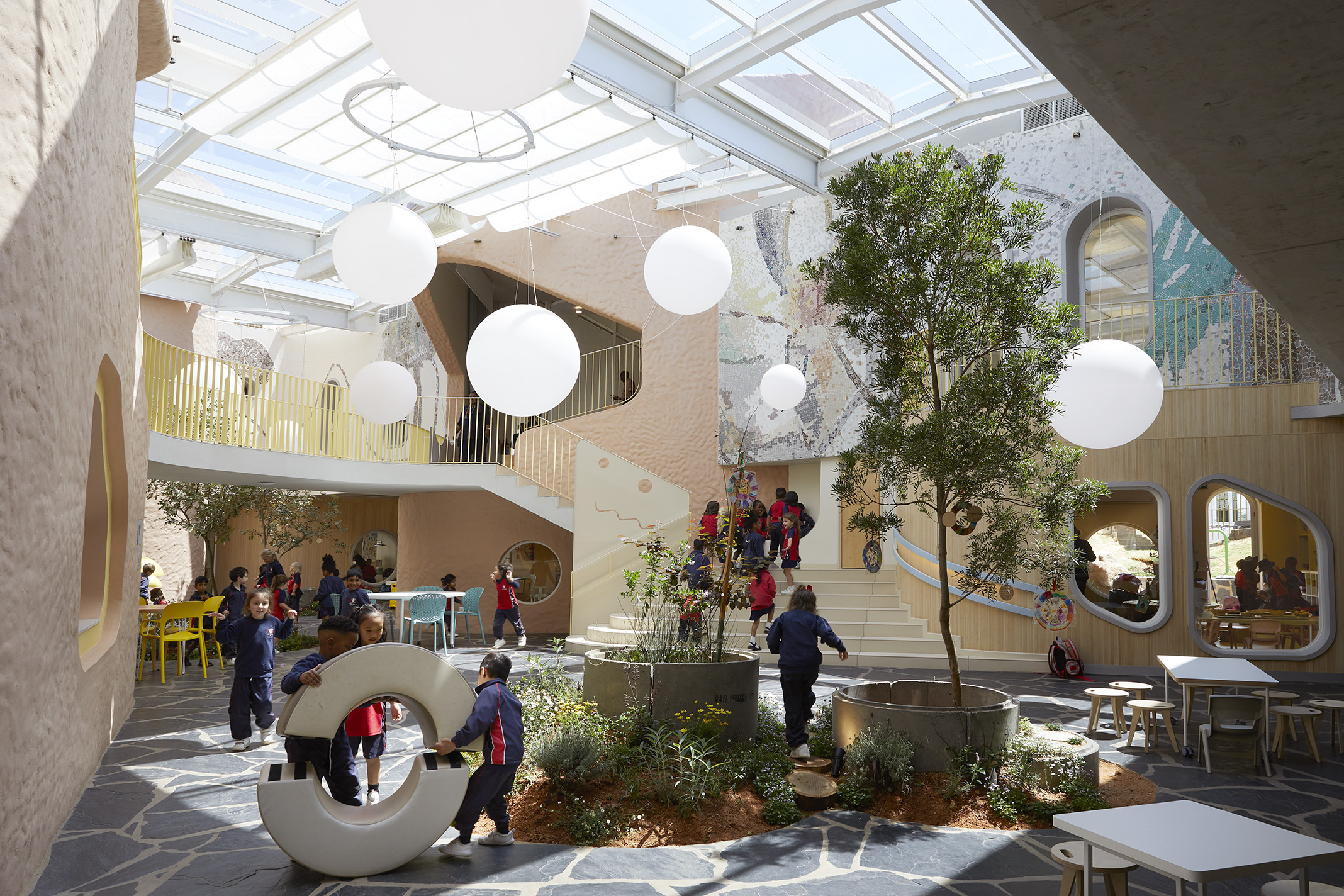
We started talking about the “giving tree” and whether it could be recreated. One child said, You can’t recreate it — but nature can hug you. For me, that was the biggest takeaway from the workshops with the children and the teachers. It was about feelings and conversation around ‘feeling light.’ It led us to sink the building into the site and use the excavated soil to create gentle, undulating hills around it. These landforms invite play and create a feeling of being held by nature.
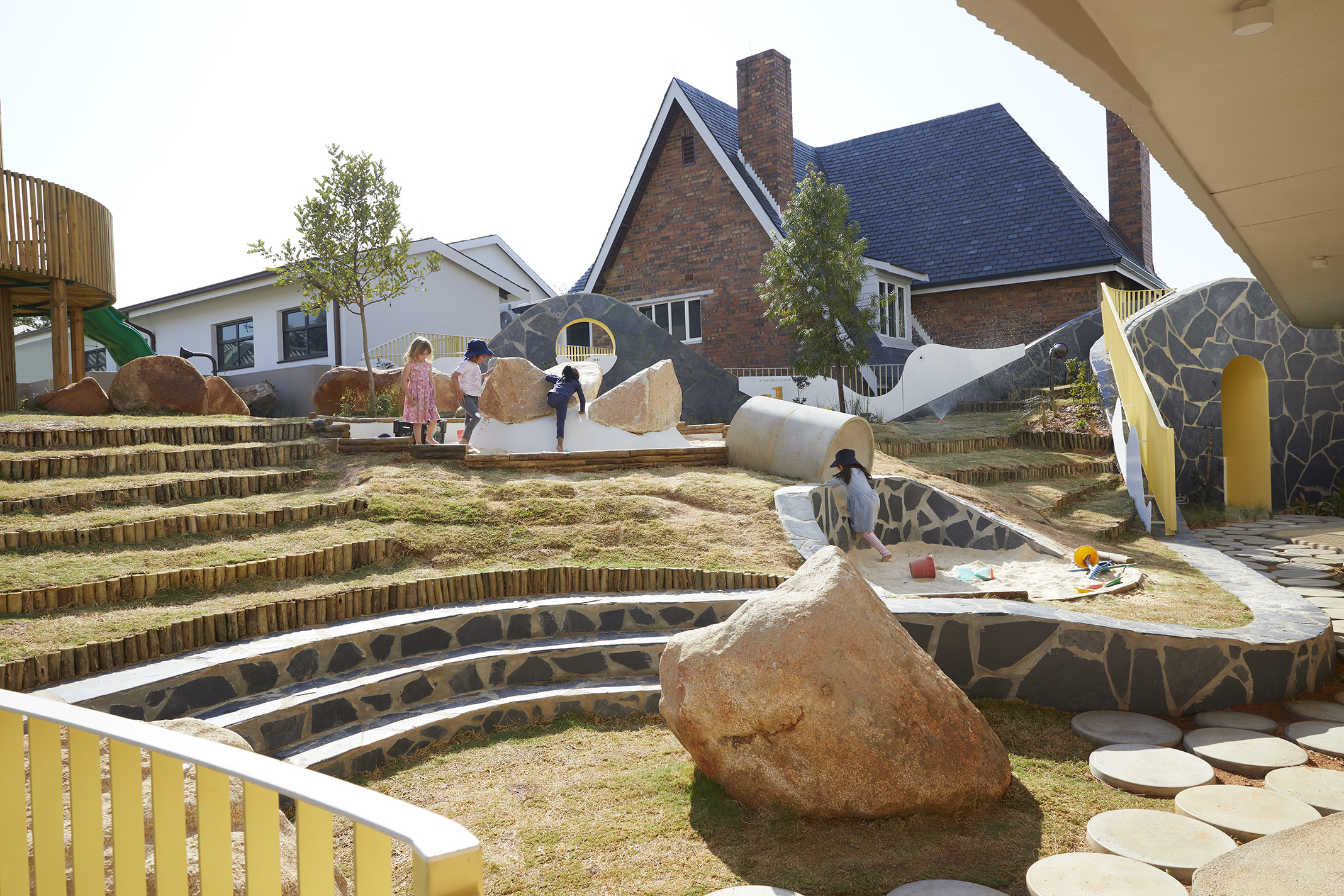
D/A: What were the consequences of sinking the building, and how did that constraint expand the project’s potential?
Sinking the building solved multiple challenges at once. It reduced the height, prevented blocking northern light to neighbouring properties, and avoided what could have become a serious dispute. It also reinforced our belief that building and landscape should be one continuous experience with no start and no finish. So it keeps going and looping around. We love the idea of the loop when we deal with educational spaces. It did create the rooftop which gave one another layer to the building that we hadn’t originally anticipated. The roof gardens became more meaningful, views opened across the city, and the rooftop evolved into a fully accessible learning space.
Because the project remained process‑driven throughout construction, we continued collaborating with contractors and play‑equipment designers. That flexibility didn’t inflate costs and, in fact, the project ultimately came under budget.
D/A: The jury highlighted the building’s gradients of light and shadow. What design decisions allowed those gradients to emerge?
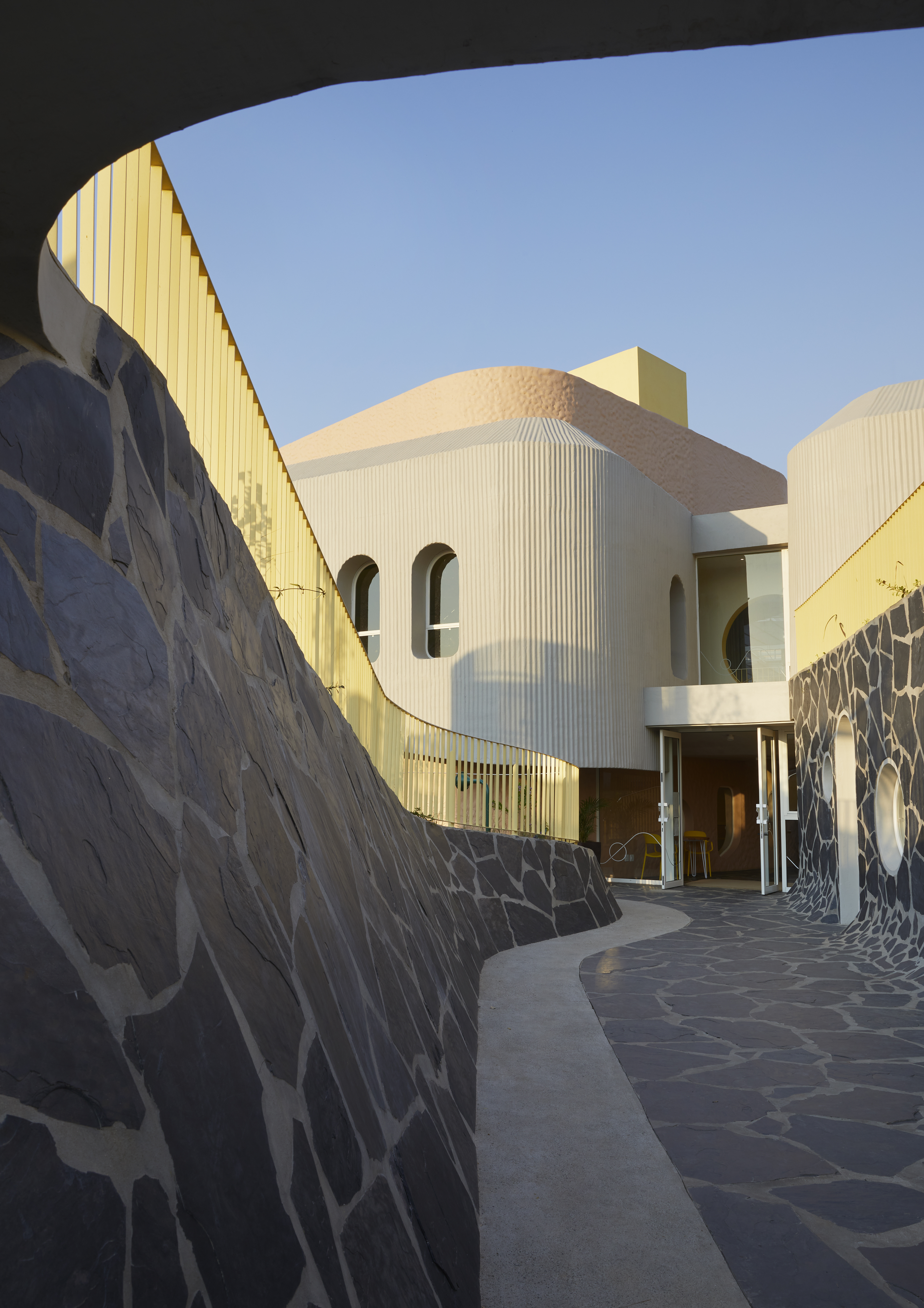
The facade is the first thing that comes to mind. We initially considered using a zinc material, but it felt inappropriate – both materially and contextually. The children loved playing with corrugated card, and we were fascinated by the way it created shadow and movement.
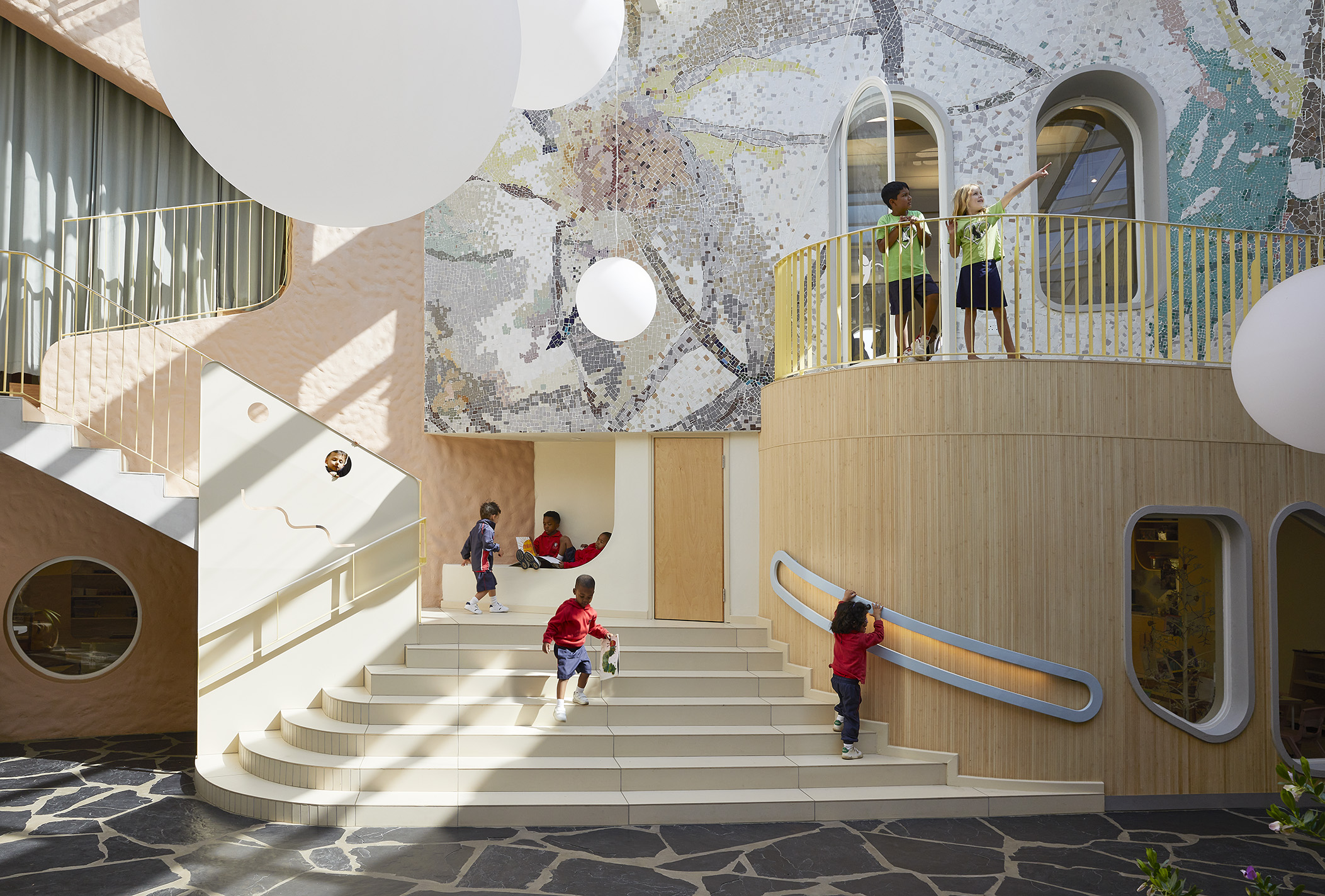
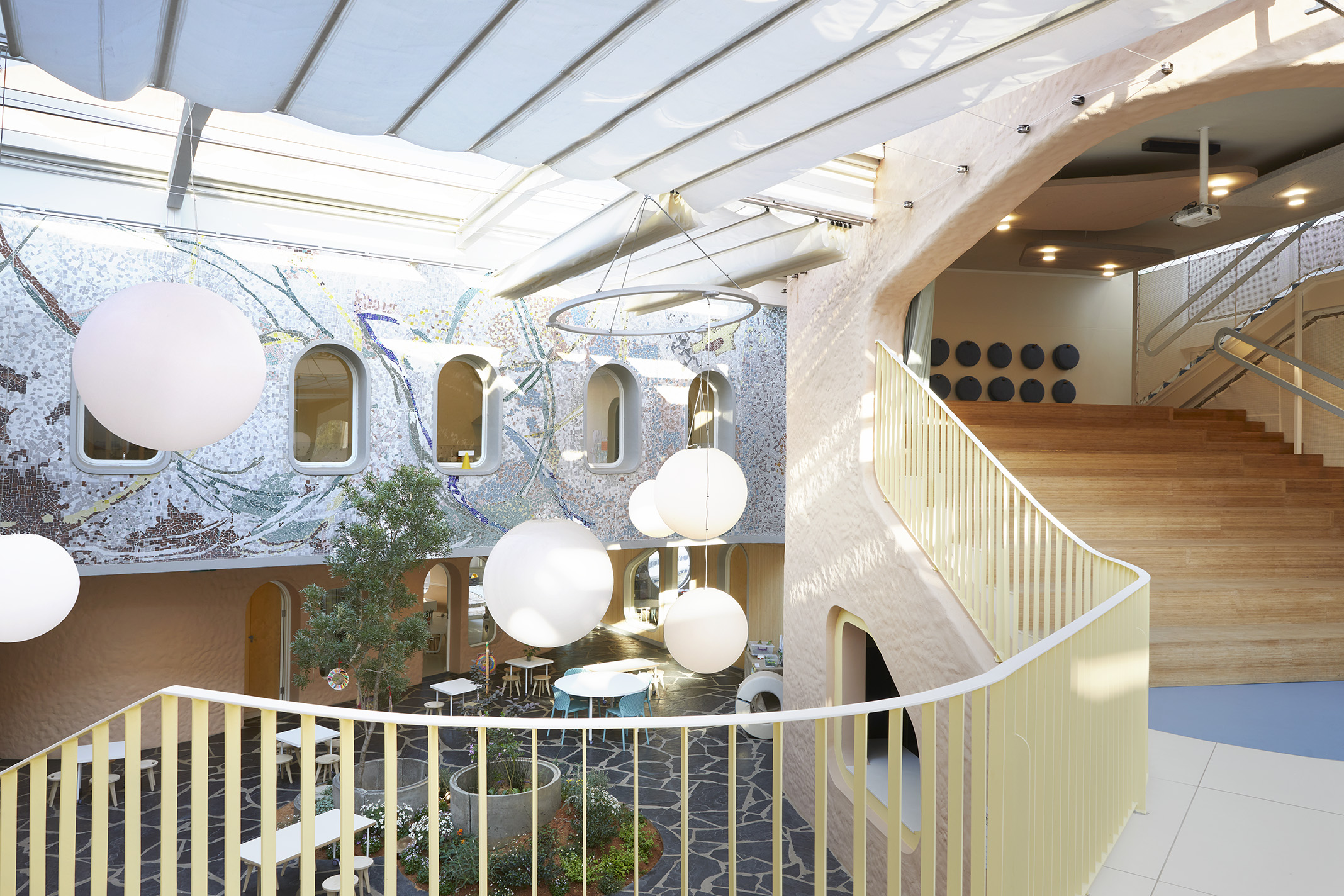
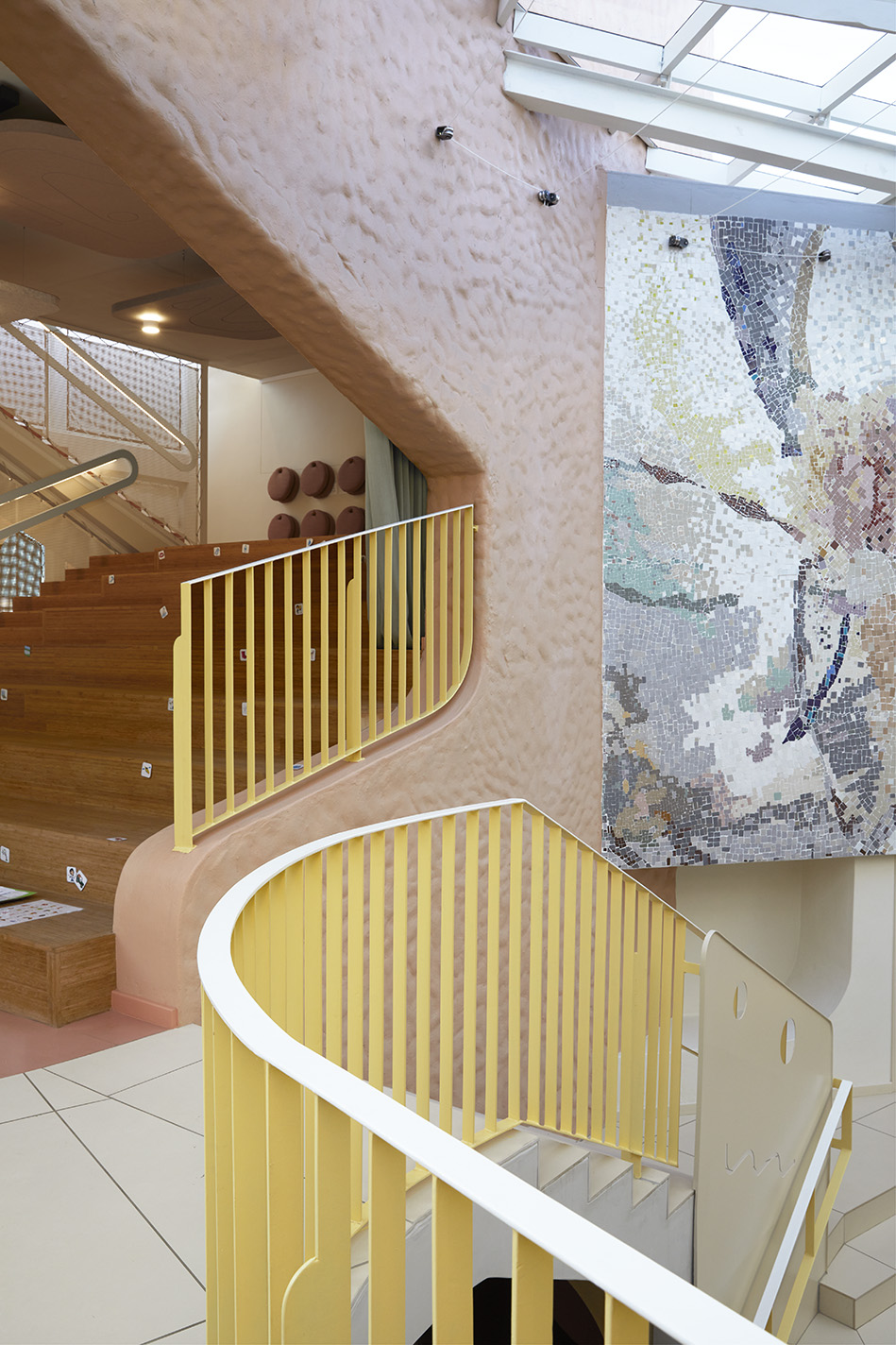
That led us to a locally appropriate plaster facade that could undulate and really come alive. Through on‑site testing, we explored different patterns and intensities, watching how light animated the surface throughout the day. The facade became soft, almost marshmallow‑like, constantly changing with time. The choice of using plaster facade gave us a budget to create a collaborative artwork inside the Piazza space with the artist Usha Sijaram, who worked with the children to create a “100 Languages” mosaic.
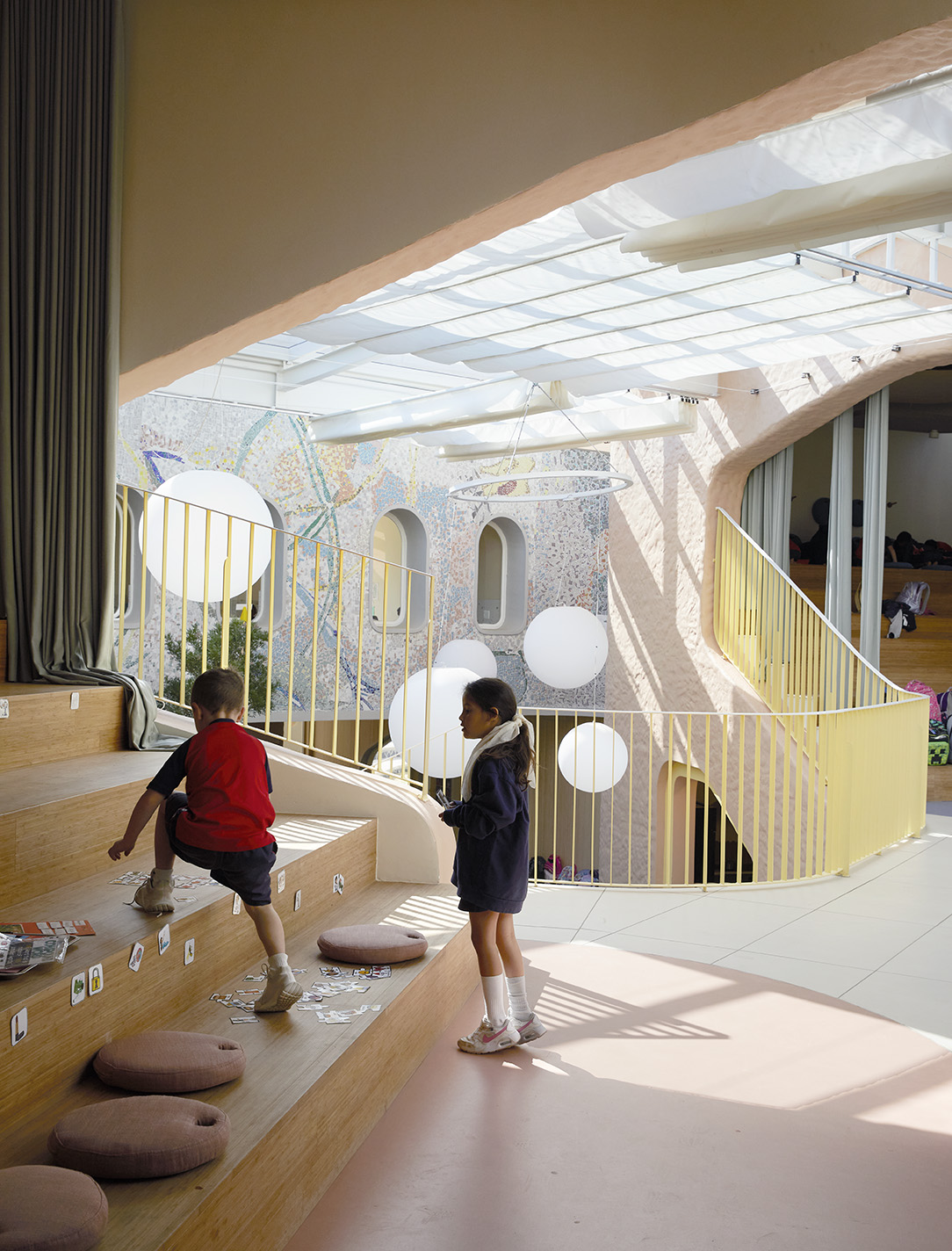
Like Reggio Emilia light experiments, the artwork changes continuously with light, seasons, and time of day. We also introduced large acoustic awnings that children operate themselves through turning these oversized wheels. By opening and closing them, they control light and sound simultaneously, and it becomes a learning exercise. Every element has multiple meanings and uses.
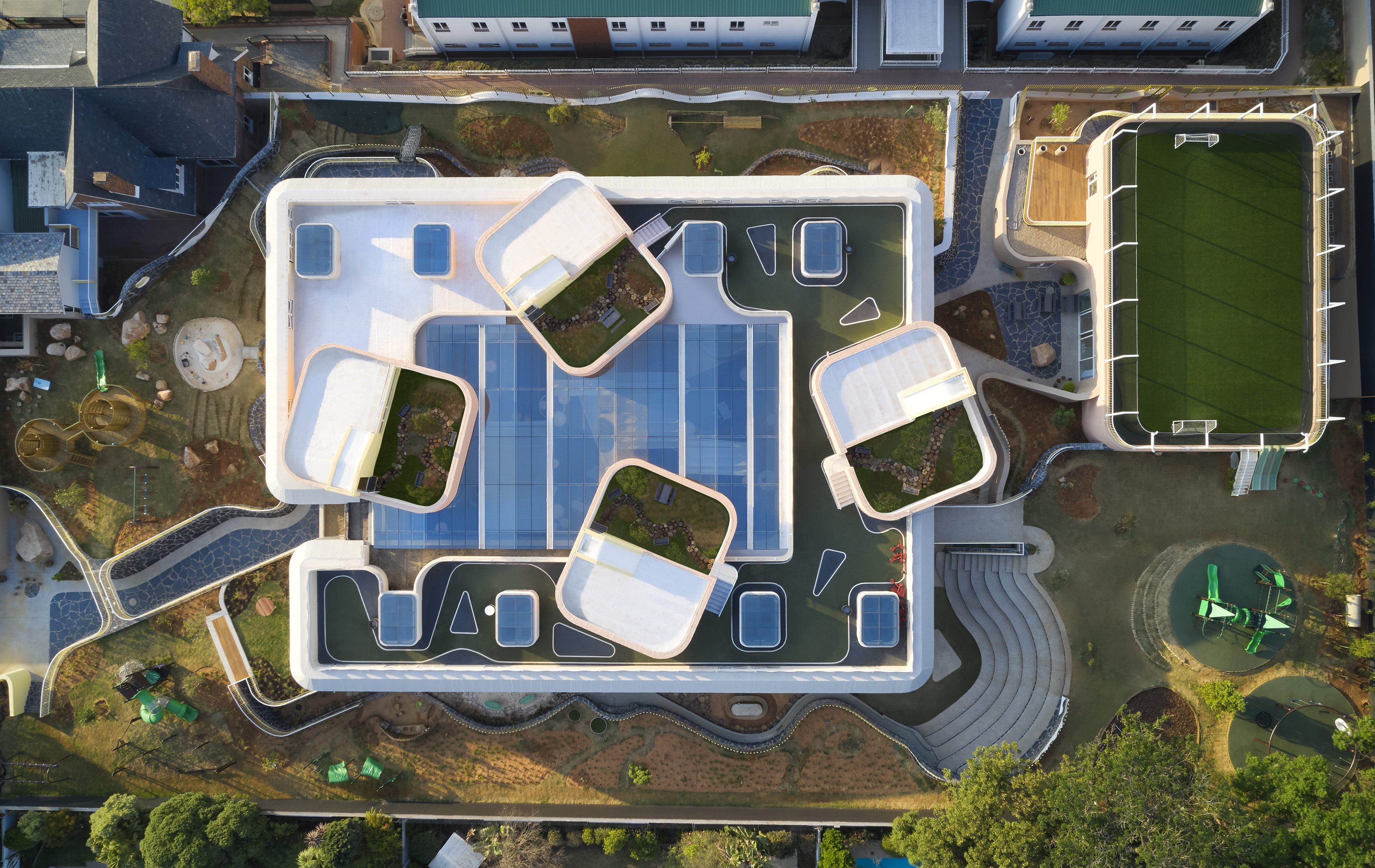
D/A: The building is organised around four vertical ateliers. How does verticality help choreograph different light conditions?
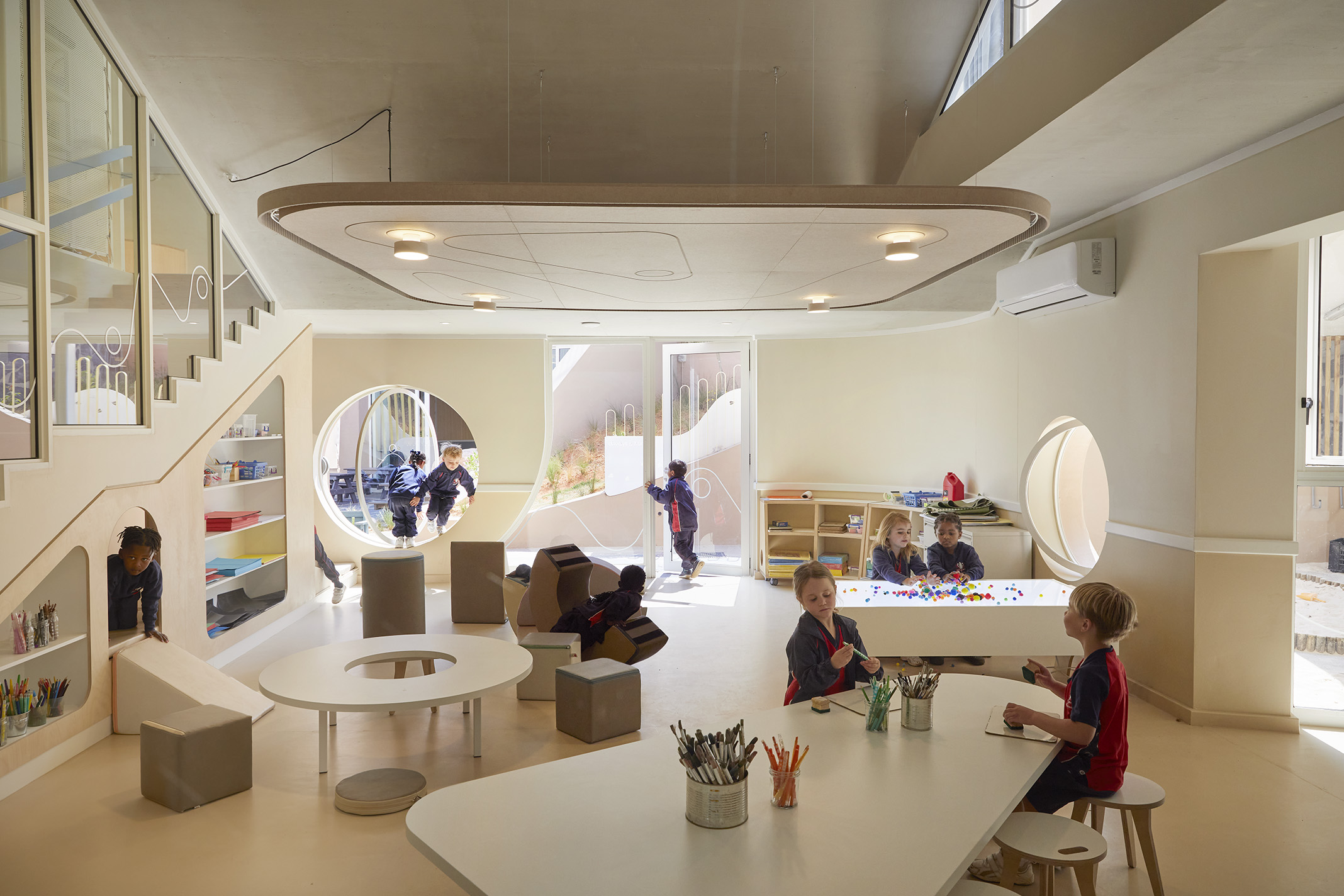
Learning often happens on a horizontal plane, with floors separated by age. We wanted something different. Each atelier becomes a vertical house that children grow through over several years. These spaces are flooded with studio‑like light ‘borrowed’ from the main Piazza space and connected by visual links. Children can see teachers from earlier years, reinforcing continuity and community. Each atelier has access to a roof garden, creating moments of surprise, connection, and sensory engagement.
Classrooms, by contrast, have more controlled light. This was achieved by using thickened walls, deep window setbacks, staggered plans, and overhangs to soften the daylight, and provide controlled shading to support concentration rather than overwhelming it. It’s not an offensive light, it’s not a direct light, but there’s a lot of light. Curtains and adaptable elements allow the spaces to change function as needed.
D/A: There’s a story about the children staging their own “jury.” What did that moment mean to you?
It showed us that the children truly own the building. After the project won the prize, they held an assembly, presented us with the trophy – and then immediately took it back. They placed it on a light table, examined it, and started building with it. They created a model of the building, and they went out and started to analyse the building. It was so fantastic to see young children imagining how a building that they exist in, fits together.
For them, the trophy wasn’t an endpoint; it was a starting point. That is Reggio Emilia in action which was so great to see — there is no final product, only ongoing exploration. It was such an exciting way to experience the building, a tangible experience that was more complete, more than the award. That was the ultimate award, to see a building used like this.
D/A: Looking ahead, what ideas about light or atmosphere are you most eager to explore next?
As we move into the international market, we’re looking forward to exploring how light behaves and acts in different contexts. We’re so comfortable in the South African environment, but now we’re starting to work in Miami and in Surrey in the UK, which have such different experiences of light. Miami is so hot and bright, whereas in Surrey light is more scarce and you need to find ways to maximise it. It’s going to be a lot of fun to anticipate how the light behaves in both of those projects as they go.
We’re also working on a very exciting project in the Kruger Park- a kind of community Arts Centre. It features a big outdoor theatre that has to cater to the greater community. There’s a dance between the functional and feeling in this project, and that dance is something that we are going to try to explore further.
Watch the presentation below to learn about the project in more detail.