2018 - Cover to reveal
Category
Daylight Investigations - Region 1: Western Europe
Students
Brice Lemaire & Xiaolan Vandendries
Teacher
Julien Obedia
School
Université catholique de Louvain
Country
Belgium
Download
Download project board
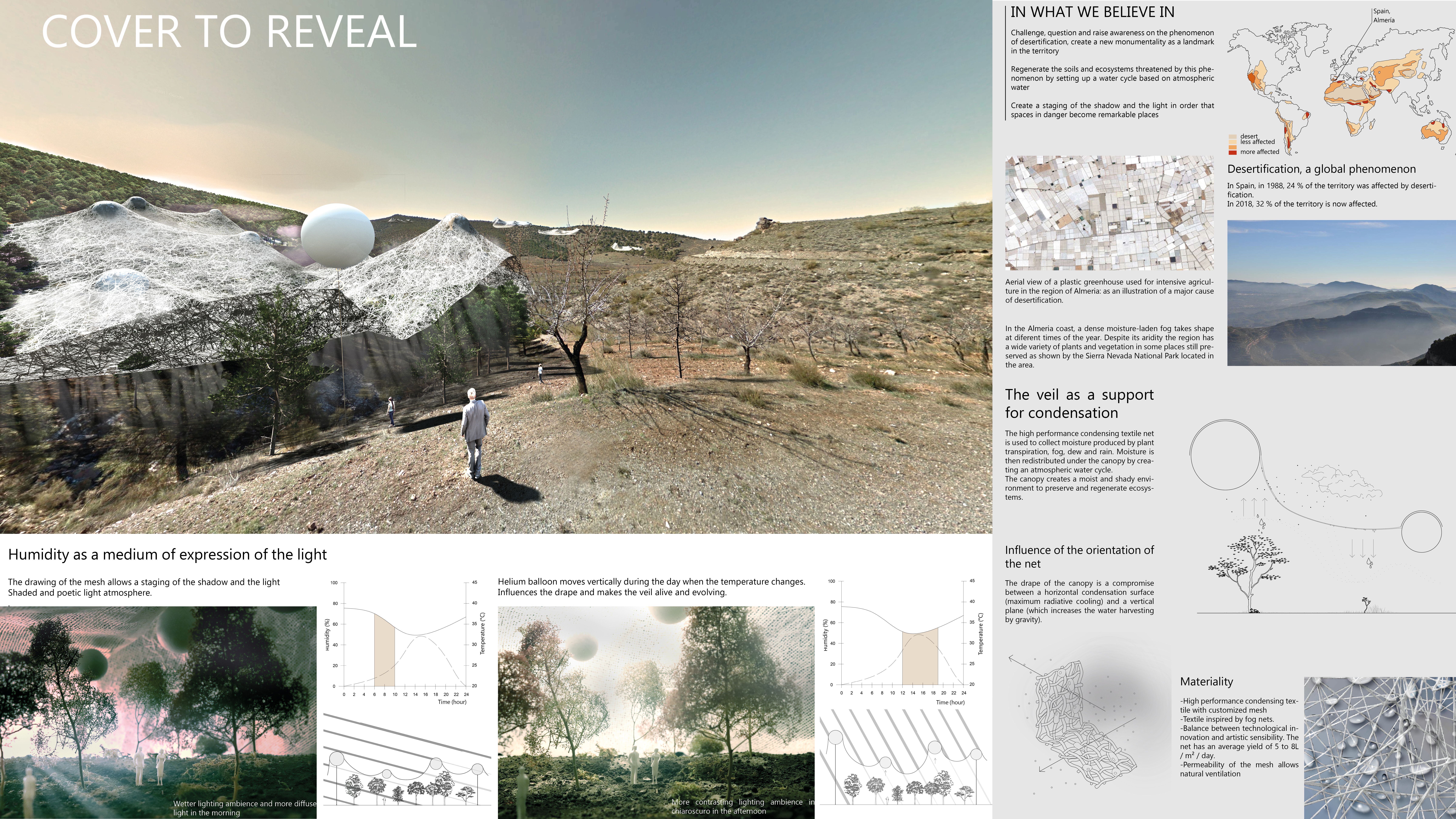
According to the United Nations, desertification refers to the degradation of land into semi-arid and arid lands, resulting from factors like human activity and climatic variations. The main causes linked to human activity are over-exploitation by intensive agriculture (resulting in soil and groundwater depletion) and intensive wood cutting. It’s a global phenomenon that, according to IUCN, affects 25% of the world land area. Desertification leads to the degradation of living conditions by the destruction of the ecosystems and the deterioration of arable land, that becomes unusable, which leads to the displacement of populations.
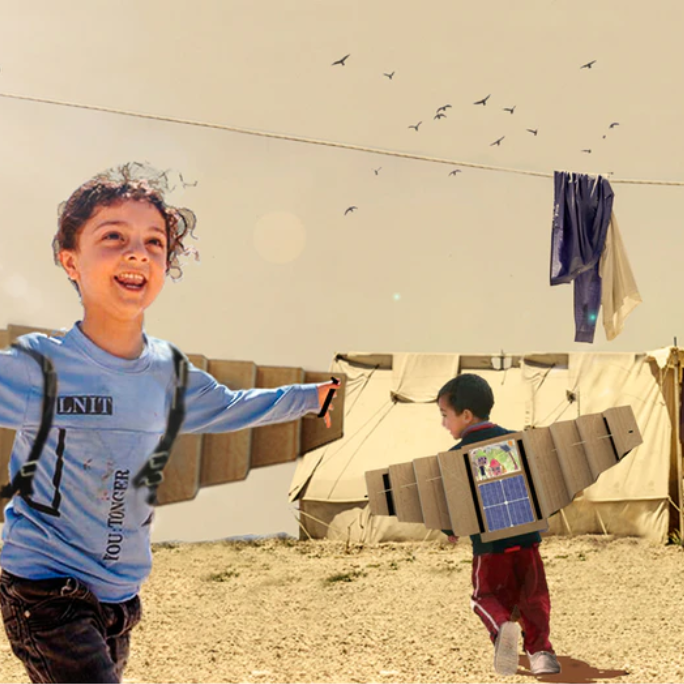
At the European level, the situation in Spain is particularly alarming: in 1988, 25% of its land was affected by desertification and in 2016, it was 31.5%. Today, 66% of its territory is threatened by desertification and 20% of the country’s land has already lost all vegetation. The region of Almeria is one of the most affected. There, 30 years ago we had to dig at 5 m. depth to have water, now, one needs to dig 200 m. underground and hope to find water.
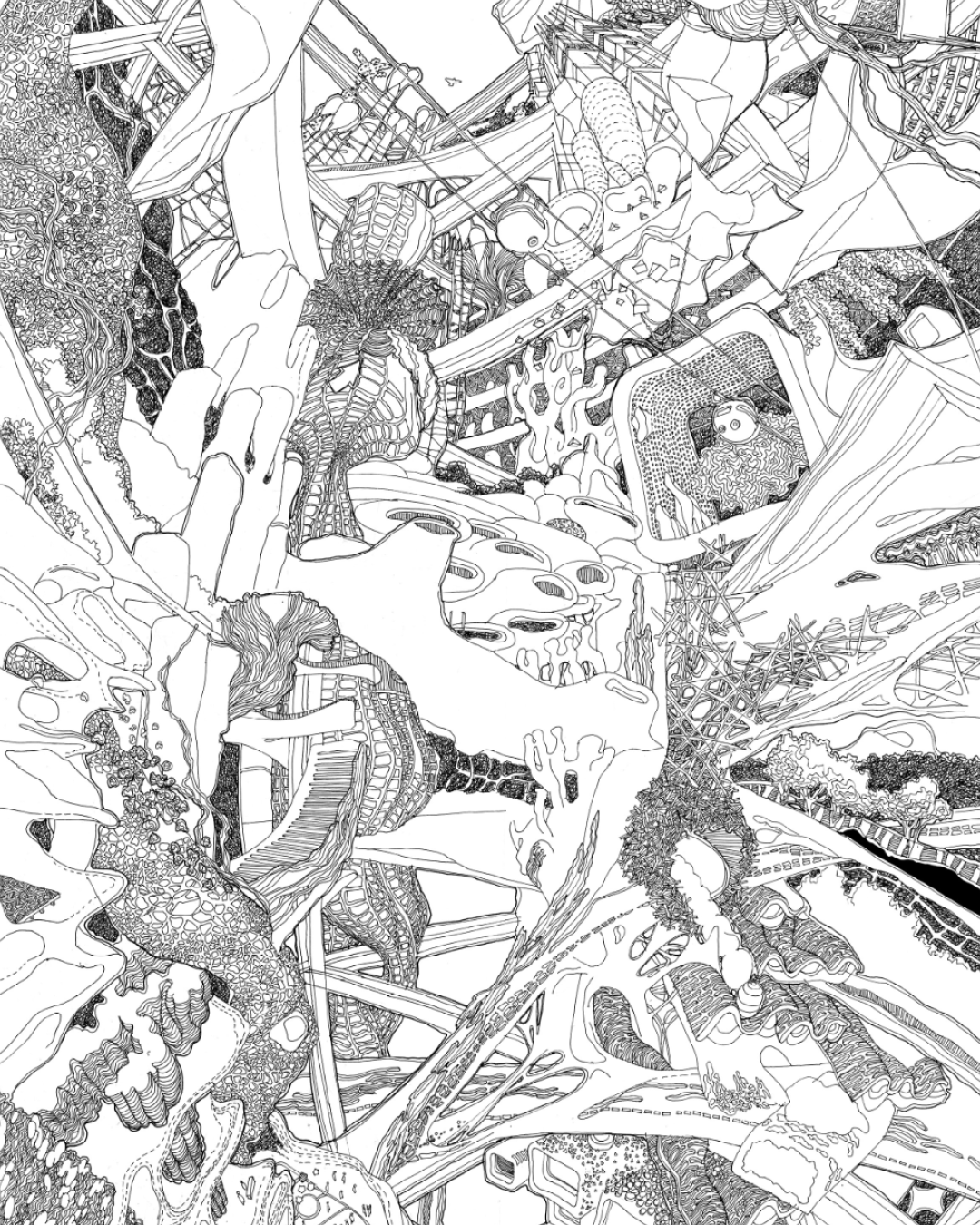
The triggering element of our approach was a shattering report about a forest of plastic greenhouses which occupies an area equivalent to 3 times the city of Barcelona. These greenhouses are a typical illustration of the intensive agriculture, which is one of the main causes of the phenomenon of desertification that Spain is facing. The idea was to echo this typology by acting in a completely opposite way.
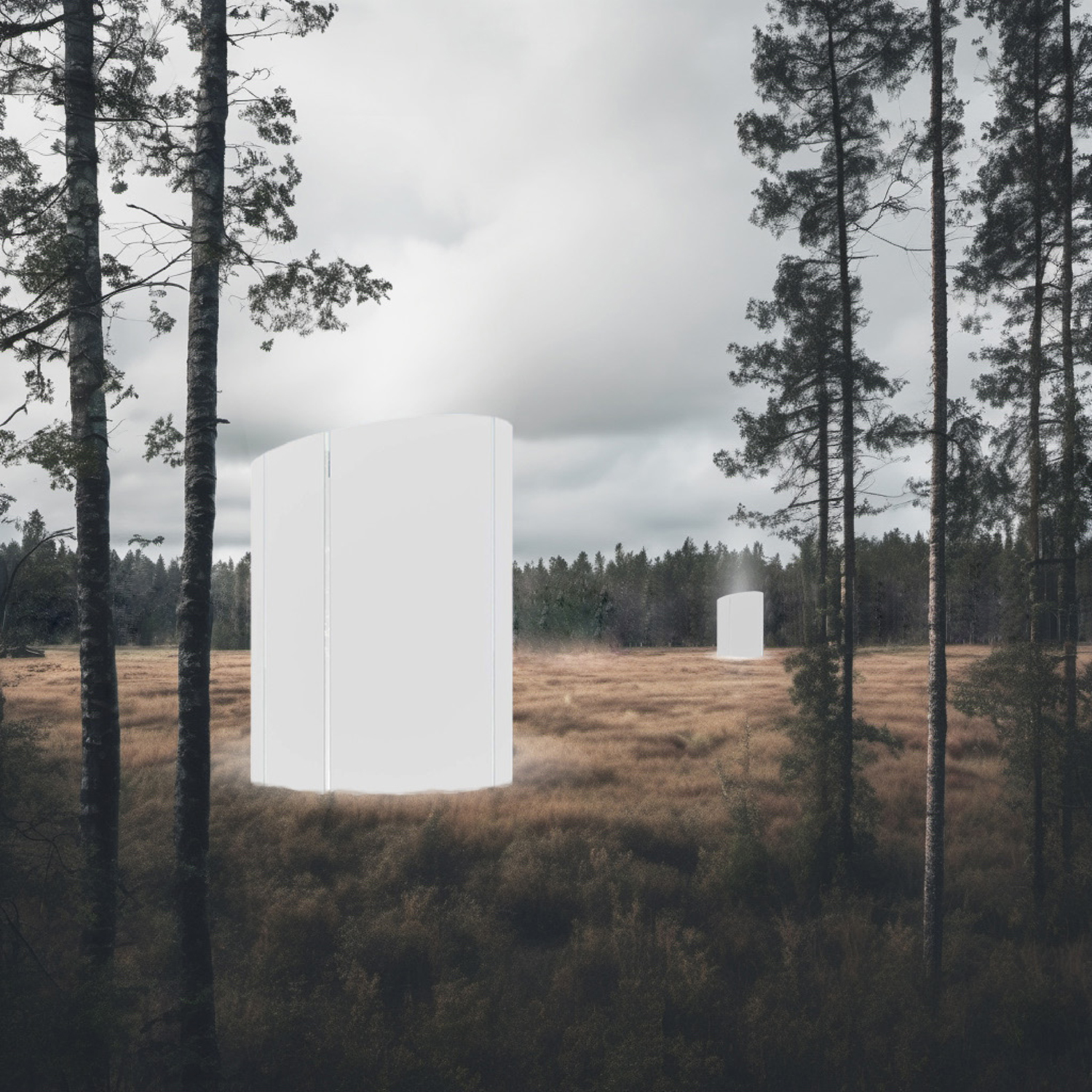
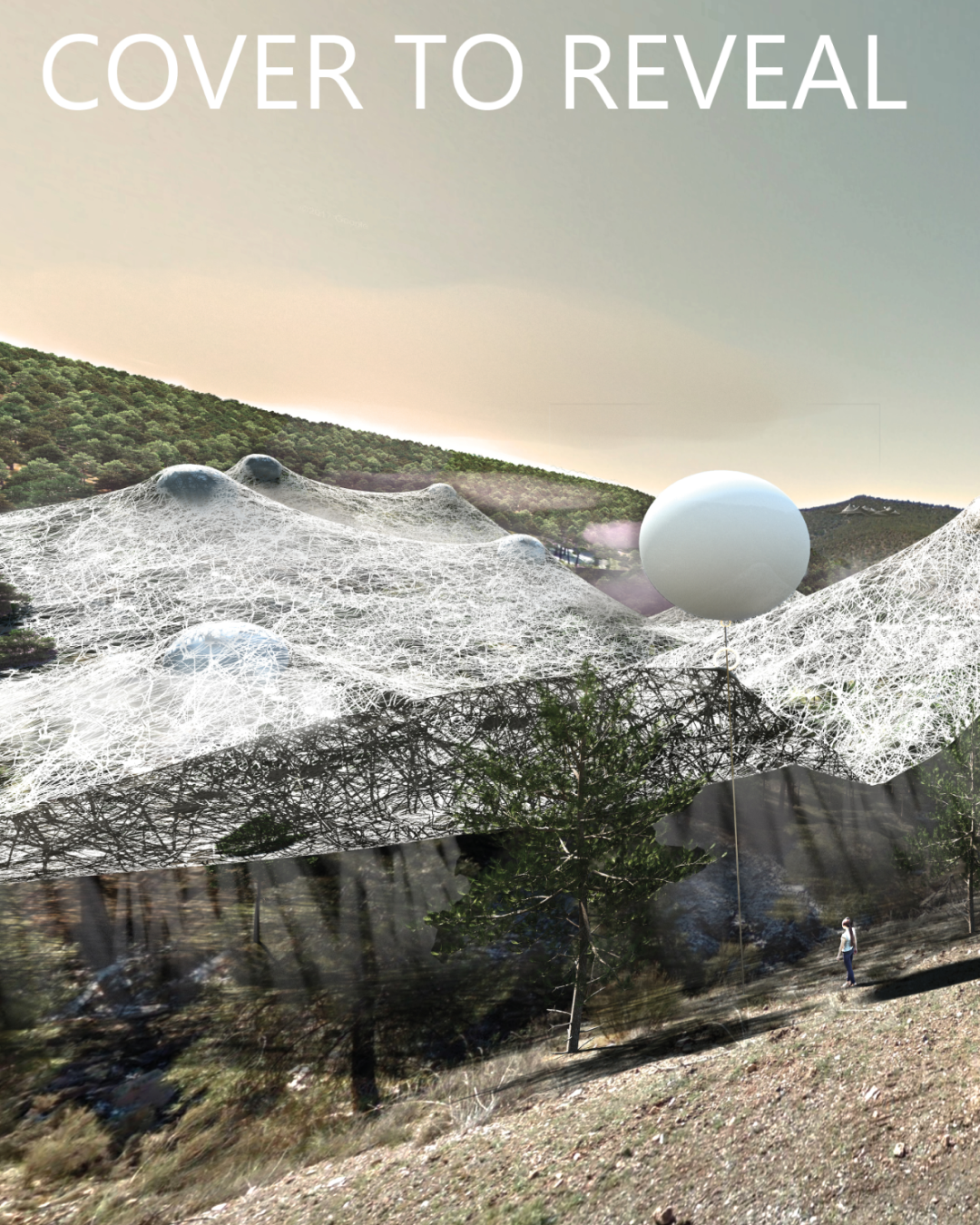
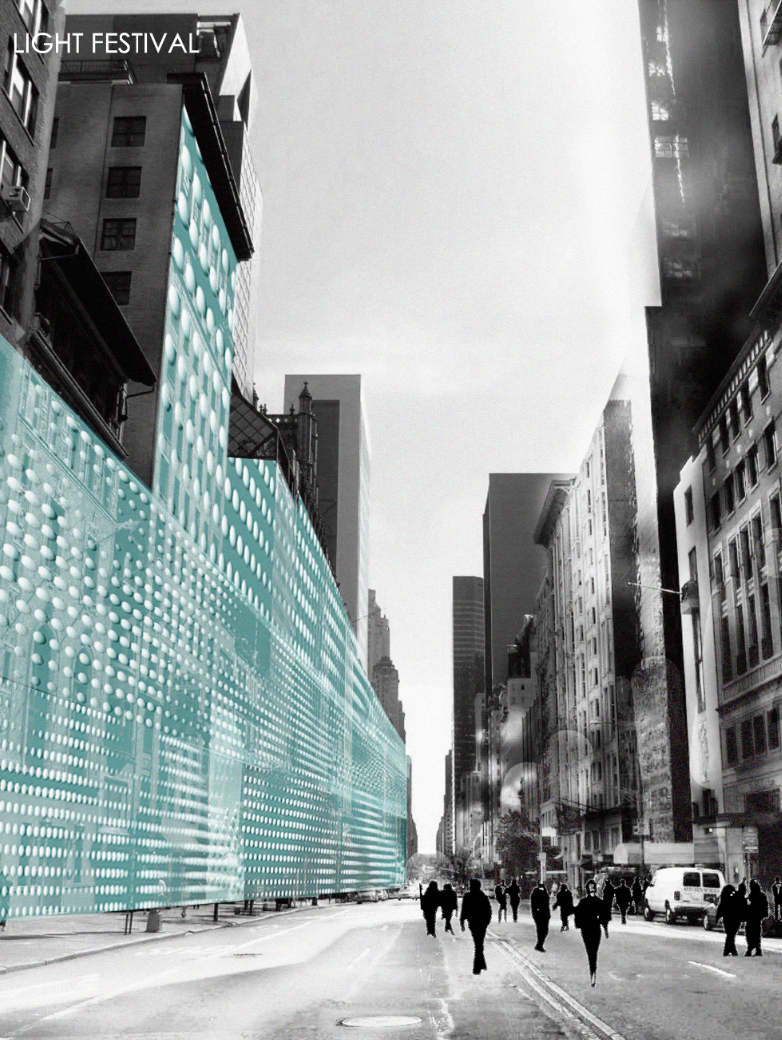
One of the primary objectives of the project has been to raise public awareness on the phenomenon of desertification. By interpellating, questioning and creating a new monumentality, the canopies spreaded over vast areas of the territory become landmarks in the landscape.
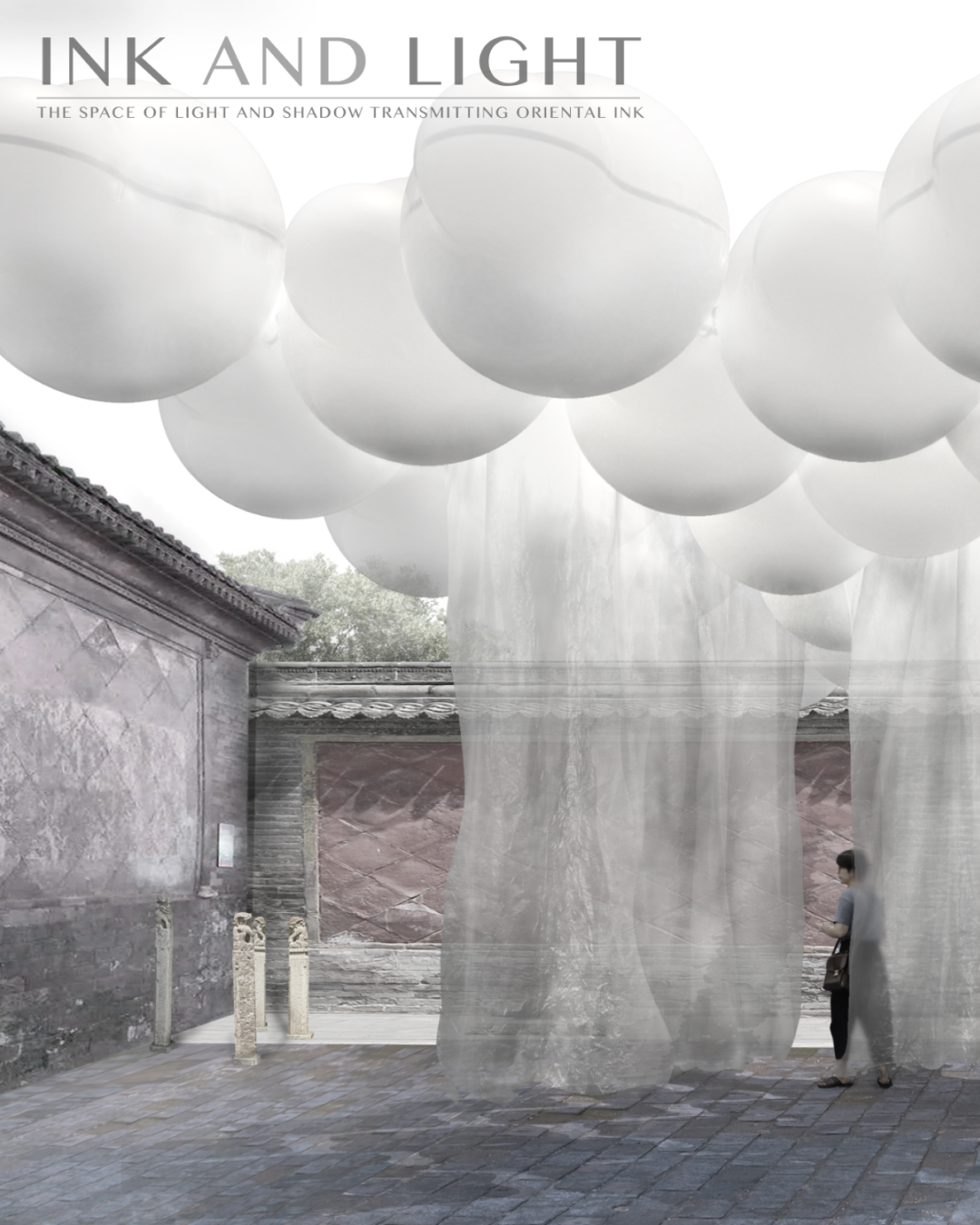
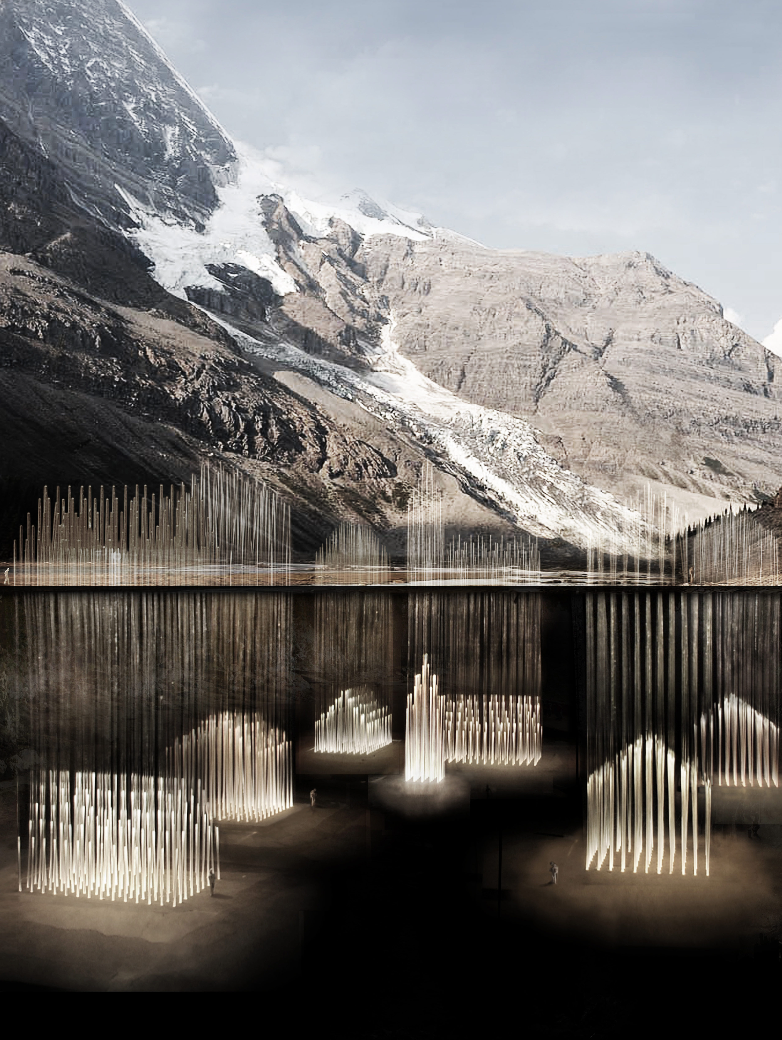
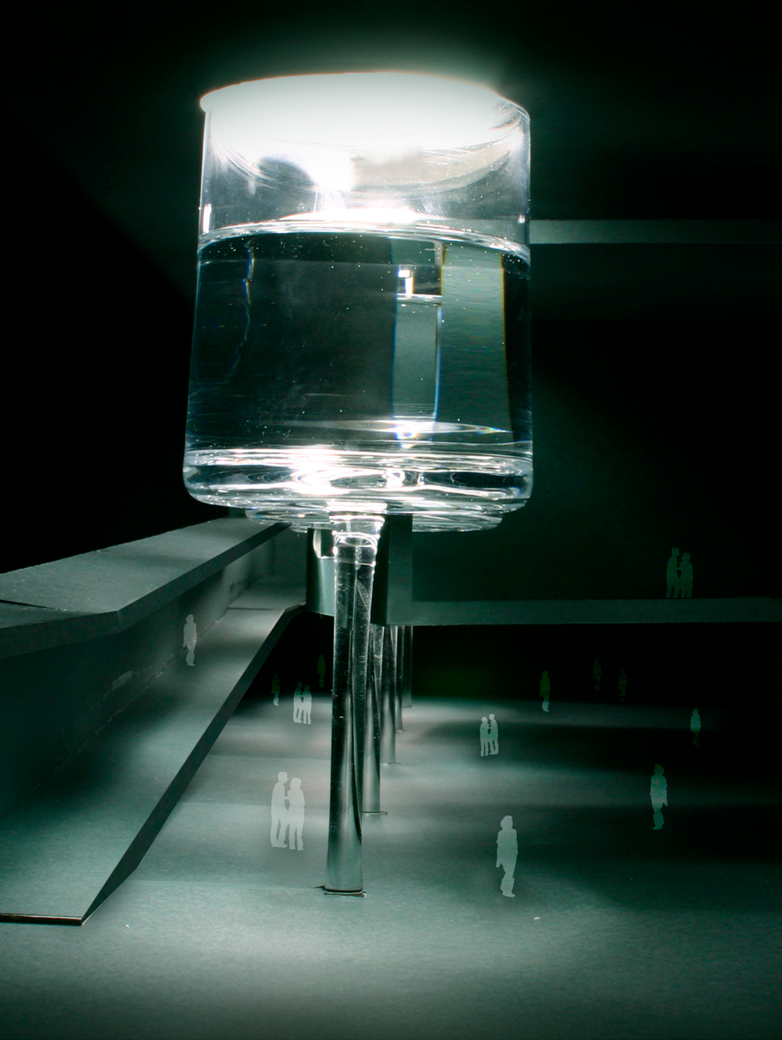
The canopy is a temporary installation that aims to create a humid and shaded environment, in order to preserve and regenerate the elements located at the edge of an area that has become unusable.
Therefore, the installation is deployed on the risky areas, during the time required for the soil and the ecosystem’s regeneration. Then, the installation can be moved to another sensitive area, and so on.
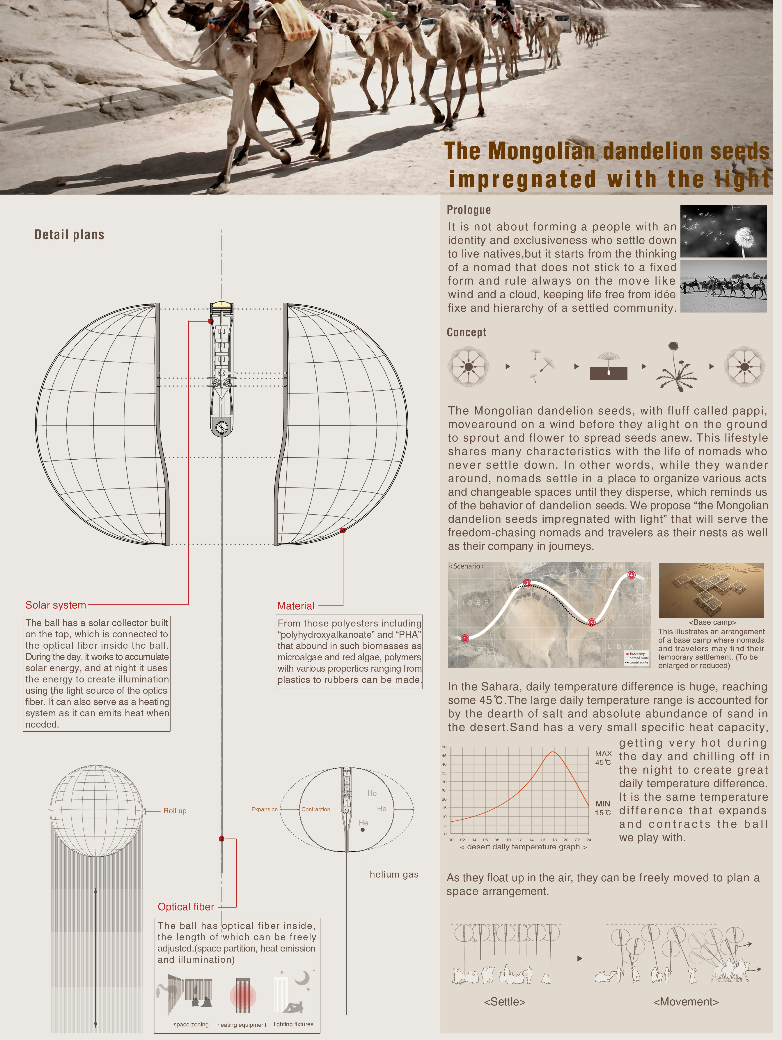
The installation of the canopy and its transfer to a new location can be done easily, since it requires very little infrastructure (helium balloons attached to the canvas and a few cables at the ends). It’s a flexible structure that adapts to its environment and is easy to handle.
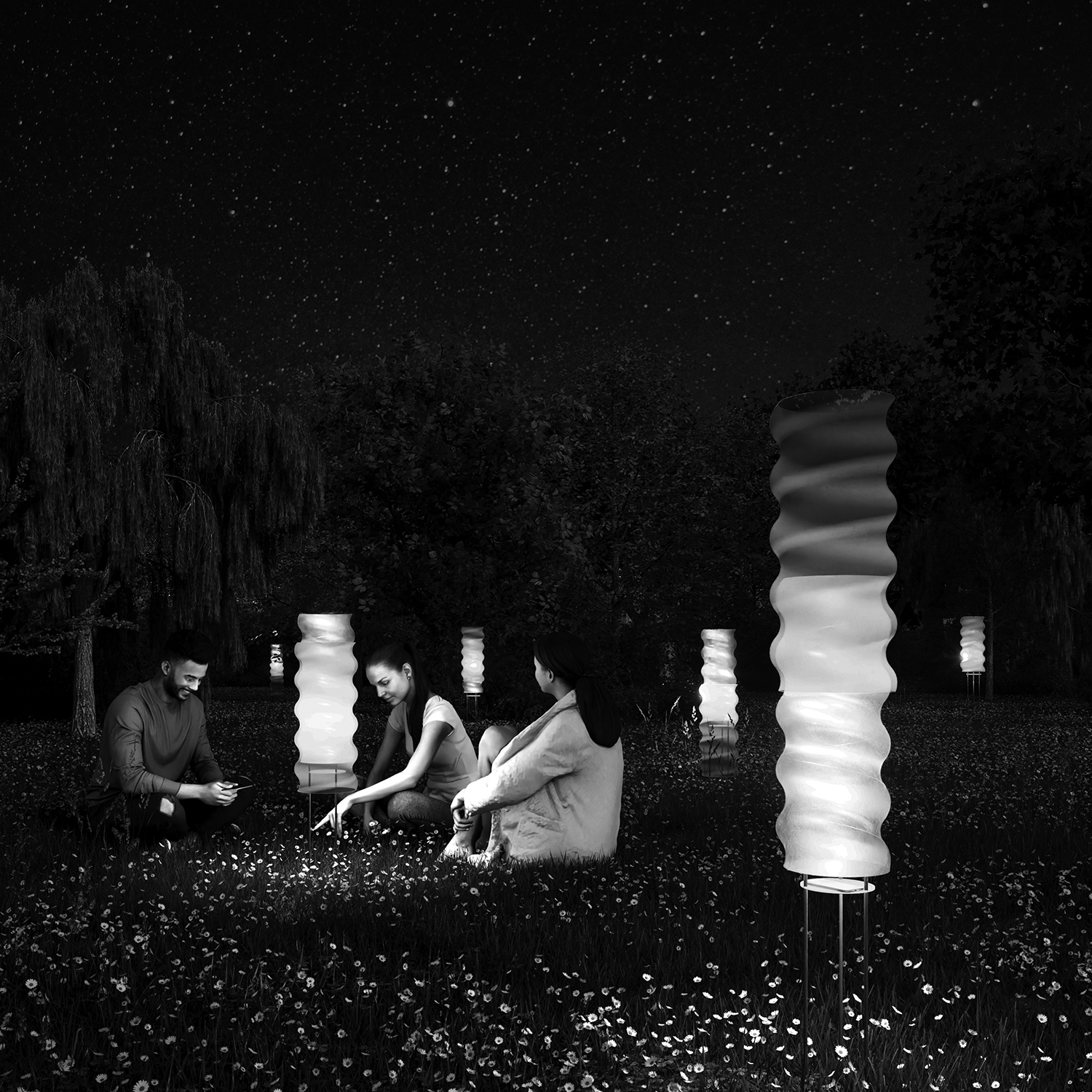
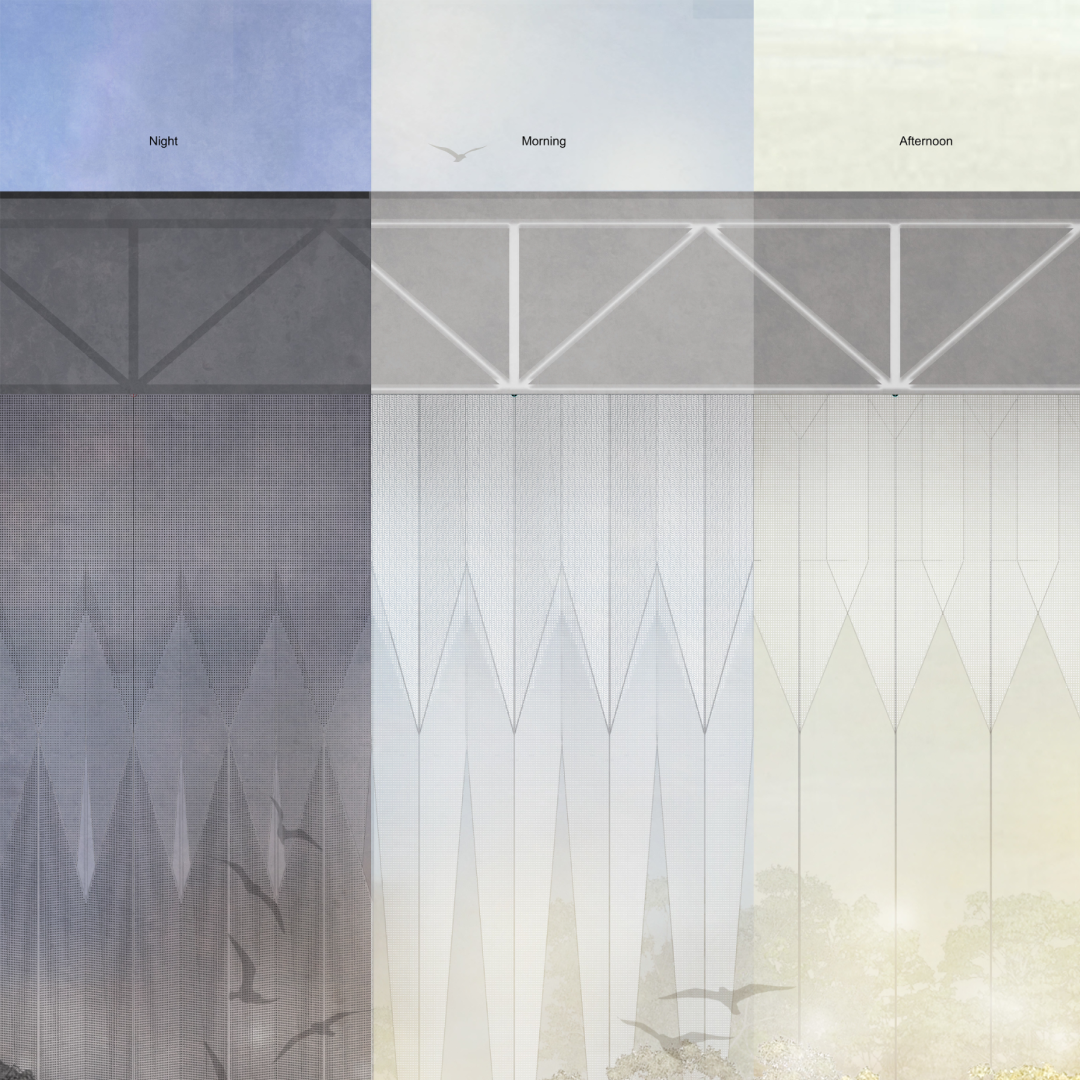
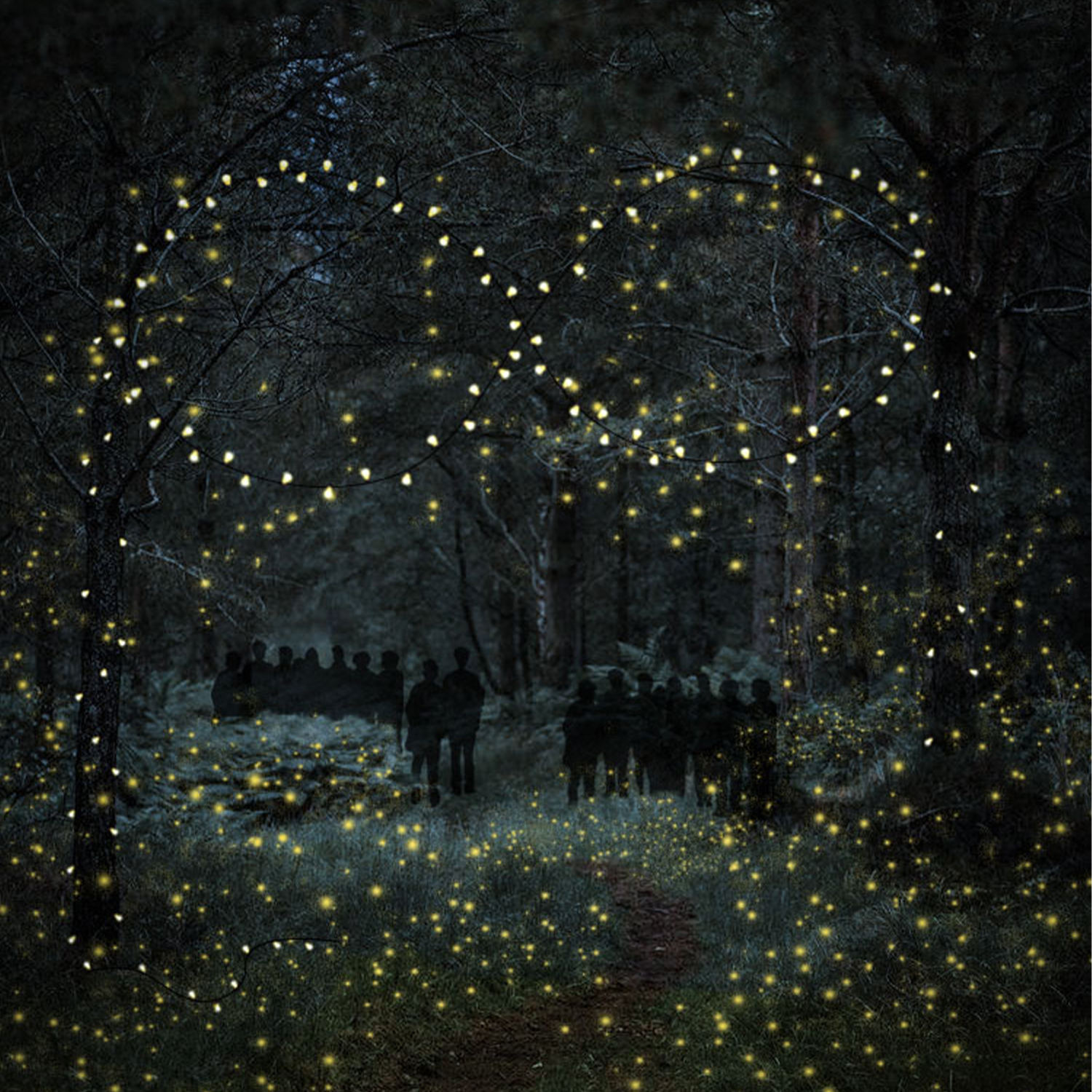
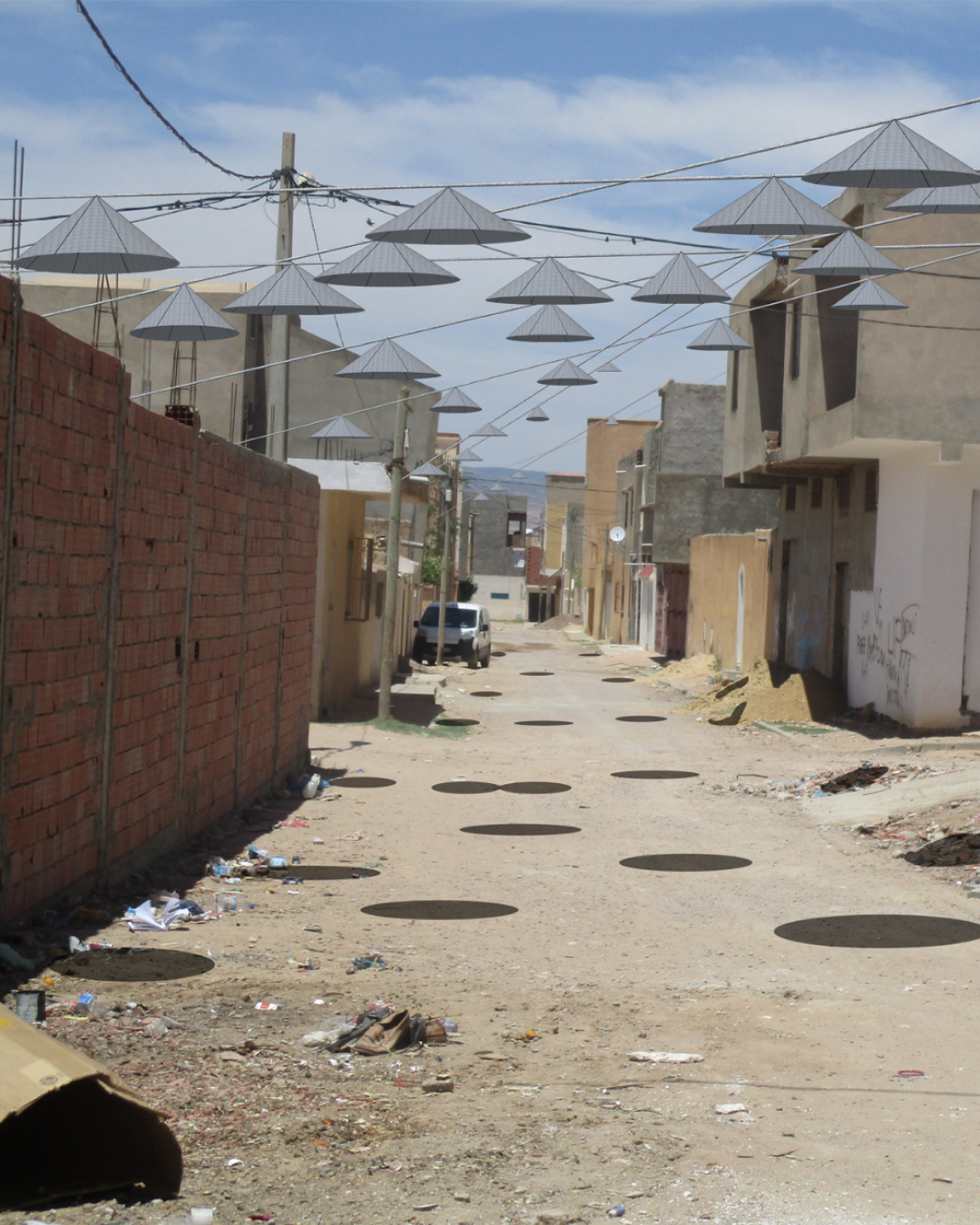
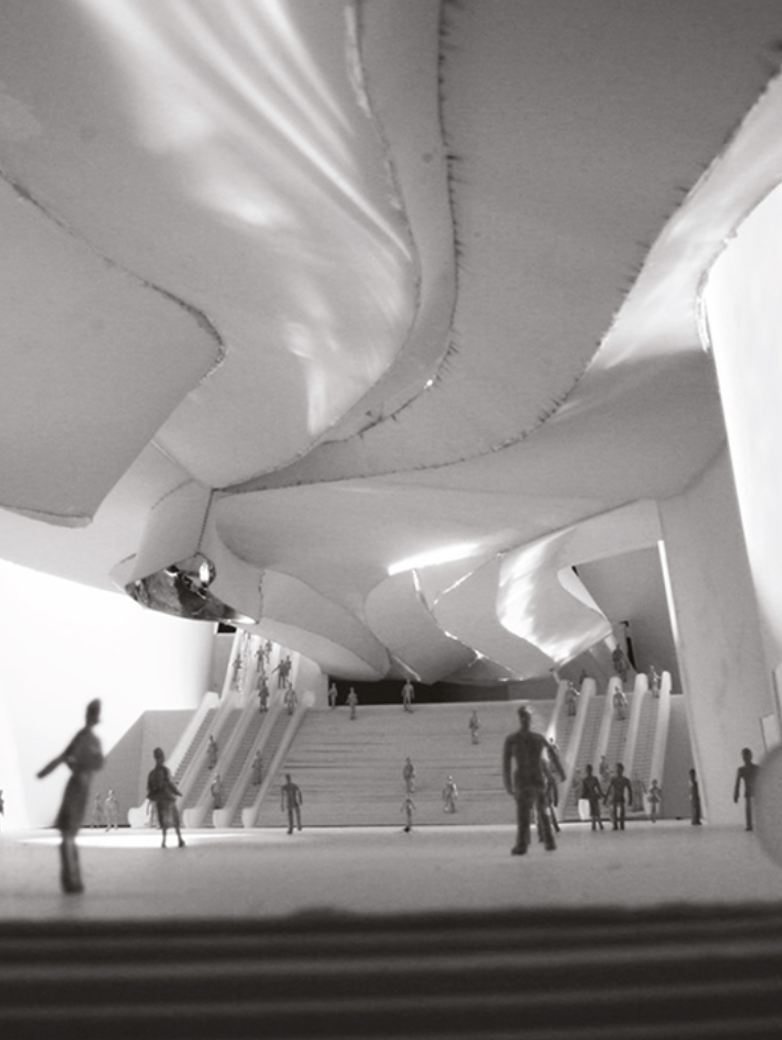
Finally, the design of the mesh acts as a filter or a veil and creates a light and shadow scenography that evolves during the day. Thus, threatened and usually neglected spaces can become places with remarkable spatial and luminous qualities. This new environment becomes a fun place, appropriated by the community where people can gather under the canopy for school trips, ballads or simply to enjoy it’s new poetic atmosphere.
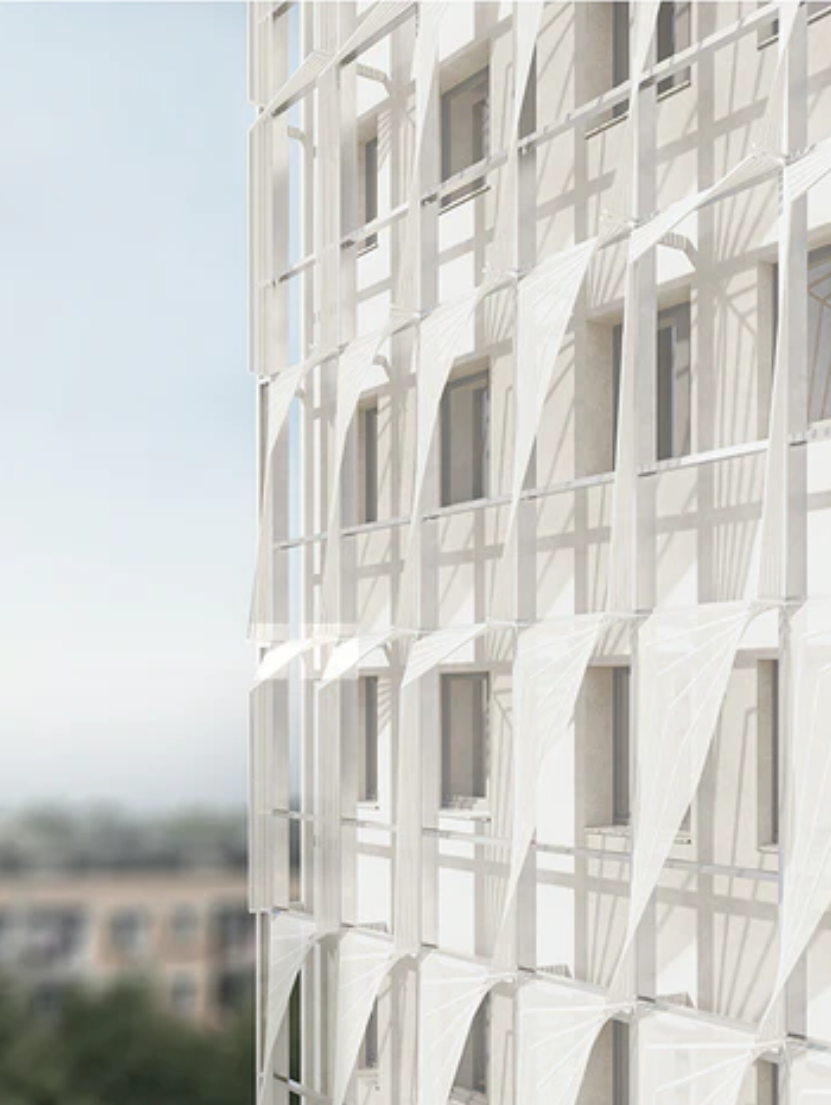
The net of the canopy -inspired by mist nets- is a white textile, which has high performances of water condensation. This material helps to collect the moisture present in the fogs that appear at certain times in this region (which come from the air that crossed an oasis). It also collects the moisture generated by the perspiration of plants and by the morning dew, which would normally evaporate during the day. The permeability of the mesh guarantees a natural ventilation which intensifies in the afternoon, when the temperatures are at the highest -thanks to the rise of the helium balloons that react to temperature changes.
The helium balloons act as structural elements to the veil, making it alive and evolving, varying the transparency and the play of light. When located in the heart of the canopy, they are simply attached to the veil by fasteners. At the ends of the canopy they are fixed to the canvas and connected to the ground by a cable. Finally the balloons are made of white polyethylene, in order to promote even more the expressions of light and shade.