2026 - Daylight in New Buildings - Reclaiming the Tropical Plaza

Category
Special Prize: Daylight in New Buildings - Reclaiming the Tropical Plaza - Asia & Oceania
Students
Papinyapon Apisaksirikul
Teacher
Apiparn Borisuit
School
Chulalongkorn University
Country
Thailand
Download
Project ↓
Reclaiming the Tropical Plaza rethinks the civic plaza as a public space shaped by tropical climate, local culture, and everyday life. Influenced by colonial history and imported Western ideals of civilization, many cities in Asia, especially in Southeast Asia, adopted the civic plaza as a model of public space. Typically expressed as a large open ground paved with stone or tiles, this spatial type performs well in many Western contexts. In tropical Southeast Asia, however, such exposed plazas are often less compatible with local climate and daily public life. Under strong sun and heat, these spaces may remain visually impressive yet socially underused.
This project takes Bangkok City Hall Plaza as a case study for this condition. Located near the Giant Swing, Wat Suthat, and the axis leading toward the Democracy Monument, the site is embedded in a rich civic and cultural context within Bangkok’s historic core. Yet despite its symbolic importance, the plaza is underused during the daytime, with most activities taking place in the evening. It therefore becomes a strong example of the tropical civic plaza: central, visible, and significant, but not fully inhabitable under harsh daylight conditions.In tropical climates, the ideal response to such conditions is often dense tree planting. However, this site reflects a common urban limitation. With parking infrastructure located beneath the plaza, the ground cannot easily support the soil depth, water load, and root space required for extensive tropical trees. This constraint led the project to explore another kind of climatic intervention: a lightweight canopy that works not as a heavy roof, but as a suspended field of filtered shade.
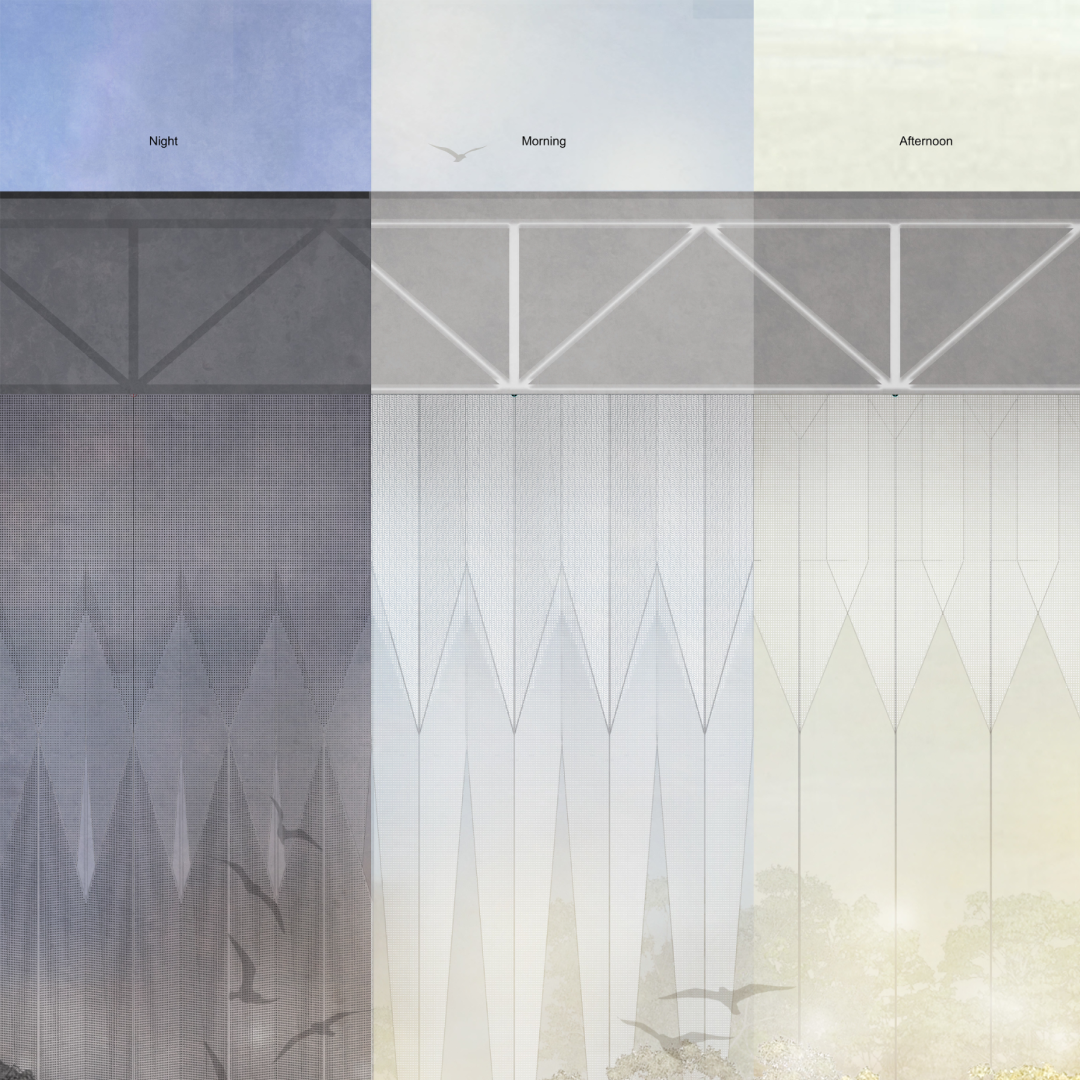
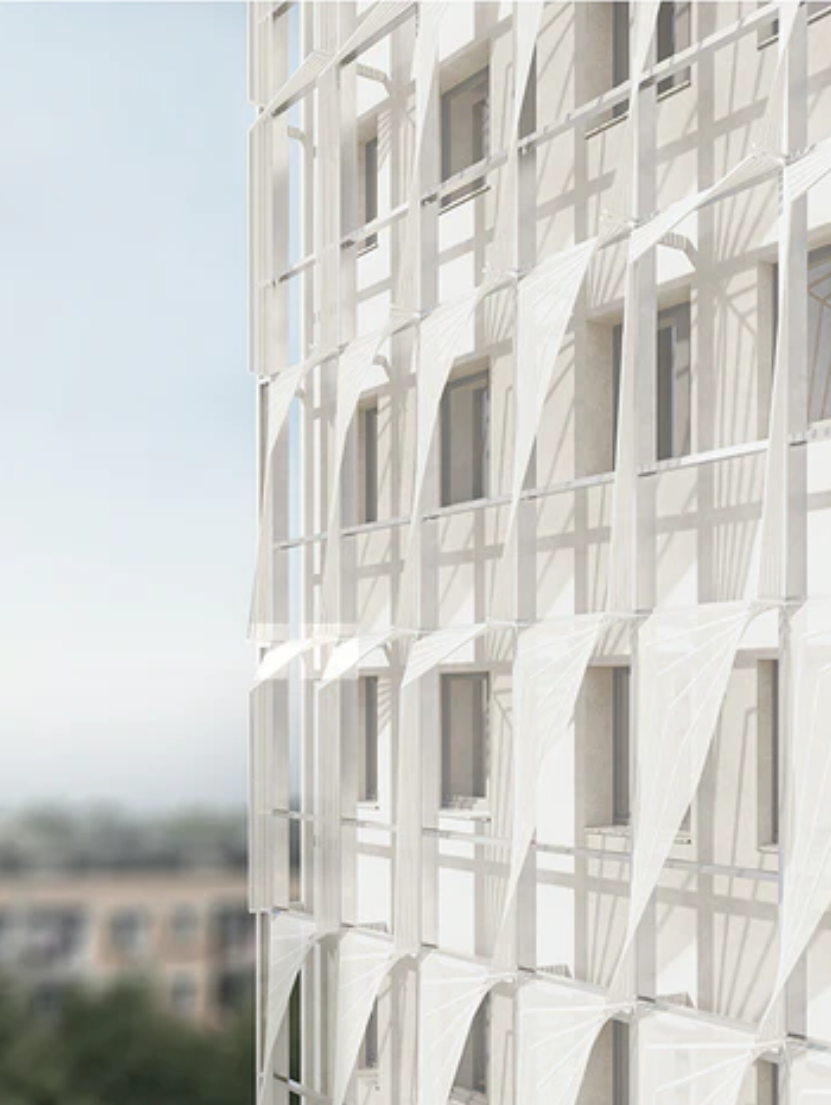
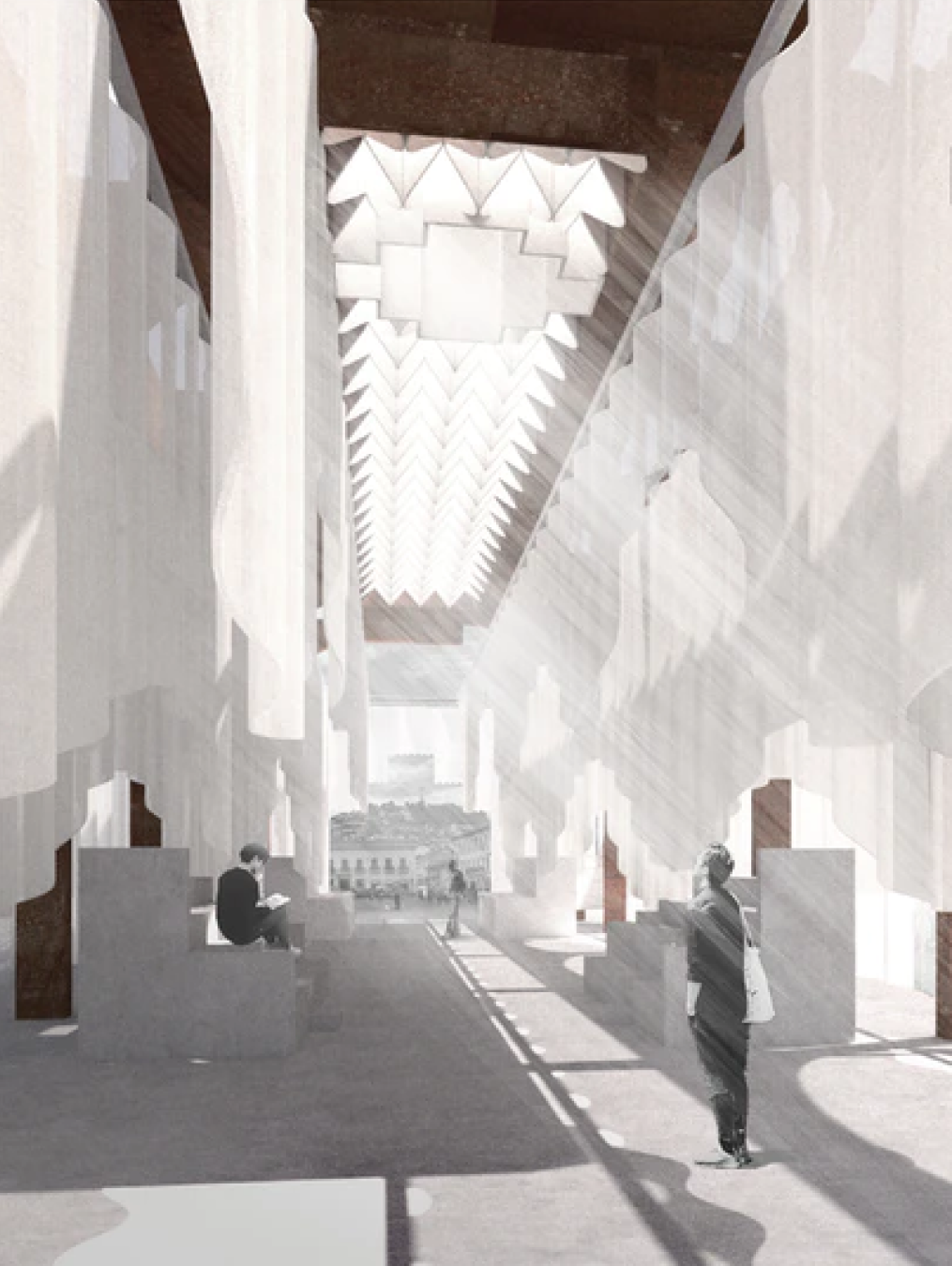
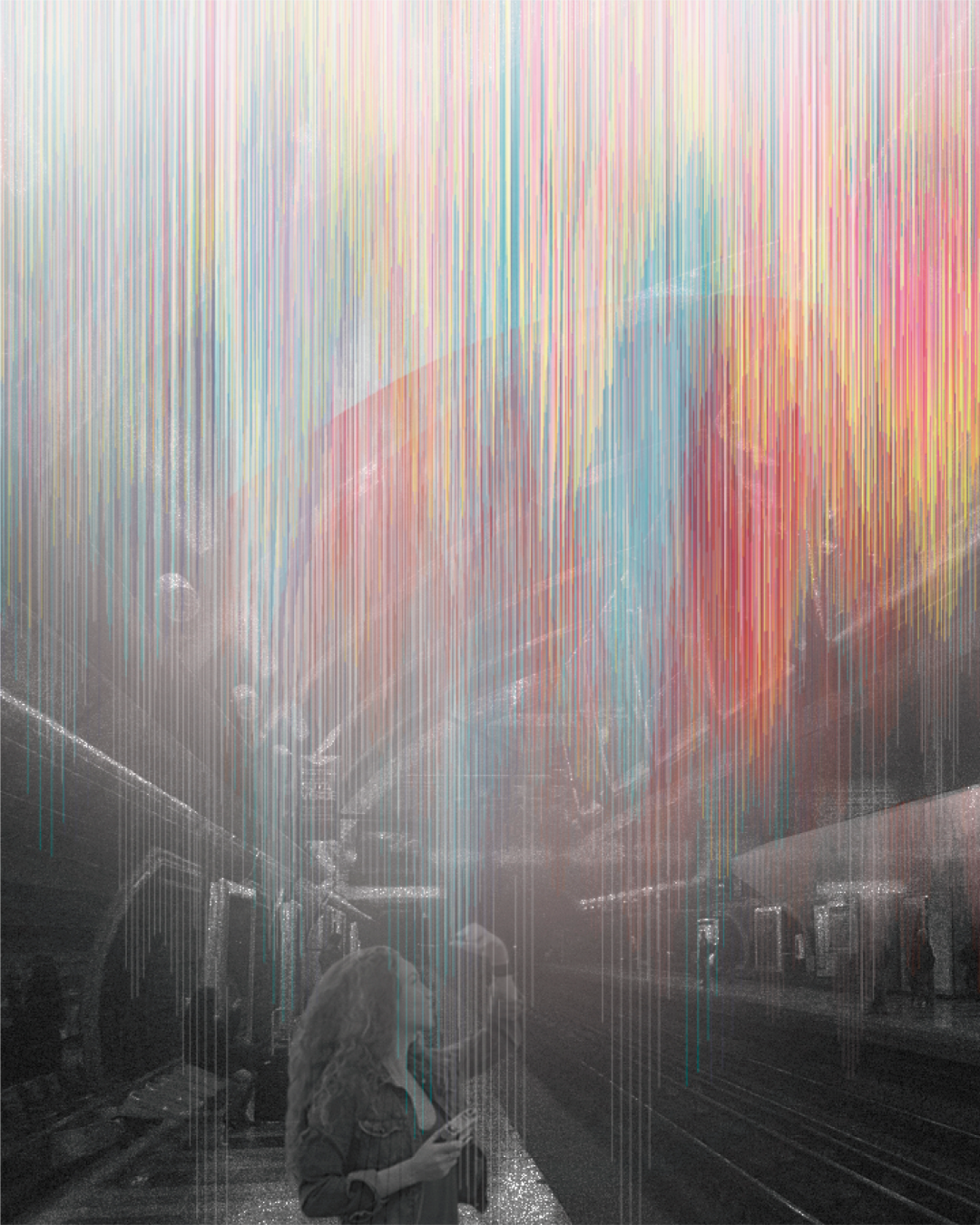
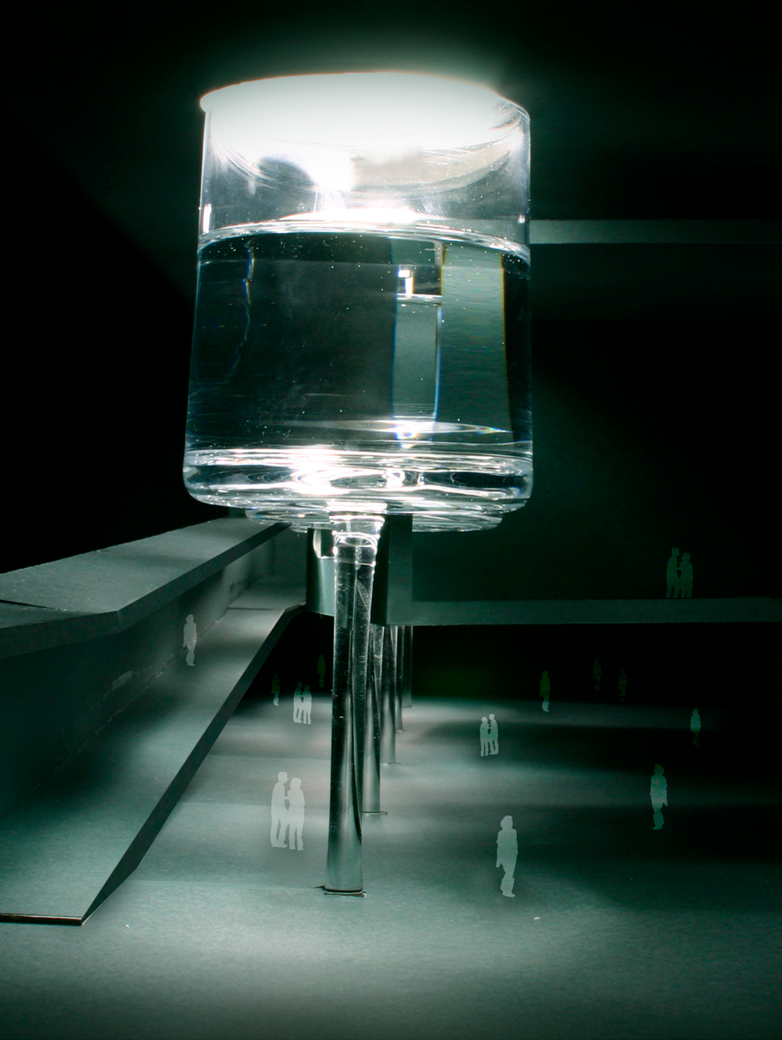
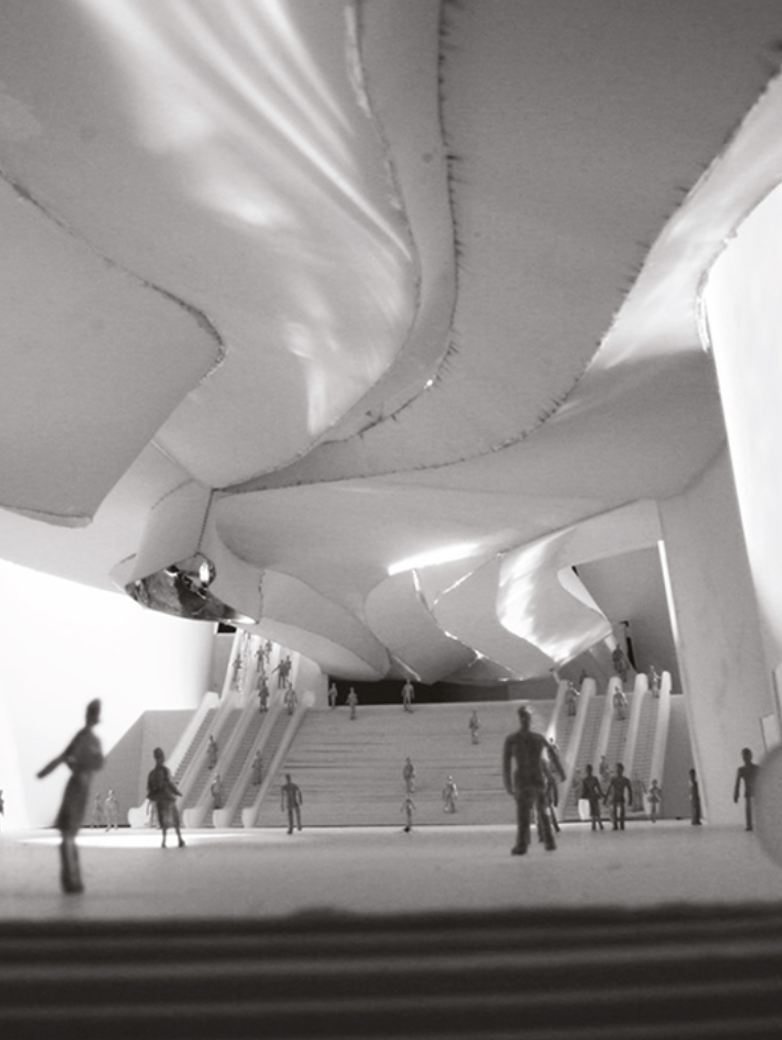
The design draws from Thai architectural essence, where life in the tropics often begins in the shade. In traditional Thai architecture, the shaded space beneath the building has long supported daytime occupation, rest, gathering, and daily activities. The project also takes inspiration from the gable roof, a familiar form in hot-humid climates that responds to both rain and heat. Together, these references are reinterpreted into a civic canopy that creates shelter while remaining open, elevated, and porous.Rather than fully enclosing the plaza, the proposal introduces a suspended woven canopy supported by a lightweight structural system. Its soft, draped form allows it to filter Bangkok’s harsh daylight into a more moderated luminous environment.
The canopy is designed not to block daylight completely, but to transform direct solar exposure into usable shade and softer illumination. In this way, daylight remains present as a spatial quality, while becoming more comfortable for public occupation.The daylight simulation supports this intention. The canopy helps filter rather than eliminate daylight, allowing much of the plaza to remain naturally lit while reducing excessive exposure. The results suggest that the space achieves a more useful range of daylight under the canopy, even though some areas remain partially exposed to strong sunlight. This is important because the project is not trying to create an interior condition outdoors; instead, it seeks a balance between openness and comfort, where shade becomes a climatic mediator rather than a complete barrier to light.
The performance can also be further refined through adjustments to canopy height and geometry.More than a shading device, the canopy acts as a new civic layer. It redefines the flat open plaza into a sequence of shaded zones, thresholds, and pockets of occupation. It preserves the openness of the civic ground while introducing conditions for staying, gathering, resting, and everyday public use. In this sense, the project is not only about climate adaptation, but also about reclaiming public life.Reclaiming the Tropical Plaza matters because it challenges the assumption that civic space in the tropics must follow imported models of openness and monumentality. Instead, it proposes that public space should be shaped by how people actually live, gather, and occupy space in hot-humid climates. By reinterpreting the civic plaza through tropical architectural language, the project transforms a space of exposure into a space of inhabitation.