2026 - Filtered Light
Category
Region 2: Central/Eastern Europe and the Middle East
Students
Polina Riabtseva
Teacher
Orest Hirnyi
School
National Academy Of Fine Arts And Architecture
Country
Ukraine
Download
Project ↓
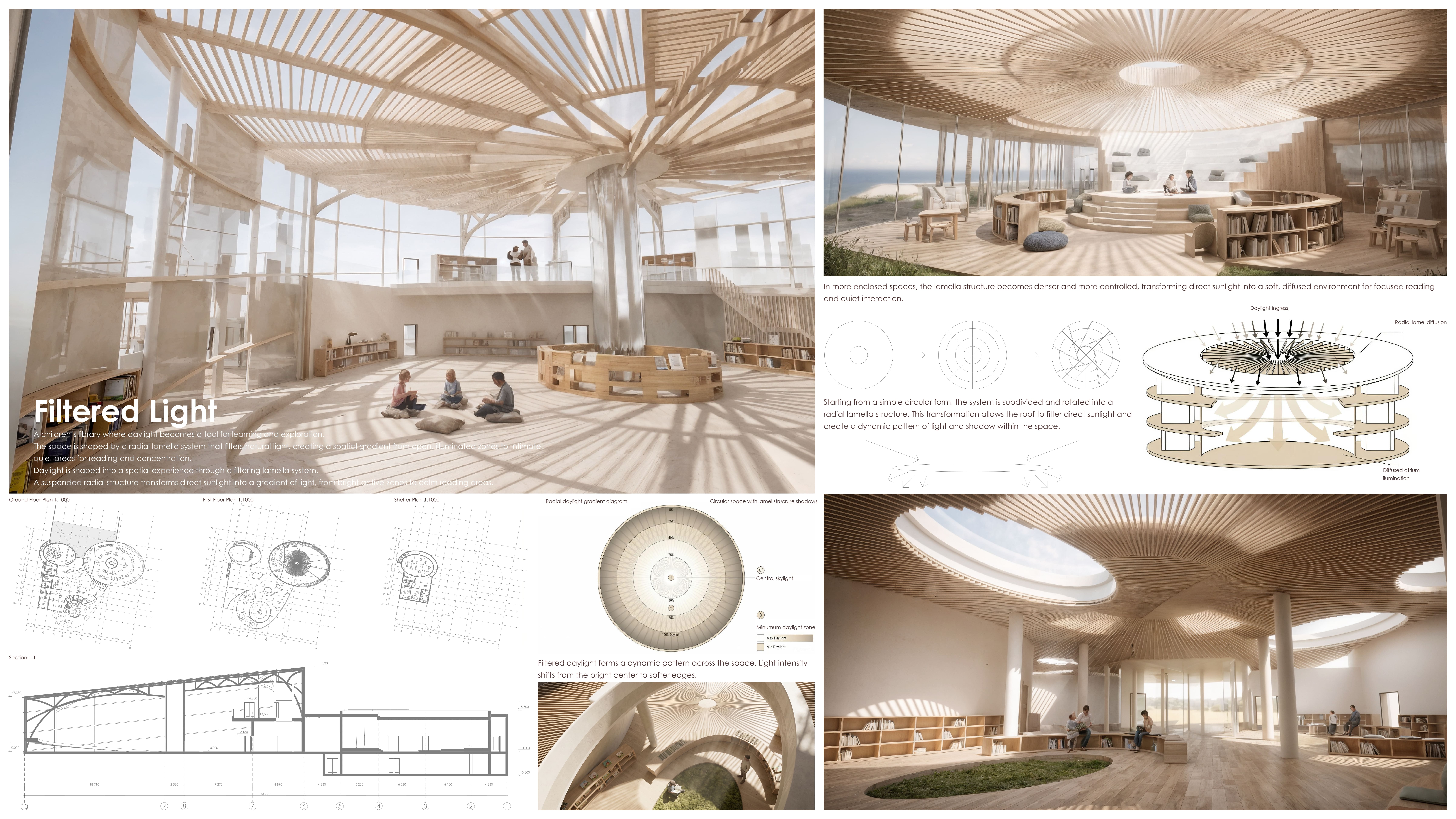
The project proposes a children’s library conceived as a spatial system shaped by daylight. Rather than treating light as a secondary condition, the design positions it as the primary architectural driver — a medium that organizes space, defines atmosphere, and supports the emotional and cognitive experience of young users. In contemporary learning environments, access to natural light is not only a matter of comfort, but a fundamental component of wellbeing and engagement. For children, light influences concentration, curiosity, and spatial perception.
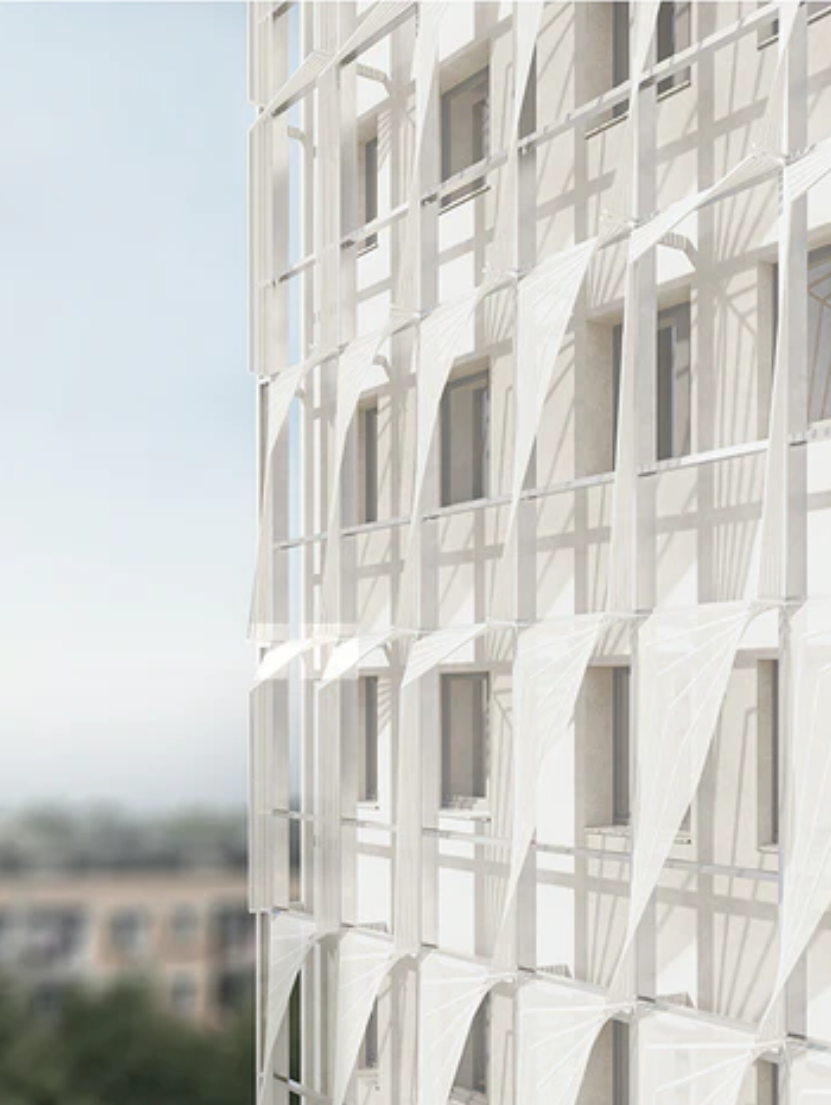
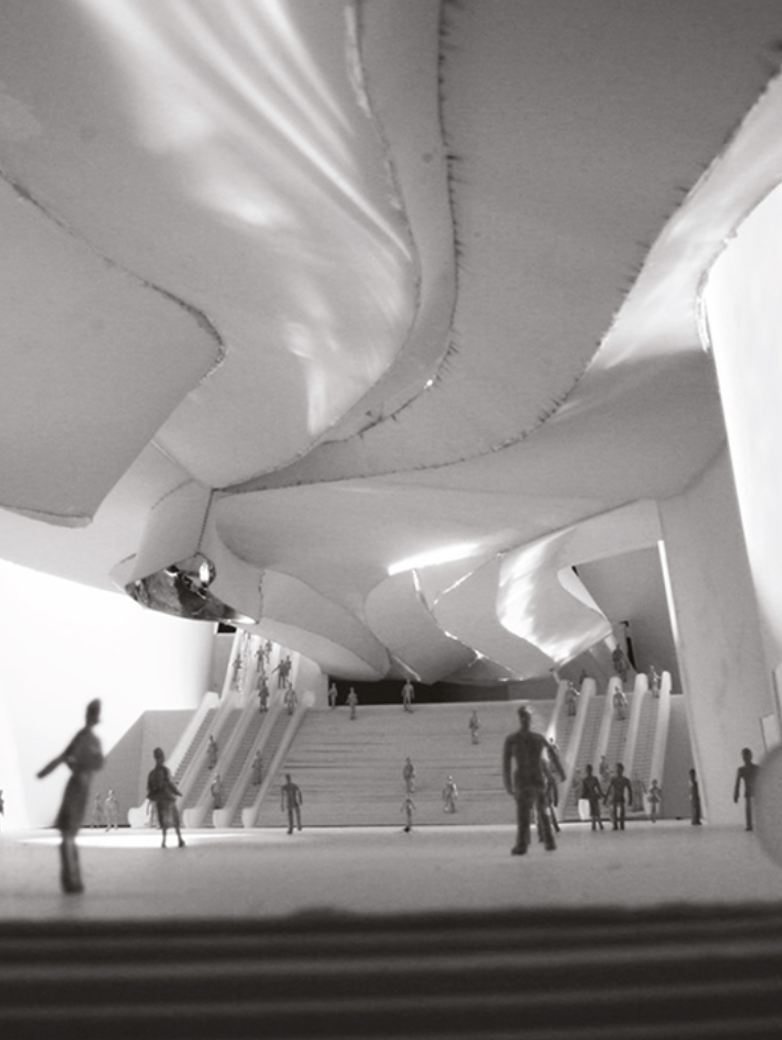
The project responds by creating an environment where daylight is not simply admitted, but carefully filtered, modulated, and transformed into a spatial experience. At the core of the proposal is a central atrium — a calm, open space that functions as the heart of the library. Illuminated from above through a circular skylight, it allows daylight to enter vertically and establish a clear focal point. The central zone becomes the brightest and most active area, supporting interaction, exploration, and shared learning. Above the atrium, a radial lamella system is introduced as the key architectural element. Derived from a simple circular geometry, it evolves through subdivision and rotation into a layered structure that filters incoming sunlight. The density and orientation of the lamellas regulate light intensity and direction, transforming direct illumination into a soft, diffused gradient. This process creates a continuous transition of light conditions across the space. At the center, light is more direct and intense, encouraging activity and engagement. Toward the perimeter, it gradually softens, forming quieter zones for reading, reflection, and concentration. This gradient establishes a subtle spatial hierarchy without the need for physical barriers.
The lamella structure also generates a dynamic pattern of light and shadow that shifts throughout the day. As the sun moves, shadows create an ever-changing atmosphere, introducing rhythm and variation while maintaining a coherent identity. This temporal quality reinforces a connection between users and natural cycles. Materiality supports this concept of filtered light. The interior is defined by warm, natural tones and light wood surfaces that reflect and diffuse daylight. The restrained palette allows light to remain the primary expressive element, enhancing the perception of softness and depth. The design avoids harsh contrasts and artificial lighting dominance, promoting a balanced luminous environment. This results in a calm and welcoming atmosphere that supports both active and quiet modes of use. The clarity of the space, free from excessive visual complexity, allows children to focus and navigate intuitively. The circular geometry provides a simple and legible spatial organization. Movement flows naturally around the central atrium, while peripheral areas offer more intimate conditions. Seating, reading zones, and circulation are integrated into a continuous system that reinforces spatial coherence.
Beyond its functional role, light becomes a narrative element. The transition from brightness to shadow reflects different modes of learning — from active engagement to quiet reflection. In this way, the architecture subtly guides behavior and perception through environmental cues. The lamella system also contributes to sustainability by controlling solar exposure and reducing glare, minimizing the need for artificial shading. Daylight becomes a regulated resource that enhances comfort and environmental performance. Filtered Light is not simply about controlling sunlight, but about transforming it into a meaningful spatial quality — one that supports learning, enhances wellbeing, and creates a memorable environment for children.