2026 - Honourable Mention -Revealing Absence
Category
Honourable Mention: Revealing Absence - Western Europe
Students
Stavroula Leoudi
Teacher
Eleonora Brembilla
School
Delft University of Technology
Country
Netherlands
Download
Project ↓
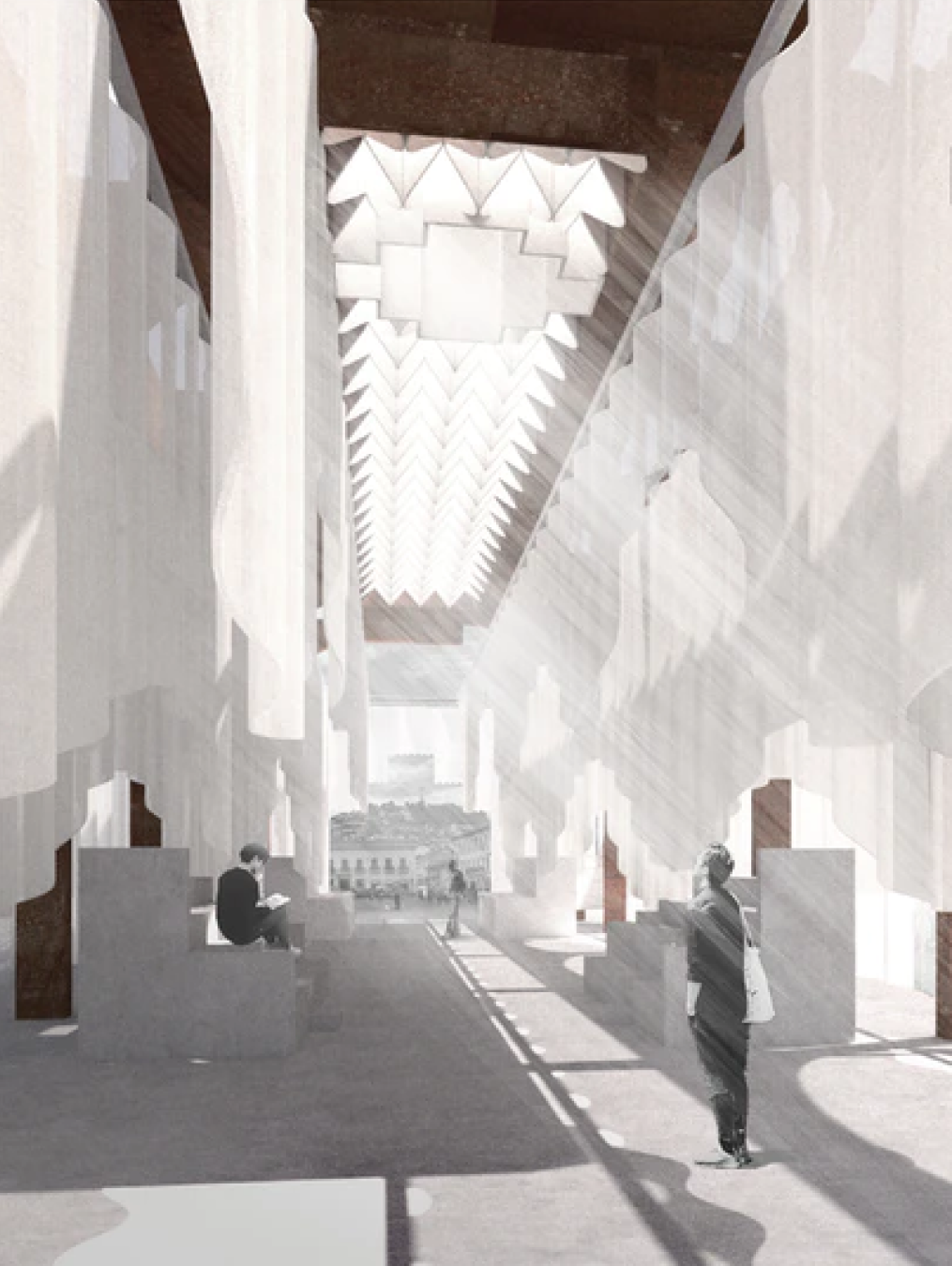
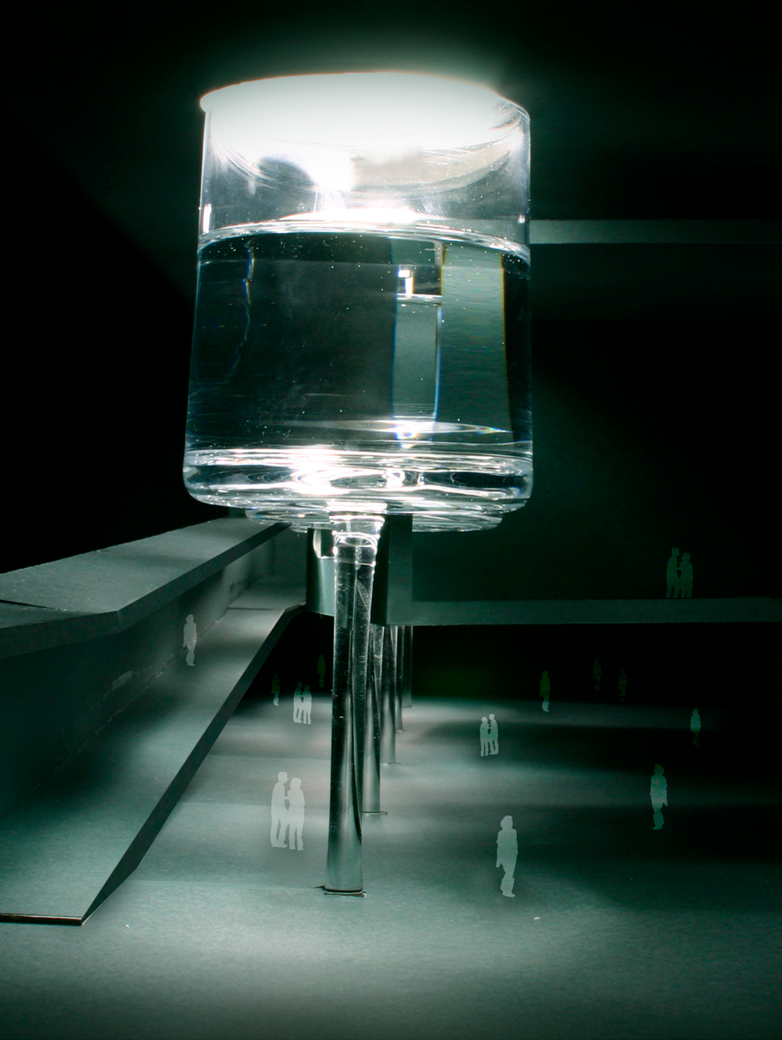
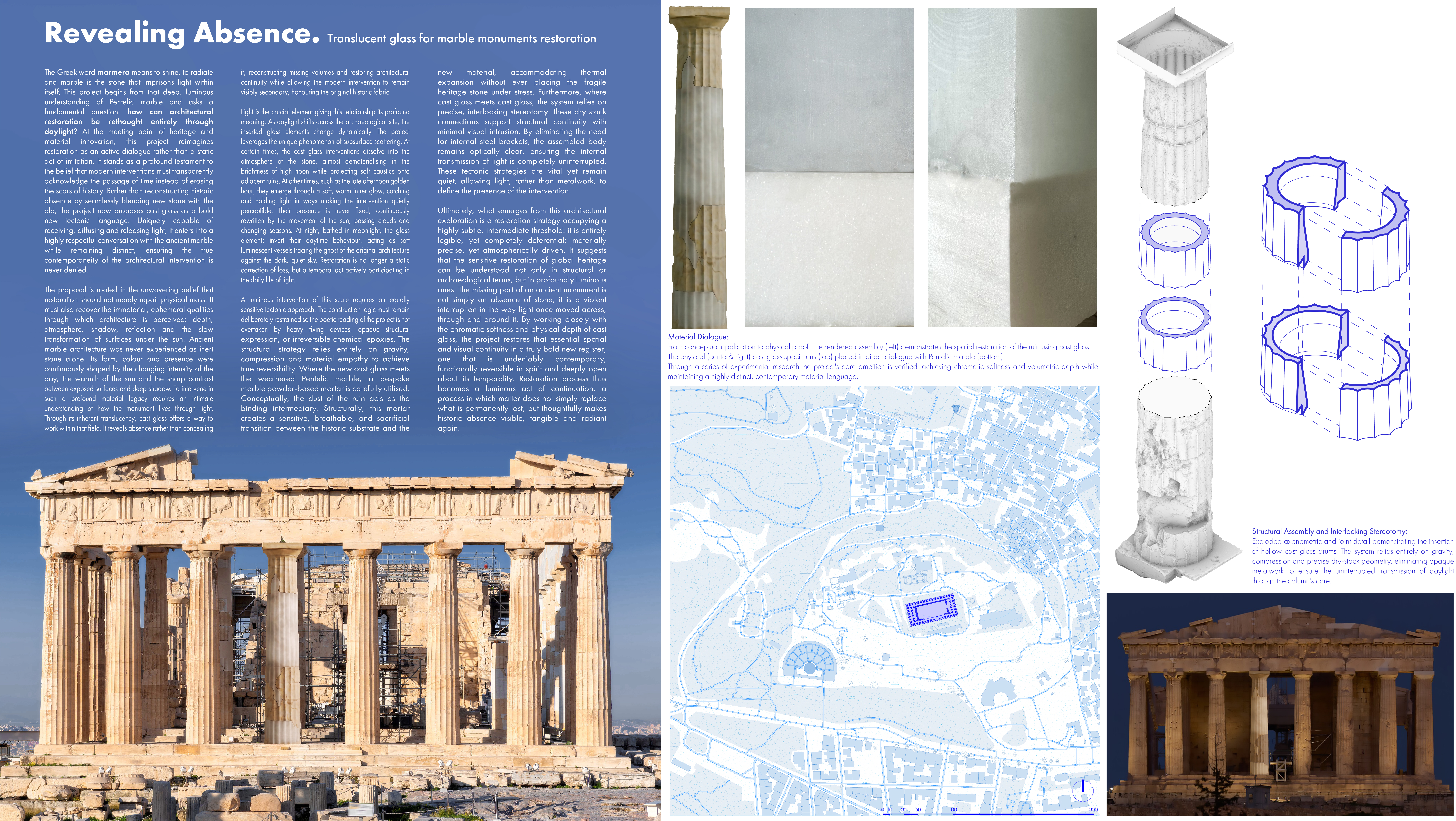
The Greek word marmero means to shine, to radiate and marble is the stone that imprisons light within itself. This project begins from that deep, luminous understanding of Pentelic marble and asks a fundamental question: how can architectural restoration be rethought entirely through daylight? At the meeting point of heritage and material innovation, this project reimagines restoration as an active dialogue rather than a static act of imitation. It stands as a profound testament to the belief that modern interventions must transparently acknowledge the passage of time instead of erasing the scars of history. Rather than reconstructing historic absence by seamlessly blending new stone with the old, the project now proposes cast glass as a bold new tectonic language. Uniquely capable of receiving, diffusing and releasing light, it enters into a highly respectful conversation with the ancient marble while remaining distinct, ensuring the true contemporaneity of the architectural intervention is never denied.
The proposal is rooted in the unwavering belief that restoration should not merely repair physical mass. It must also recover the immaterial, ephemeral qualities through which architecture is perceived: depth, atmosphere, shadow, reflection and the slow transformation of surfaces under the sun. Ancient marble architecture was never experienced as inert stone alone. Its form, colour and presence were continuously shaped by the changing intensity of the day, the warmth of the sun and the sharp contrast between exposed surfaces and deep shadow. To intervene in such a profound material legacy requires an intimate understanding of how the monument lives through light. Through its inherent translucency, cast glass offers a way to work within that field. It reveals absence rather than concealing it, reconstructing missing volumes and restoring architectural continuity while allowing the modern intervention to remain visibly secondary, honouring the original historic fabric.
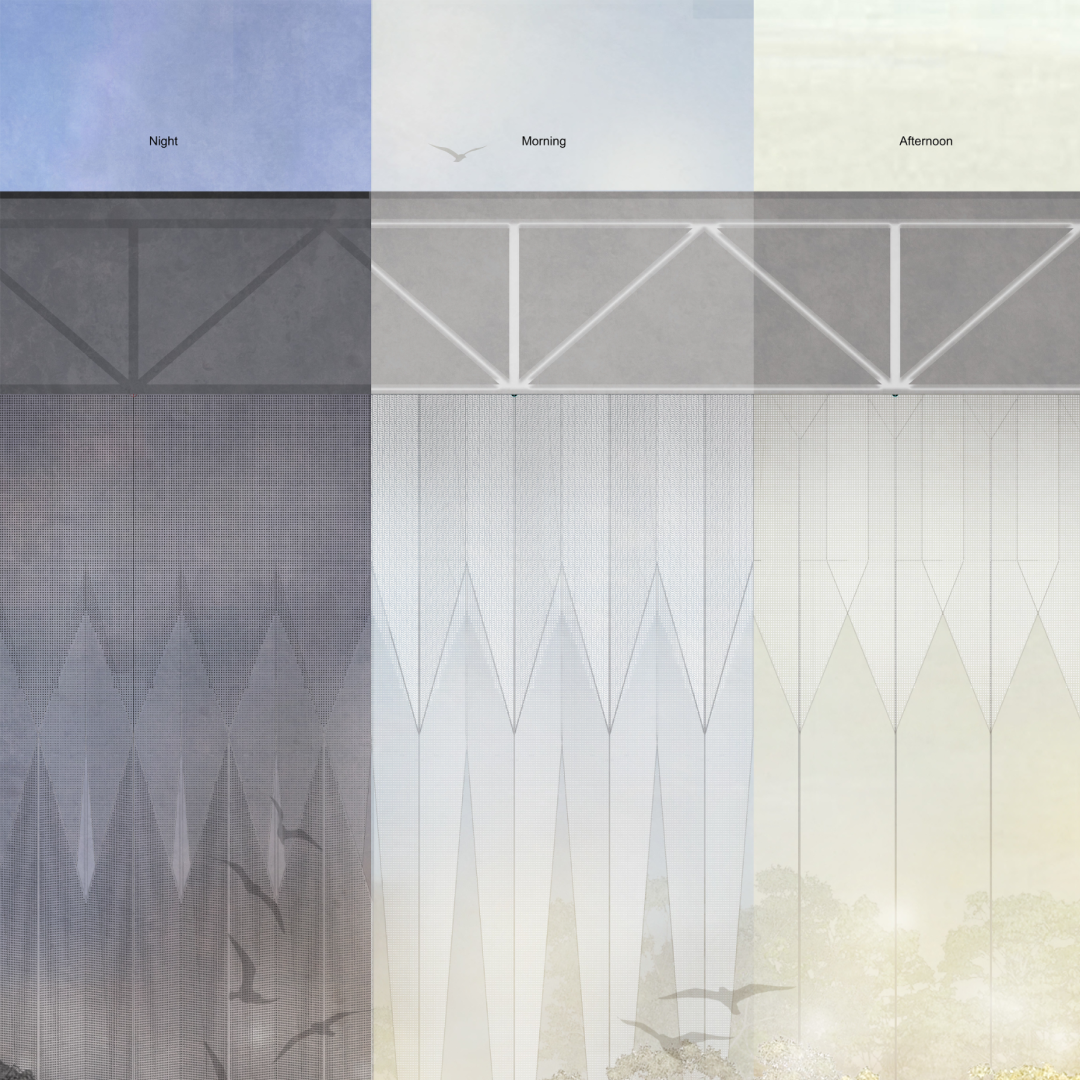
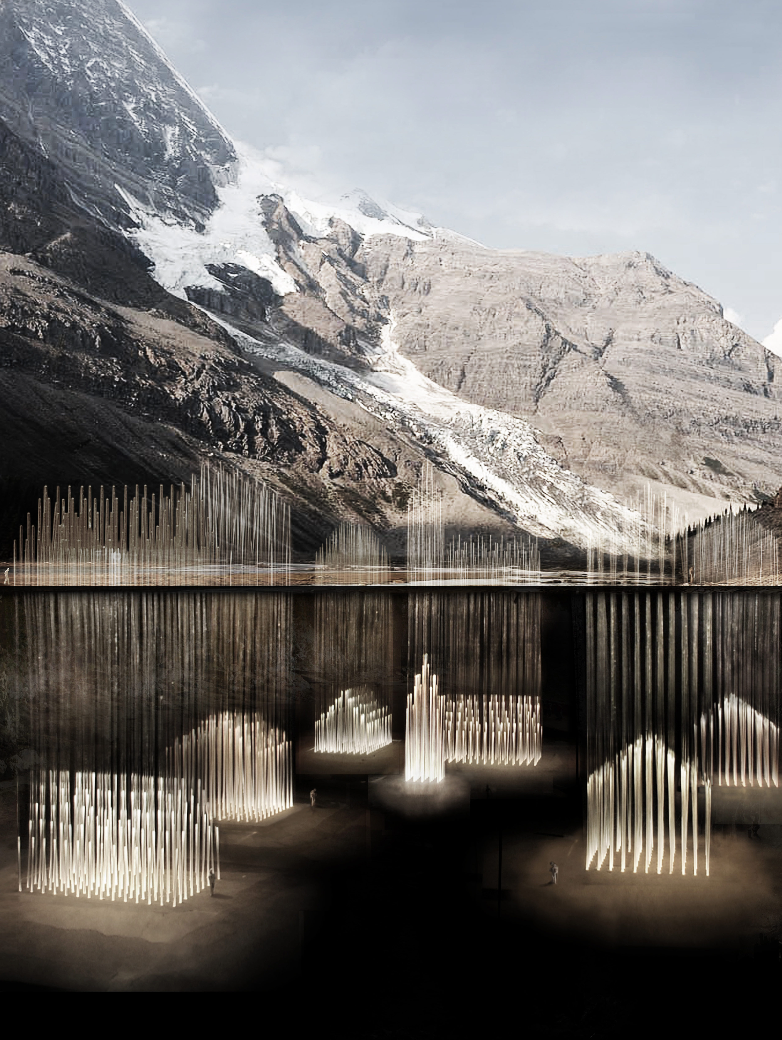
Light is the crucial element giving this relationship its profound meaning. As daylight shifts across the archaeological site, the inserted glass elements change dynamically. The project leverages the unique phenomenon of subsurface scattering. At certain times, the cast glass interventions dissolve into the atmosphere of the stone, almost dematerialising in the brightness of high noon while projecting soft caustics onto adjacent ruins. At other times, such as the late afternoon golden hour, they emerge through a soft, warm inner glow, catching and holding light in ways making the intervention quietly perceptible. Their presence is never fixed, continuously rewritten by the movement of the sun, passing clouds and changing seasons. At night, bathed in moonlight, the glass elements invert their daytime behaviour, acting as soft luminescent vessels tracing the ghost of the original architecture against the dark, quiet sky. Restoration is no longer a static correction of loss, but a temporal act actively participating in the daily life of light.A luminous intervention of this scale requires an equally sensitive tectonic approach. The construction logic must remain deliberately restrained so the poetic reading of the project is not overtaken by heavy fixing devices, opaque structural expression, or irreversible chemical epoxies. The structural strategy relies entirely on gravity, compression and material empathy to achieve true reversibility. Where the new cast glass meets the weathered Pentelic marble, a bespoke marble powder-based mortar is carefully utilised.
Conceptually, the dust of the ruin acts as the binding intermediary. Structurally, this mortar creates a sensitive, breathable, and sacrificial transition between the historic substrate and the new material, accommodating thermal expansion without ever placing the fragile heritage stone under stress. Furthermore, where cast glass meets cast glass, the system relies on precise, interlocking stereotomy. These dry stack connections support structural continuity with minimal visual intrusion. By eliminating the need for internal steel brackets, the assembled body remains optically clear, ensuring the internal transmission of light is completely uninterrupted. These tectonic strategies are vital yet remain quiet, allowing light, rather than metalwork, to define the presence of the intervention.
Ultimately, what emerges from this architectural exploration is a restoration strategy occupying a highly subtle, intermediate threshold: it is entirely legible, yet completely deferential; materially precise, yet atmospherically driven. It suggests that the sensitive restoration of global heritage can be understood not only in structural or archaeological terms, but in profoundly luminous ones. The missing part of an ancient monument is not simply an absence of stone; it is a violent interruption in the way light once moved across, through and around it. By working closely with the chromatic softness and physical depth of cast glass, the project restores that essential spatial and visual continuity in a truly bold new register, one that is undeniably contemporary, functionally reversible in spirit and deeply open about its temporality. Restoration process thus becomes a luminous act of continuation, a process in which matter does not simply replace what is permanently lost, but thoughtfully makes historic absence visible, tangible and radiant again.